
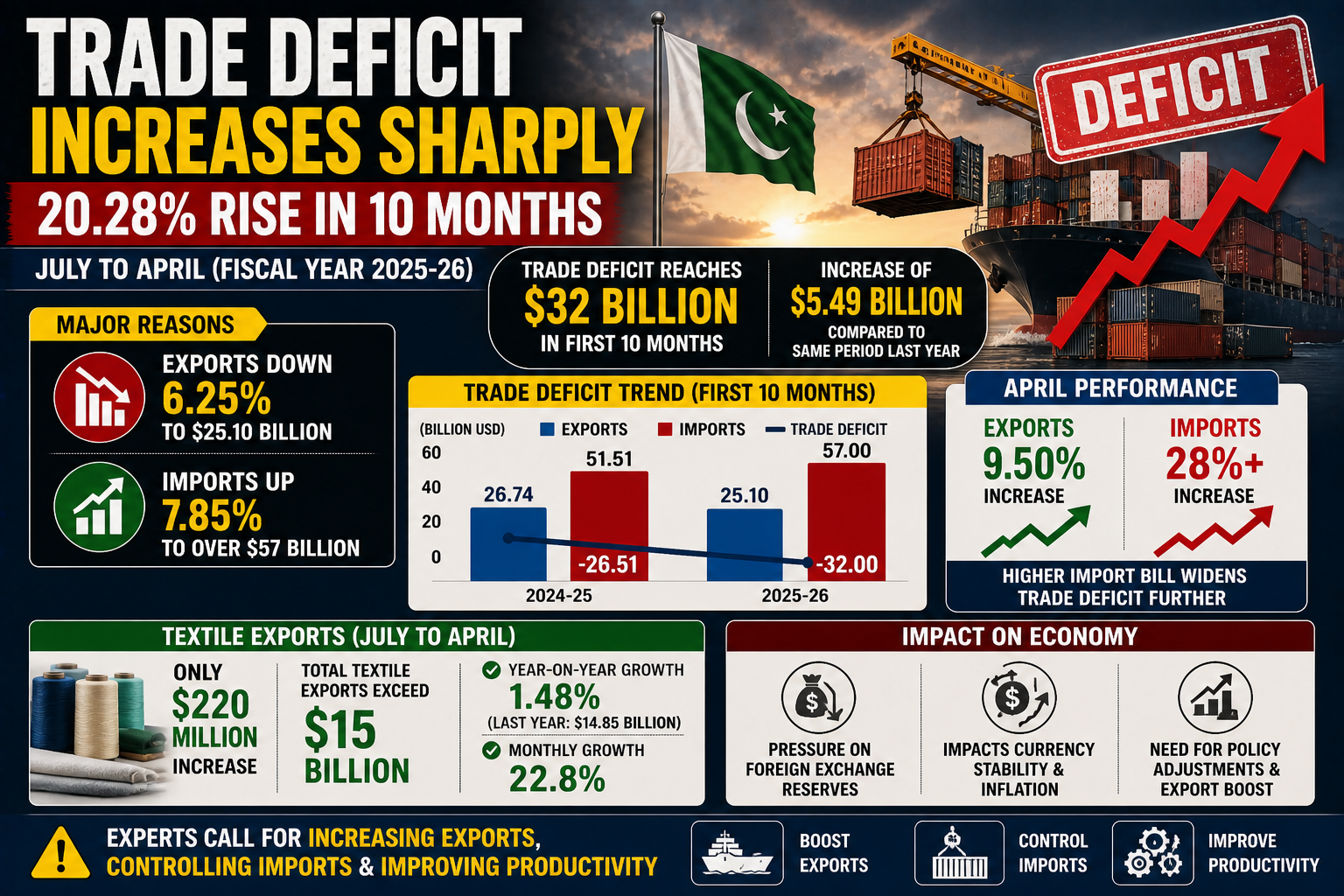
Pakistan trade deficit rises 20 percent imports surge exports fall as new data shows a significant increase in the country’s external imbalance during the current fiscal year.
📊 Trade deficit shows sharp increase
According to Pakistan Bureau of Statistics, Pakistan’s trade deficit increased by 20.28% during the first 10 months of the fiscal year.
On a monthly basis, the increase reached 43.50%, reflecting growing pressure on the economy.
💰 Deficit reaches $32 billion mark
The trade deficit rose to approximately $32 billion from July to April.
This represents an increase of around $5.49 billion compared to the same period last year.
📉 Decline in exports recorded
Exports during the period declined by 6.25%, reaching about $25.10 billion.
The decrease in exports is one of the key reasons behind the widening deficit.
📦 Imports continue to rise
Imports increased by 7.85%, crossing $57 billion during the same period.
The rise in import bills has significantly contributed to the imbalance.
📅 April shows mixed trends
In April, exports showed improvement with a 9.50% increase.
However, imports surged by more than 28%, offsetting the gains in exports.
🧵 Textile exports show limited growth
Textile exports recorded only a modest increase of about $220 million.
Total textile exports exceeded $15 billion during the July–April period.
📈 Year-on-year textile performance
Textile exports grew by approximately 1.48% compared to last year.
In the previous fiscal year, textile exports stood at around $14.85 billion for the same period.
📊 Monthly textile exports improve
On a monthly basis, textile exports showed a stronger growth of 22.8%.
In April alone, textile exports reached approximately $1.5 billion, compared to $1.2 billion last year.
⚖️ Economic implications of deficit growth
The widening trade deficit indicates increased reliance on imports.
It also highlights challenges in boosting export competitiveness.
🌍 Pressure on external account
Experts suggest that a rising trade deficit can put pressure on foreign exchange reserves.
It may also impact currency stability and inflation.
🔄 Need for policy adjustments
Analysts emphasize the need for measures to:
- Increase exports
- Control import growth
- Improve industrial productivity
Such steps could help reduce the trade gap.