
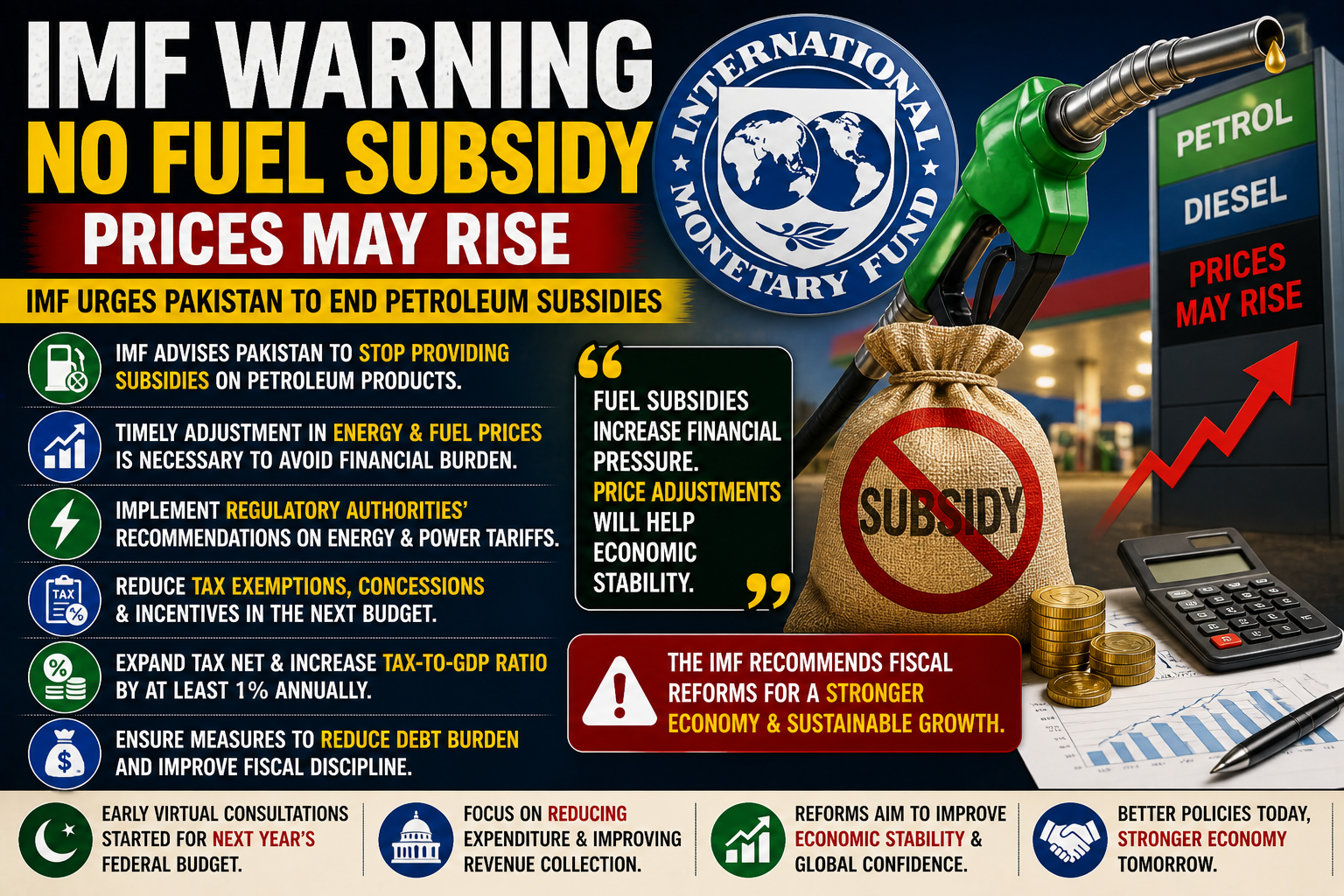
IMF Pakistan fuel subsidy IMF urges no petrol subsidy as early consultations begin for the upcoming federal budget and key fiscal targets.
💼 IMF consultations begin with Pakistan
Initial virtual discussions have started between International Monetary Fund and the Government of Pakistan regarding the next fiscal year’s budget.
These talks focus on setting financial targets and economic priorities.
⛽ IMF advises against fuel subsidy
The IMF has recommended that Pakistan should avoid providing subsidies on petroleum products.
Officials suggested that continuing subsidies could increase financial pressure on the economy.
📊 Call for timely price adjustments
The IMF emphasized the need for timely adjustments in fuel and energy prices.
Such measures are aimed at maintaining fiscal discipline and reducing budget deficits.
⚡ Energy sector reforms highlighted
Recommendations include implementing decisions made by regulatory bodies related to electricity and energy pricing.
The goal is to ensure transparency and efficiency in the energy sector.
📉 Reducing financial burden
The IMF stressed that reducing subsidies will help control government spending.
This is considered important for improving overall economic stability.
🧾 Tax policy changes under consideration
Discussions also included proposals to:
- Reduce tax exemptions
- Limit subsidies and concessions
- Expand the tax base
These steps aim to increase revenue generation.
📈 Target to improve tax-to-GDP ratio
Officials are considering increasing the tax-to-GDP ratio by at least one percent annually.
This is part of broader fiscal reform efforts.
💰 Focus on reducing debt burden
The IMF has also advised Pakistan to take measures to reduce its debt burden.
This includes better financial management and controlled spending.
🔄 Budget planning underway
The consultations are part of the early phase of budget preparation.
Further discussions are expected before finalizing the fiscal plan.
🌍 Economic implications
Analysts note that these recommendations could impact fuel prices and consumer costs.
However, they may also contribute to long-term economic stability.