
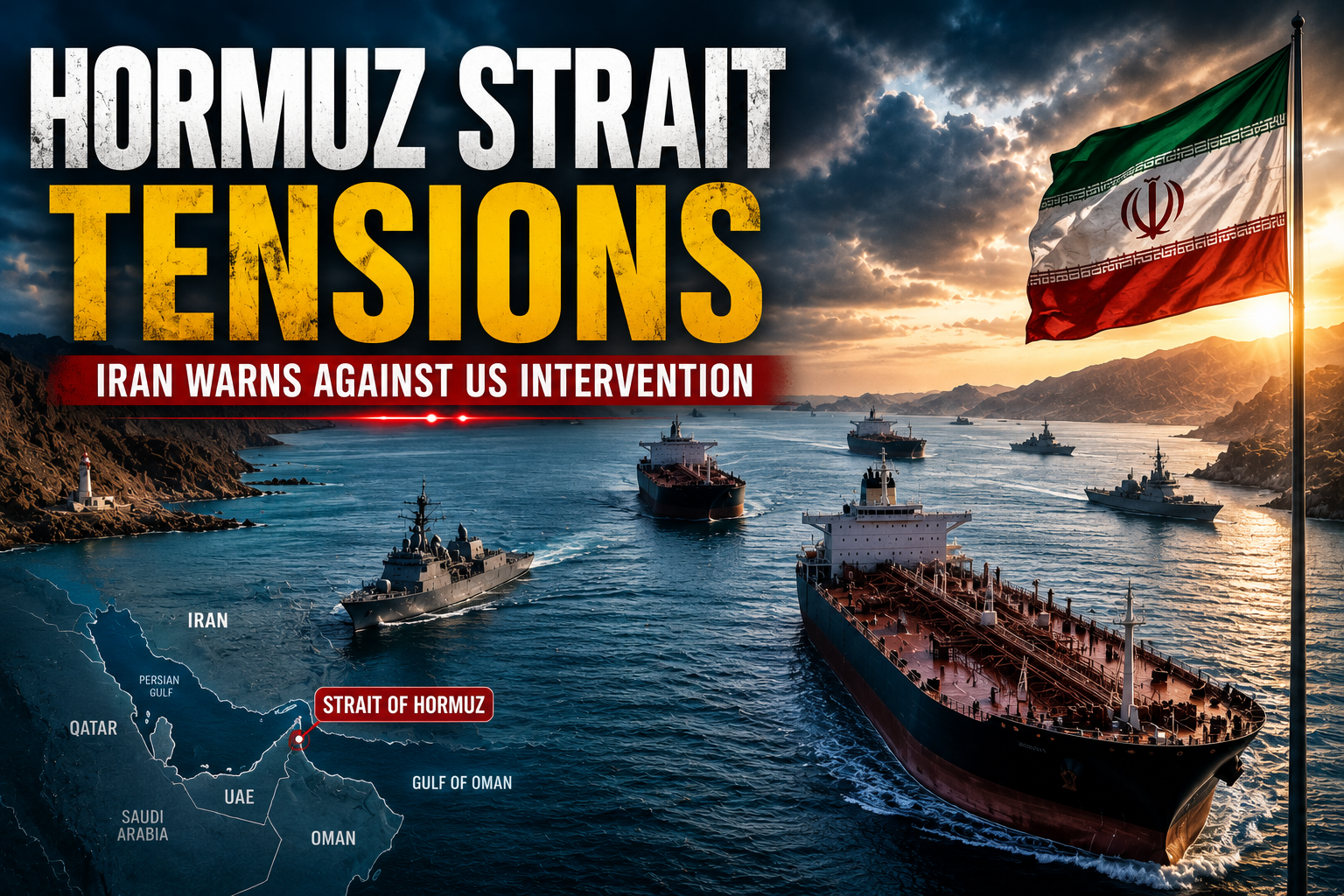
Hormuz Strait Tensions escalated after Iran’s military warned that it would not allow the United States to interfere in the management of the strategic waterway, following recent remarks by US President Donald Trump. Iranian officials also cautioned that any regional cooperation with Washington on the issue could increase the risk of broader conflict, according to an official military statement.
The comments were made by Brigadier General Ebrahim Zolfaqari, spokesperson for Iran’s Khatam al-Anbiya Central Headquarters, in a statement released in Tehran. The remarks come amid continued geopolitical tensions surrounding one of the world’s most important maritime energy routes.
⚓ Iran Rejects US Involvement in the Strait
According to the official statement, Iranian military officials said the United States had already harmed the security of global energy transportation through its actions in the Strait of Hormuz.
Brigadier General Ebrahim Zolfaqari stated that Iran does not recognize any American role in the administrative affairs of the strategic waterway and would continue to oppose any such involvement.
He said Iran considers the Strait of Hormuz to be an area where external interference by the United States is unacceptable. The statement did not provide details of any specific US action but was issued in response to recent remarks attributed to President Donald Trump.
🌍 Concerns Over Regional Cooperation
The Iranian military also expressed concern over the role of some countries in the region.
According to the statement, cooperation by certain regional states with the United States has increased the possibility of a wider conflict. Iranian officials argued that such cooperation could contribute to instability rather than improving regional security.
The statement did not identify any specific countries but warned that external alliances could complicate an already tense security environment in the Gulf region.
⚠️ Warning Issued Over Future Intervention
Iran’s armed forces warned that any attempt by the United States to intervene in the Strait of Hormuz would face opposition.
According to Brigadier General Zolfaqari, Iran will not permit American involvement in the management of the strategic passage under any circumstances.
The military statement also warned that countries supporting Washington in such efforts could face consequences if Iran’s territorial integrity were threatened.
🛡️ Iran Links Cooperation With US to National Security
The statement further said that any form of cooperation with the United States against Iran would be viewed as an act directed against the country’s sovereignty.
According to Iranian officials, actions perceived as supporting military or security measures against Iran would be treated seriously under the country’s national defense policy.
The statement claimed that a broader conflict could affect multiple countries across the region if tensions continue to rise.
🚢 Strait of Hormuz Remains Strategically Important
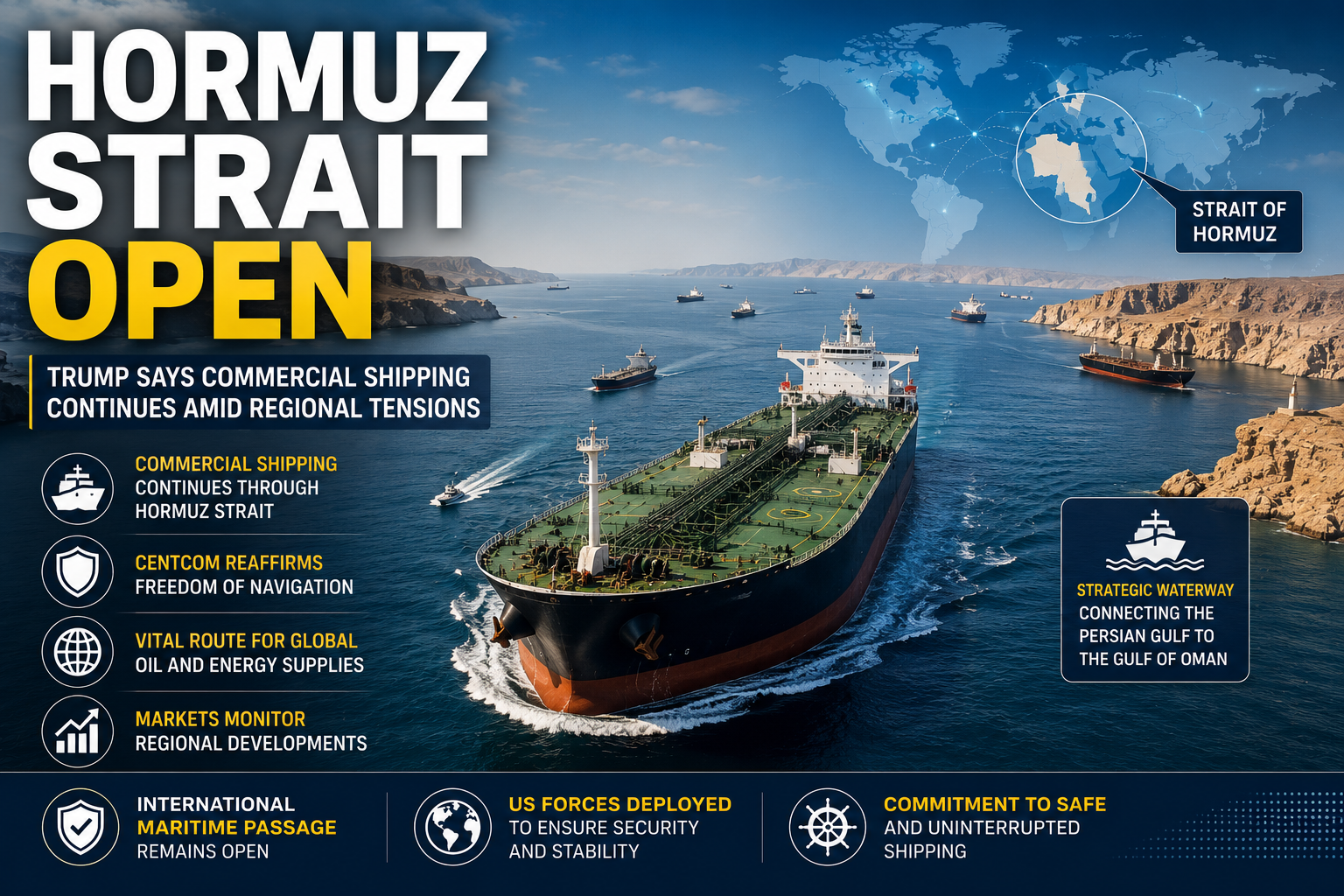
The Strait of Hormuz is one of the world’s most significant maritime routes for global energy supplies. A large share of internationally traded crude oil and liquefied natural gas passes through the narrow waterway connecting the Persian Gulf with the Gulf of Oman and the Arabian Sea.
Because of its strategic importance, developments involving the Strait are closely monitored by governments, shipping companies, and international energy markets.
Analysts note that statements from either side can influence market sentiment even without immediate changes to shipping operations.
🌐 International Attention Focuses on Gulf Security
Recent exchanges between Iranian and US officials have drawn renewed international attention to security in the Gulf region.
While Iran has reiterated its opposition to US involvement in the Strait of Hormuz, there has been no official indication of immediate operational changes affecting commercial shipping.
Diplomatic observers continue to monitor developments closely as governments seek to avoid further escalation in one of the world’s most strategically important maritime corridors.
Officials from various countries have repeatedly emphasized the importance of maintaining freedom of navigation and protecting international energy supply routes while encouraging dialogue to reduce regional tensions.