
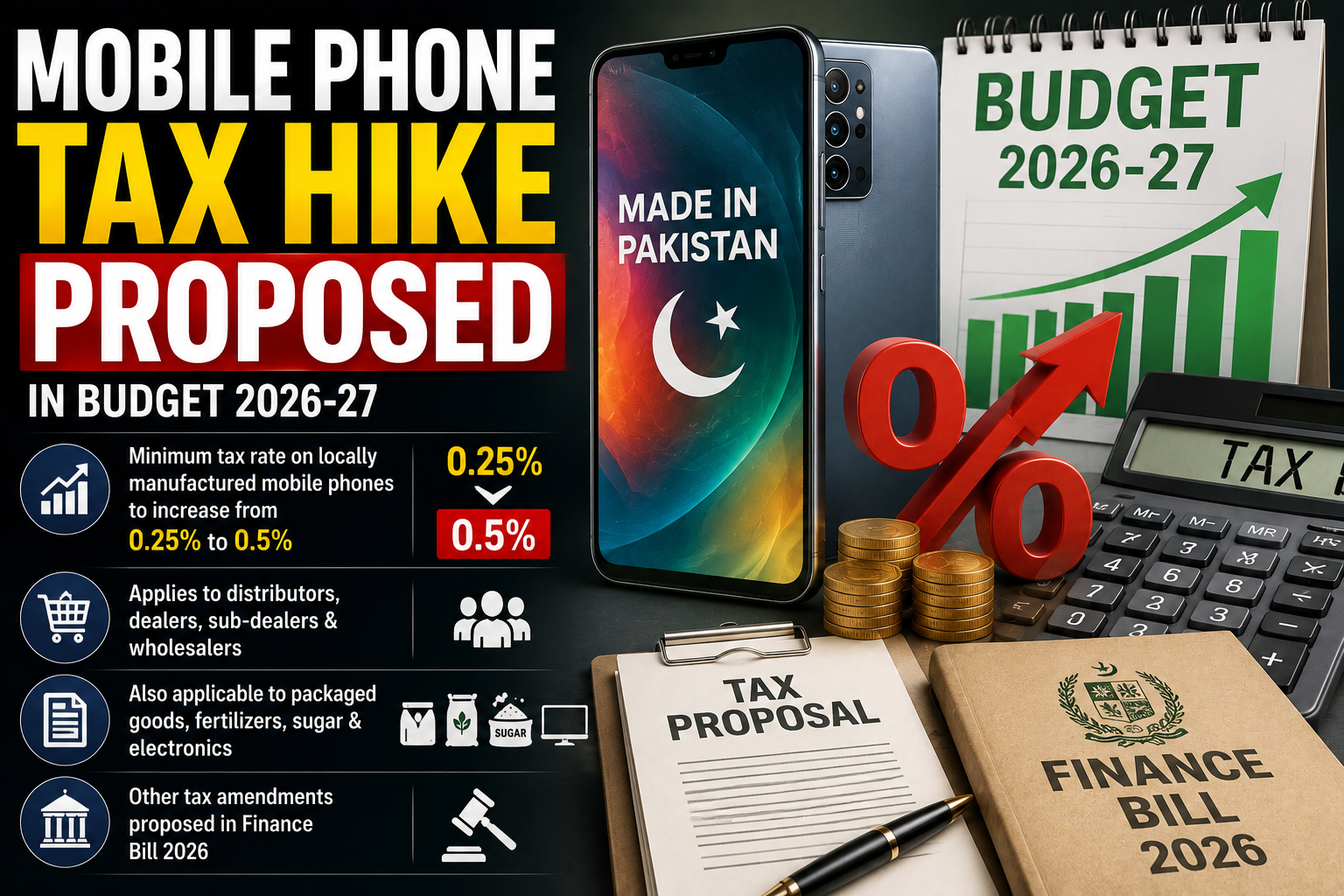
Mobile Phone Tax Hike Proposed in Pakistan’s federal budget for 2026-27, as the government seeks to increase the minimum tax rate on several sectors, including locally manufactured mobile phones, packaged goods, fertilizers, sugar, and electronics distribution businesses.
The proposal is part of broader tax amendments introduced through the Finance Bill 2026, which aims to enhance revenue collection while revising tax treatment across multiple industries.
If approved by parliament, the changes could affect manufacturers, distributors, dealers, wholesalers, and other businesses operating within these sectors.
📱 Government Proposes Higher Tax on Mobile Phone Sector
One of the key proposals in the Finance Bill relates to locally manufactured mobile phones.
According to budget documents, the government has suggested increasing the minimum tax rate applicable to distributors, dealers, sub-dealers, and wholesalers involved in the sale of locally assembled mobile phones.
The proposed change would raise the minimum tax rate from 0.25 percent to 0.5 percent under Section 113(1) of the Income Tax Ordinance.
Industry stakeholders are expected to closely examine the proposal due to the rapid growth of Pakistan’s local mobile manufacturing sector in recent years.
The move comes as authorities continue efforts to expand the tax base and increase government revenues.
💰 Multiple Sectors Included in Tax Proposal
The proposed increase is not limited to mobile phones alone.
Budget documents indicate that similar tax changes would apply to distributors and dealers involved in packaged consumer goods, fertilizers, sugar, and electronic products.
If implemented, the revised tax structure would double the minimum tax rate for these sectors from the existing 0.25 percent level to 0.5 percent.
Government officials argue that the measure is intended to improve tax collection and create greater consistency across various industries.
Business groups, however, are expected to assess the potential impact on operating costs and market prices.
📋 Amendments Proposed Through Finance Bill 2026
The tax measures form part of wider amendments proposed under Finance Bill 2026.
Several changes have been suggested in Part II of the Second Schedule of the Income Tax Ordinance.
The government has proposed revisions affecting withholding taxes, minimum taxes, and sector-specific tax treatments.
Tax experts note that these changes are part of a broader strategy aimed at strengthening fiscal revenues while adjusting existing tax policies.
The proposals will remain subject to parliamentary debate and approval before becoming law.
⚓ Relief Proposed for Terminal Operators
While some sectors may face higher taxes, the government has also proposed relief for terminal operators.
Under the proposed amendment, the withholding tax rate under Section 153(1)(b) would be reduced from 15 percent to 12 percent of the gross payment amount.
Industry observers say the measure could lower the tax burden on businesses operating in logistics and terminal management services.
The proposal reflects the government’s attempt to balance revenue generation with support for sectors considered important to trade and economic activity.
Further discussions are expected regarding the practical implications of the revised rate.
🏭 Changes Suggested for Steel Manufacturers
The Finance Bill also contains proposals affecting iron and steel manufacturers.
According to the draft measures, tax deducted from payments received for the sale of manufactured iron and steel products would no longer remain adjustable.
Instead, the tax would be treated as a minimum tax liability.
Industry participants are reviewing the proposal to determine its impact on financial planning, cash flow management, and overall tax obligations.
The steel sector remains an important contributor to industrial development and infrastructure projects across the country.
🏠 Property and Trading House Tax Measures
Additional amendments target trading companies and real estate transactions.
The government has proposed ending certain withholding tax exemptions currently available to companies operating trading houses under Section 153.
At the same time, Finance Bill 2026 includes a proposal to eliminate separate tax rates previously applicable to late filers involved in the purchase, sale, or transfer of immovable property.
Tax professionals believe these measures could influence compliance requirements and transaction costs in both commercial and property markets.
As parliamentary discussions on the federal budget continue, businesses across multiple sectors will be closely monitoring the outcome of these proposals.
If approved, the tax changes could reshape the financial landscape for manufacturers, distributors, traders, and investors during the upcoming fiscal year.