
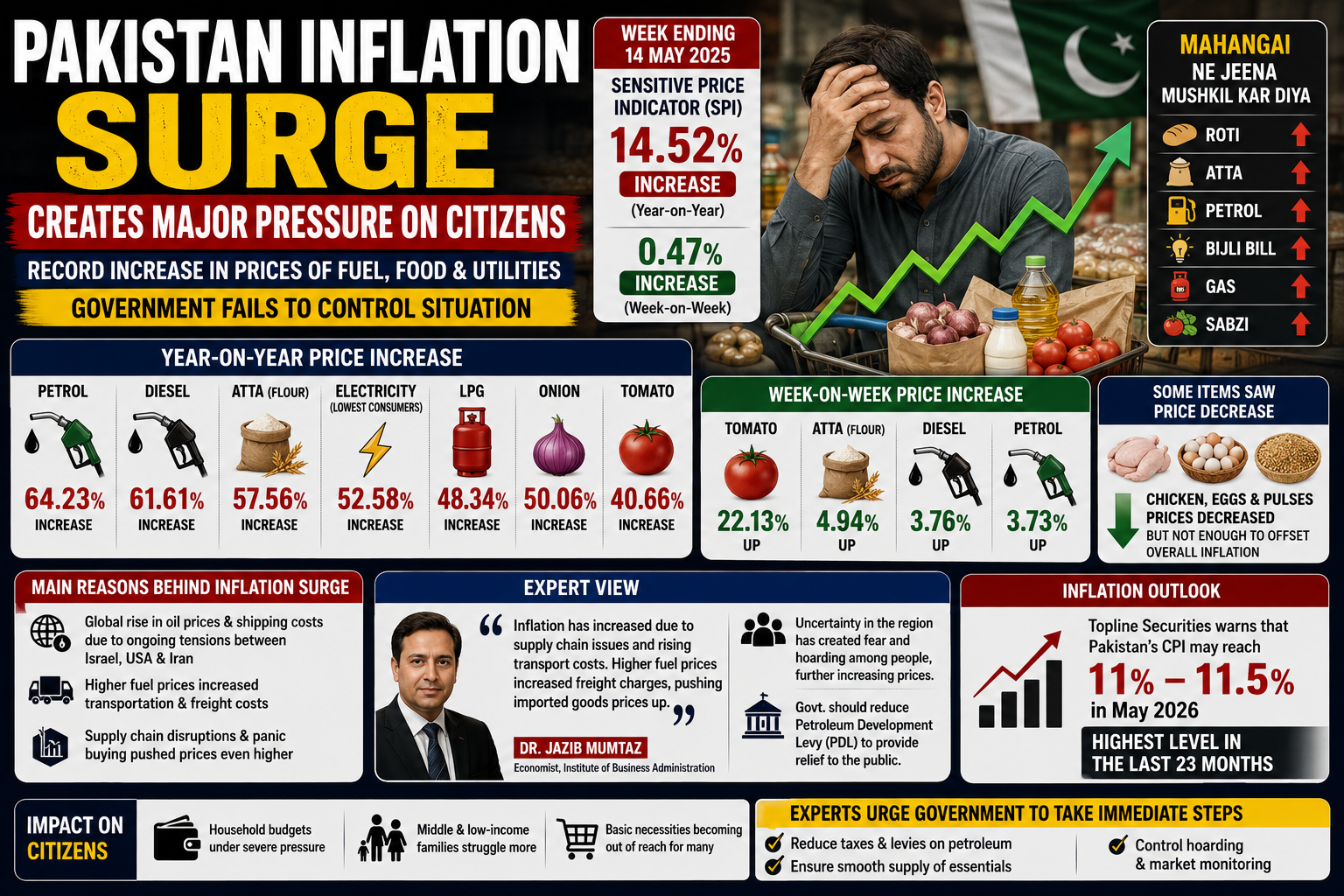
Pakistan inflation surge has continued to increase pressure on households after new data showed a sharp rise in short-term inflation across the country. According to the latest figures released by the Pakistan Bureau of Statistics, the Sensitive Price Indicator (SPI) recorded a year-on-year increase of 14.52 percent during the week ending May 14, highlighting growing financial challenges for consumers.
The latest inflation figures have raised concerns among economic experts and citizens as fuel, electricity, food, and transportation costs continue climbing despite ongoing monetary tightening and economic stabilization efforts.
📈 Weekly Inflation Data Shows Sharp Increase
According to official statistics, the SPI also increased by 0.47 percent on a weekly basis.
Economists believe the continued rise in inflation indicates that price pressures remain strong despite strict fiscal and monetary measures introduced during recent months.
The increase has added further pressure on household budgets, particularly for middle-income and low-income families struggling with rising living costs.
⛽ Fuel Prices Record Massive Annual Increase
The latest data showed major increases in fuel prices across Pakistan.
According to reports, petrol prices recorded a yearly increase of 64.23 percent, while diesel prices rose by 61.61 percent.
Experts believe rising global oil prices and higher transportation costs linked to regional tensions have directly contributed to inflationary pressure inside Pakistan.
🥖 Food and Utility Costs Continue Rising
Food items and utility expenses also recorded substantial increases during the reported period.
Official figures showed flour prices rising by 57.56 percent, while electricity bills for lower consumption users increased by 52.58 percent.
Similarly, LPG prices rose by 48.34 percent, onion prices increased by 50.06 percent, and tomato prices climbed by 40.66 percent compared to the previous year.
Analysts say rising prices of essential commodities continue affecting household spending and overall purchasing power.
🌍 Regional Tensions Affect Global Markets
Economic experts linked part of the inflationary pressure to ongoing geopolitical tensions involving Iran, the United States, and Israel.
According to analysts, instability in international energy markets increased oil prices and shipping costs globally, eventually impacting Pakistan’s transportation and food sectors.
Higher import and freight costs have reportedly contributed to rising prices of multiple consumer goods in local markets.
💬 Economists Point to Supply Chain Problems
Economist Jazib Mumtaz stated that supply chain disruptions and increased transportation costs remain among the main drivers behind inflation.
He explained that higher fuel prices increased freight charges, which pushed the prices of imported and locally distributed goods upward.
The economist also warned that uncertainty in the region contributed to panic buying and hoarding trends, further increasing market pressure.
📉 Weekly Price Changes Also Remain High
On a weekly basis, tomato prices recorded the highest increase at 22.13 percent.
Flour prices rose by 4.94 percent, diesel increased by 3.76 percent, and petrol prices climbed by 3.73 percent during the same period.
Although prices of some products including chicken, eggs, and pulses declined slightly, experts said the reductions were insufficient to offset the overall impact of inflation on consumers.
⚠️ Experts Warn Inflation Could Rise Further
Brokerage firm Topline Securities reportedly warned that Pakistan’s Consumer Price Index (CPI) could reach between 11 and 11.5 percent in May 2026.
Analysts described the expected figure as the highest inflation level recorded during the past 23 months.
Experts cautioned that if fuel, electricity, and imported goods continue becoming more expensive, financial difficulties for middle-class and lower-income families could intensify further in coming months.
🏛️ Calls Grow for Public Relief Measures
Economic experts have urged the government to consider relief measures to reduce pressure on consumers.
Suggestions include reducing petroleum development levy charges and improving supply chain management to stabilize prices.
Analysts believe targeted relief programs and stronger market monitoring may help reduce inflationary pressure and improve consumer confidence in the coming months.