
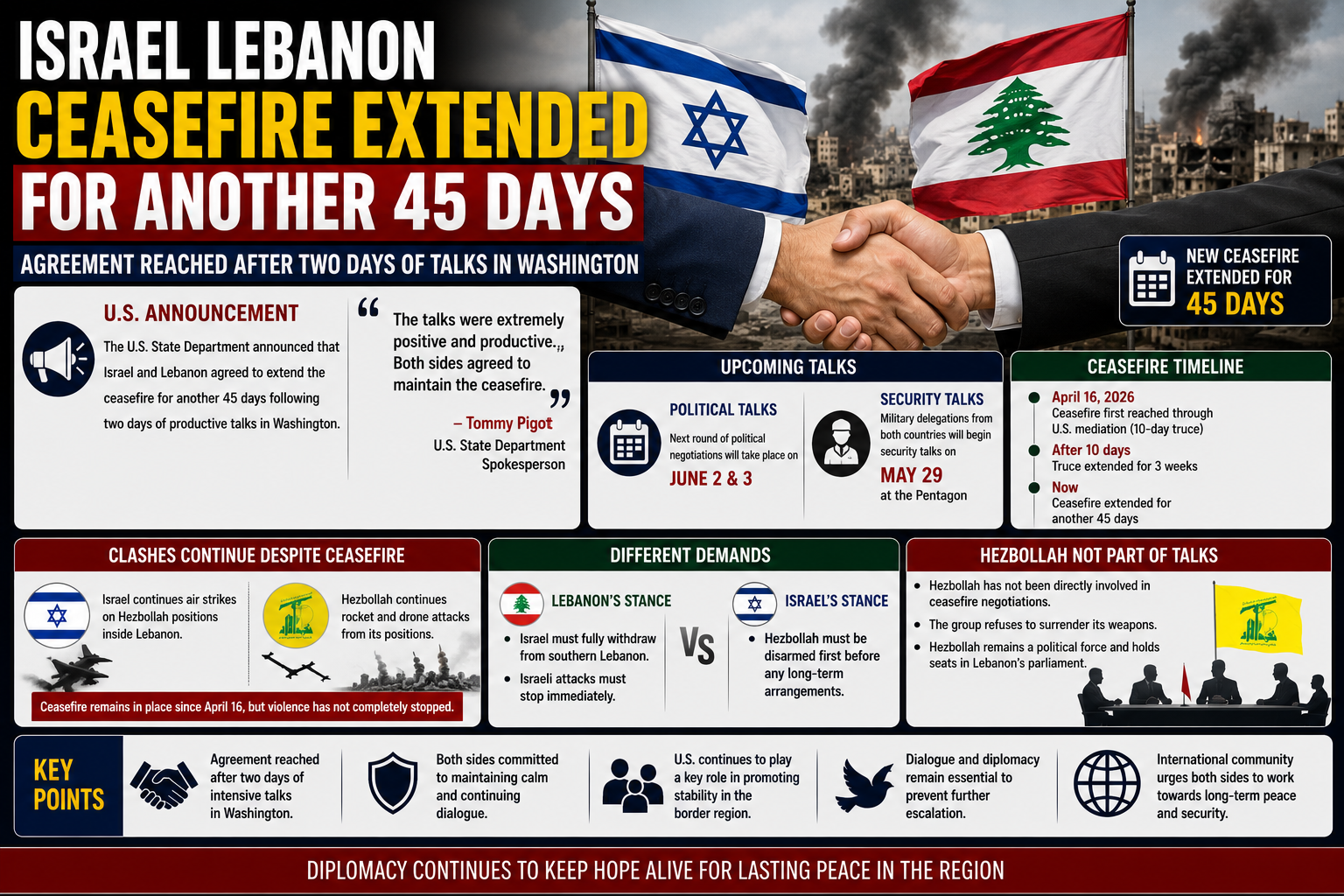
Israel Lebanon ceasefire extension has been agreed after two days of negotiations in Washington, where officials confirmed that the temporary truce between both countries would continue for another 45 days. The announcement was made by the US State Department amid ongoing diplomatic efforts to reduce tensions and prevent further escalation along the border region.
According to reports, the negotiations were described as positive and productive, with both sides showing willingness to maintain the ceasefire despite continuing security concerns and occasional clashes.
🇺🇸 US Announces New Ceasefire Extension
The United States confirmed that Israel and Lebanon agreed to extend the existing ceasefire arrangement by another 45 days.
US State Department spokesperson Tommy Pigott reportedly stated that the discussions in Washington produced constructive outcomes and helped both parties continue diplomatic engagement.
Officials said the extension aims to support stability and reduce the risk of broader regional conflict.
🤝 Political and Security Talks to Continue
According to reports, the next round of political negotiations between Israel and Lebanon is scheduled for June 2 and 3.
Officials also confirmed that separate security talks involving military delegations from both countries are expected to begin at the Pentagon on May 29.
Diplomatic sources believe continued dialogue may help address border tensions and security concerns affecting both sides.
📅 Ceasefire First Started in April 2026
Reports noted that the initial ceasefire agreement between Israel and Lebanon was first reached on April 16, 2026 through American mediation efforts.
The original arrangement reportedly involved a 10-day ceasefire, which was later extended for three additional weeks before the latest 45-day agreement.
Since then, Washington has continued facilitating discussions between both sides to maintain stability and prevent further escalation.
⚠️ Border Clashes Still Continue
Despite the ceasefire agreement remaining in place since April, reports stated that clashes and military exchanges have not completely stopped.
Israeli forces reportedly continued operations targeting Hezbollah positions, while rocket and drone attacks were also reported from the Lebanese side.
Security analysts say the continued incidents highlight the fragile nature of the ceasefire despite ongoing diplomatic efforts.
🇱🇧 Lebanon and Israel Maintain Different Positions
Lebanon reportedly continues demanding a full Israeli withdrawal from southern Lebanese territory and an end to military strikes.
Israel, meanwhile, insists that Hezbollah should first be disarmed before broader security arrangements can move forward.
Experts believe these disagreements remain among the biggest challenges preventing a long-term political settlement between the two sides.
🛡️ Hezbollah Not Directly Involved in Talks
According to reports, Hezbollah has not directly participated in the negotiations linked to the ceasefire agreement.
Reports also stated that the group has refused to surrender weapons despite remaining an influential political force within Lebanon’s parliament.
Analysts believe Hezbollah’s role remains central to any future negotiations regarding regional security and border stability.
🌍 International Attention Focused on Regional Stability
The ceasefire extension comes at a time when the Middle East continues facing broader regional tensions and security concerns.
International observers believe maintaining dialogue between Israel and Lebanon remains important for avoiding wider instability in the region.
Diplomatic efforts led by the United States are expected to continue in coming weeks as both countries prepare for further political and military discussions.