
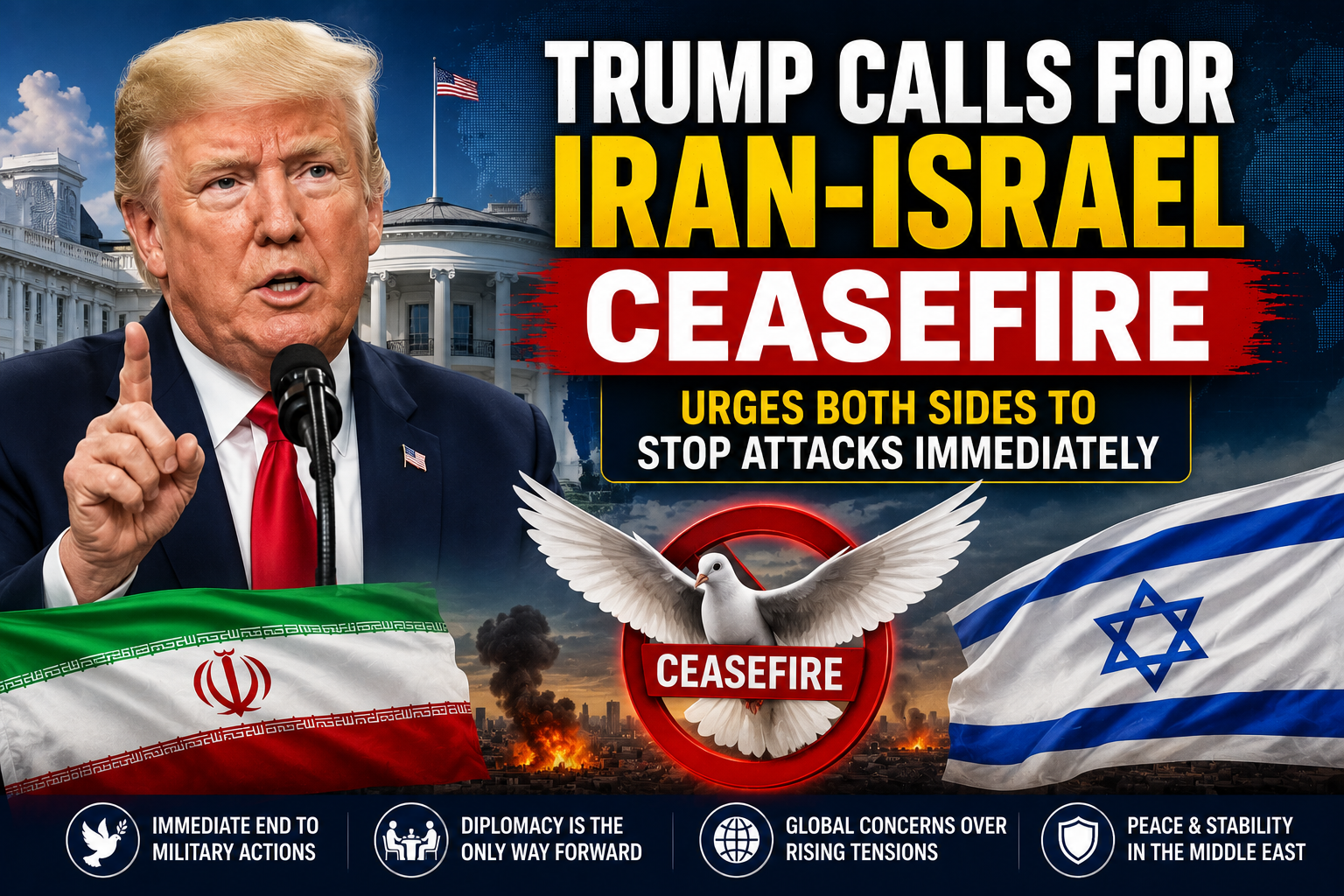
Trump Calls for Iran-Israel Ceasefire Immediately as tensions between the two Middle Eastern rivals continue to rise, prompting renewed international concern over the possibility of a wider regional conflict.
US President Donald Trump has urged both Iran and Israel to halt military actions against each other and avoid further escalation. The appeal comes amid reports of ongoing retaliatory strikes and growing fears that continued hostilities could have consequences beyond the region.
In a brief message shared on his social media platform, Truth Social, Trump called on both countries to stop attacks and move away from military confrontation. His comments have attracted international attention as world leaders and diplomatic organizations continue to push for restraint.
🕊️ Trump Urges Immediate End to Attacks
President Trump used his social media platform to deliver a direct message to both Iran and Israel.
According to reports, he called for an immediate halt to firing and military strikes, stressing the importance of reducing tensions before the situation deteriorates further. While the statement was brief, it reflected growing concern in Washington and other capitals about the possibility of a broader regional crisis.
The appeal comes at a time when both countries have exchanged accusations and military responses, raising fears of continued instability.
Trump’s statement focused on the need for restraint and emphasized that further military actions could increase risks for the region.
⚡ Tensions Continue to Escalate
The call for a ceasefire follows another period of heightened tensions between Iran and Israel.
Recent developments have included reports of military operations, security alerts, and growing concerns over regional stability. While details continue to emerge, the latest exchanges have once again placed the Middle East at the center of international attention.
Security analysts warn that prolonged confrontation could increase uncertainty across neighboring countries and create additional challenges for regional governments.
The situation has also triggered diplomatic activity as countries seek ways to prevent further escalation.
🌍 Global Concerns Over Regional Stability
The conflict between Iran and Israel is being closely monitored by governments around the world.
International observers fear that a wider confrontation could affect trade routes, energy infrastructure, and overall security across the region. The Middle East remains a strategically important area for global energy supplies, making any increase in military activity a matter of international concern.
Several countries and international organizations have repeatedly urged both sides to exercise restraint and pursue peaceful solutions.
Diplomatic efforts aimed at reducing tensions have intensified as concerns grow about the potential consequences of a prolonged conflict.
🤝 Calls for Diplomacy Instead of Military Action
In his message, Trump also highlighted the importance of pursuing diplomatic solutions.
He argued that peace and stability in the region require both countries to avoid further military operations and instead focus on dialogue. Similar appeals have been made by world leaders who believe diplomatic engagement remains the most effective way to prevent a broader crisis.
Analysts note that diplomatic initiatives often become more important during periods of heightened tensions, particularly when military exchanges risk triggering wider instability.
While no immediate breakthrough has been reported, international pressure for negotiations continues to increase.
📈 Potential Impact on Global Markets
Beyond the security concerns, experts have also pointed to possible economic consequences if tensions continue.
The Middle East plays a critical role in global energy markets, and uncertainty in the region can influence oil prices and investor confidence. Financial markets often react to geopolitical developments involving major energy-producing regions.
Economists warn that prolonged instability could affect global supply chains, transportation routes, and broader economic conditions.
As a result, governments and investors alike are watching developments closely.
🔍 Awaiting Responses From Both Sides
Despite Trump’s appeal, there has been no immediate official response from either Iran or Israel regarding the ceasefire proposal.
Officials in both countries continue to monitor developments while international observers assess the likelihood of further military activity.
Diplomatic channels remain active, and many governments are encouraging efforts aimed at reducing tensions before the situation worsens.
For now, attention remains focused on whether the latest calls for restraint will influence developments on the ground. With regional stability, energy markets, and international security all potentially affected, the coming days could prove significant in determining the direction of the crisis.