
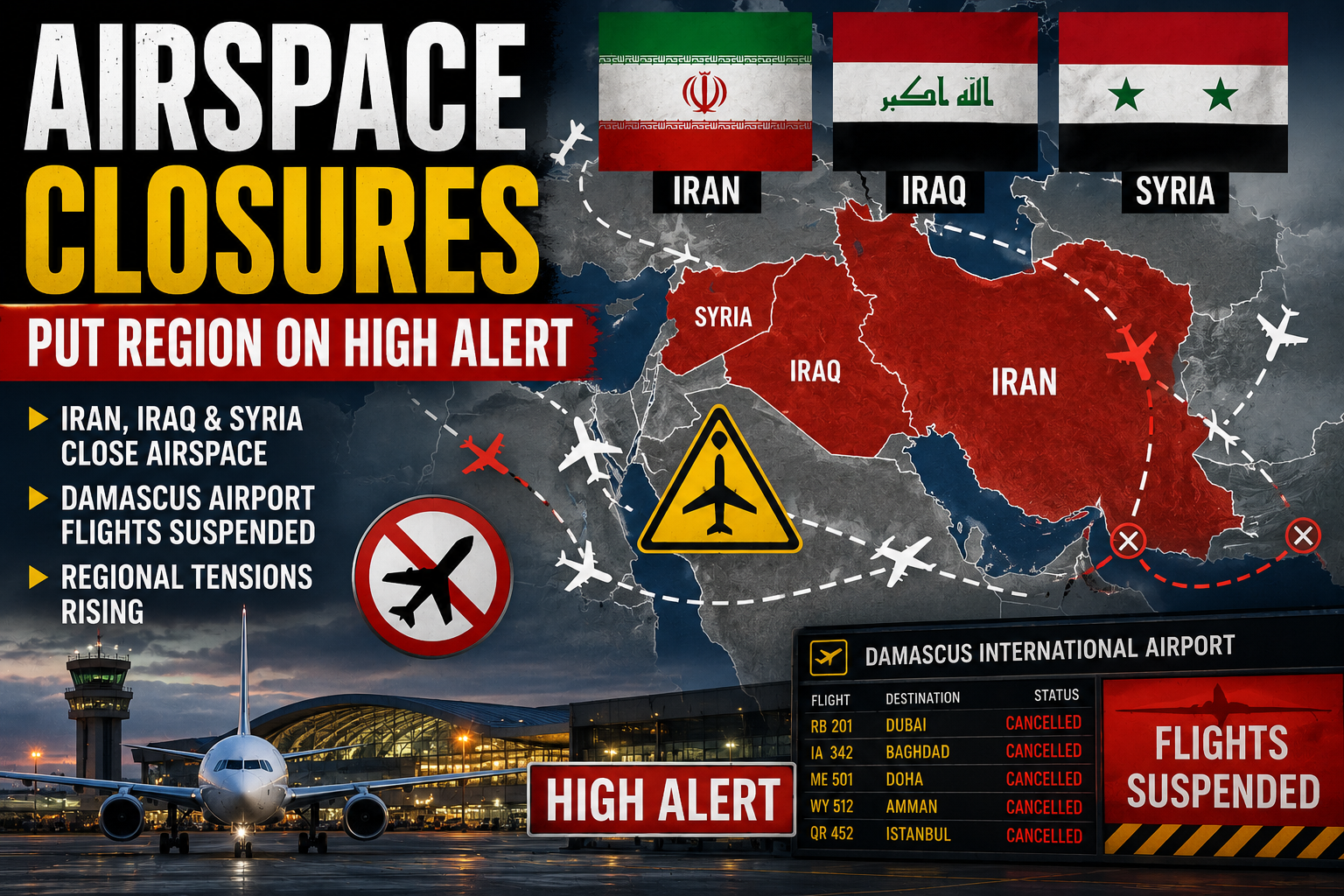
Airspace Closures across Iran, Iraq, and Syria have placed much of the Middle East on heightened alert after fresh military tensions between Iran and Israel triggered a wave of security measures and travel disruptions across the region.
Authorities in all three countries have imposed restrictions on civilian air traffic, while Syria has temporarily suspended flight operations at Damascus International Airport. The developments come amid growing concerns that the latest escalation between Iran and Israel could have wider regional consequences.
With security conditions changing rapidly, airlines, governments, and travelers are closely monitoring the situation as officials work to manage potential risks to civilian aviation.
✈️ Airspace Restrictions Expand Across Region
Iran was among the first countries to announce new restrictions, closing airspace in parts of its western region until further notice. Officials have not provided a timeline for reopening, saying the situation will be reviewed based on security assessments.
Iraq followed with its own decision to temporarily close airspace as a precautionary measure. Authorities said the move was aimed at ensuring the safety of civilian aircraft operating in and around the country.
Meanwhile, Syrian authorities announced restrictions affecting sections of the country’s southern airspace. Officials described the decision as a temporary security measure while regional developments continue to unfold.
The simultaneous actions taken by the three countries reflect growing concerns about aviation safety during a period of heightened military activity in the region.
🚨 Damascus Airport Suspends Flight Operations
One of the most significant developments came from Syria, where authorities temporarily halted operations at Damascus International Airport.
The suspension affects both arrivals and departures, disrupting travel plans for passengers and airlines using the airport as a regional gateway. Aviation officials have not yet announced when normal services will resume.
Passengers scheduled to travel through Damascus have been advised to stay in contact with their airlines and monitor official updates regarding flight schedules.
The temporary shutdown highlights the broader impact regional security tensions can have on transportation networks and civilian travel.
Airports and aviation authorities across the Middle East are also closely watching developments to determine whether additional measures may become necessary.
🇺🇸 US Embassy Advises Extra Precautions
The rising tensions have prompted security advisories from international diplomatic missions as well.
The United States Embassy in Jerusalem has reportedly instructed staff members and their families to remain vigilant and follow precautionary security measures.
According to reports, embassy personnel were advised to stay informed about local security conditions and be prepared for possible changes in the regional situation.
Such advisories are common during periods of increased uncertainty and are intended to reduce risks to diplomatic staff and their families.
The move underscores the level of concern among governments monitoring the latest developments between Iran and Israel.
⚡ Iran-Israel Tensions Continue to Escalate
The latest restrictions come after reports of military activity involving both Iran and Israel.
Iranian media reported explosions in several cities, including Tehran, Tabriz, and Isfahan. Reports also indicated that explosions were heard near Karaj, raising concerns about the scope of the latest developments.
Israeli officials later stated that military operations had targeted sites in western and central Iran. According to Israeli authorities, the strikes were carried out in response to actions attributed to Iran.
Although details remain limited, the exchange has increased fears that the conflict could expand further if tensions continue to rise.
International observers have repeatedly called for restraint, warning that additional escalation could affect regional stability and increase security risks across neighboring countries.
🌍 Airlines Adjust Routes Amid Uncertainty
Airspace restrictions often have an immediate impact on international travel, and airlines are already adjusting operations in response to the latest developments.
When countries close portions of their airspace, commercial carriers are frequently required to reroute flights, resulting in longer travel times and higher operating costs.
Some airlines may also delay or cancel services if security concerns persist or if alternative routes become difficult to manage.
Travel experts are advising passengers to regularly check flight schedules and remain flexible with travel arrangements as the situation evolves.
The aviation industry has faced similar challenges during previous periods of instability in the region, making safety the top priority for carriers and regulators alike.
📊 Regional Security Remains in Focus
As governments continue evaluating the security situation, the Middle East remains on high alert.
The closure of airspace in multiple countries, the suspension of airport operations, and increased security advisories all point to the seriousness of the current situation.
While authorities have emphasized that many of the measures are precautionary, uncertainty remains over how long the restrictions will stay in place and whether additional actions could follow.
For now, regional governments, airlines, and international observers are closely tracking developments as tensions between Iran and Israel continue to dominate security discussions across the Middle East.