
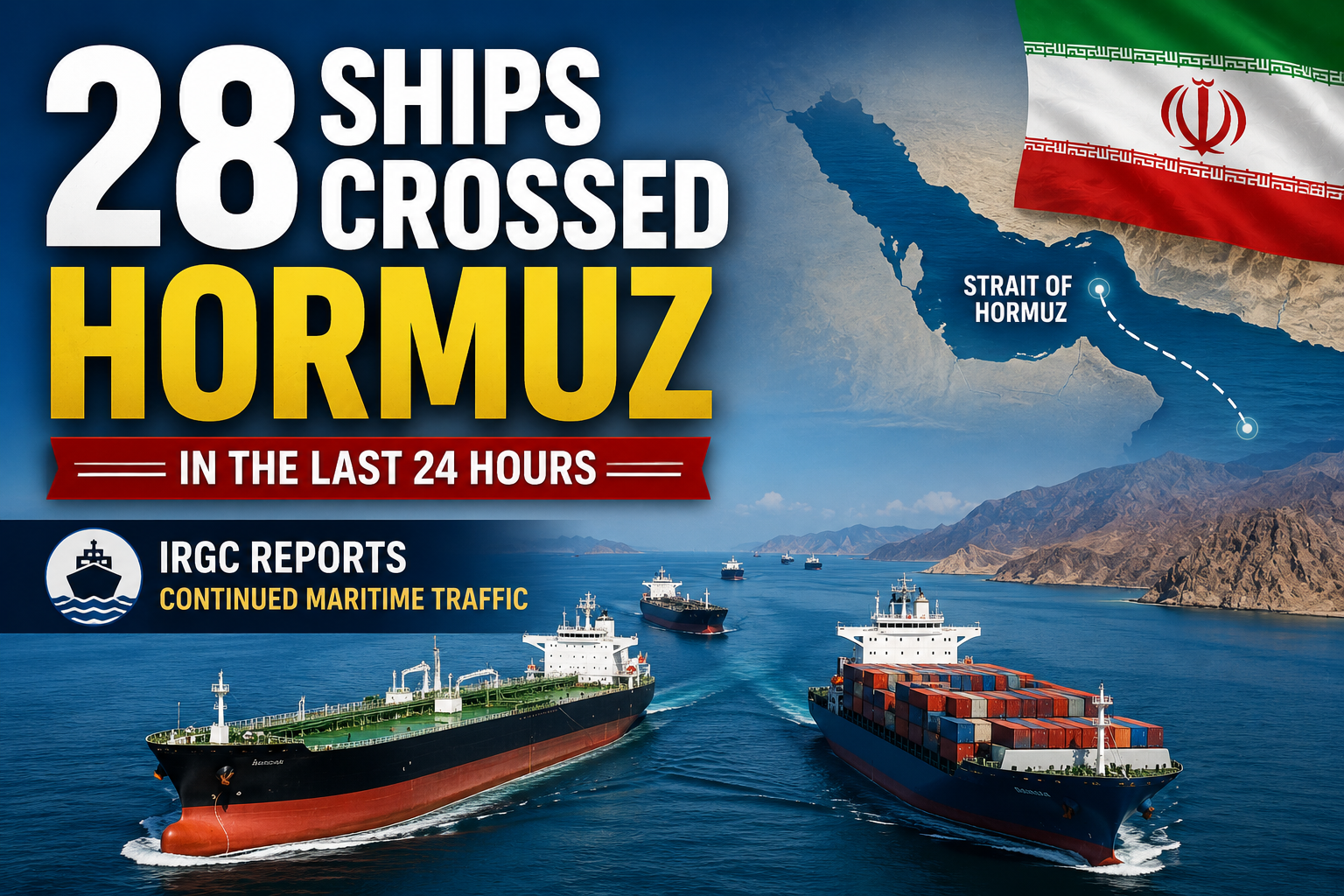
Hormuz shipping traffic remained active over the past 24 hours, according to Iran’s Islamic Revolutionary Guard Corps (IRGC), which claimed that 28 vessels successfully passed through the Strait of Hormuz under naval monitoring and security measures.
The statement comes amid continued international attention on maritime activity in the region, where the strategic waterway remains one of the world’s most important energy transit routes.
🚢 28 Vessels Reportedly Passed Through Strait
According to the IRGC Navy, 28 vessels crossed the Strait of Hormuz during the last 24 hours.
The reported traffic included oil tankers, container ships, and various commercial vessels operating in the region.
Iranian officials stated that maritime movement through the strategic waterway continued without major disruption.
⚓ IRGC Claims Security Oversight
In an official statement, the IRGC Navy said the vessels passed through the Strait under its security supervision and monitoring.
Officials emphasized that maritime security measures remain in place to ensure safe navigation through the route.
The statement also highlighted Iran’s ongoing efforts to maintain order and stability in one of the world’s busiest shipping corridors.
🌍 Strategic Importance of the Strait of Hormuz
The Strait of Hormuz is widely considered one of the most critical energy transit routes globally.
A significant portion of international oil exports passes through the waterway, making it essential for global energy markets and international trade.
Experts note that developments in the region are closely monitored because disruptions can quickly influence oil prices and shipping costs worldwide.
📈 Global Markets Watch Regional Developments
Analysts say maritime activity in the Gulf region continues to attract attention from governments, shipping companies, and energy traders.
The movement of commercial vessels through the Strait is often viewed as an important indicator of regional stability and trade conditions.
Market observers continue tracking developments as geopolitical tensions and diplomatic discussions evolve across the Middle East.
🛢️ Energy Supply Routes Remain Critical
Energy experts emphasize that uninterrupted shipping through the Strait of Hormuz remains vital for global oil supply chains.
The route serves as a key passage for crude oil and petroleum products transported from Gulf producers to international markets.
Maintaining secure maritime operations is considered important for both regional economies and global energy consumers.
🌐 Continued Focus on Maritime Security
Regional security and shipping safety remain major topics of discussion among international stakeholders.
Authorities and shipping operators continue monitoring conditions to ensure commercial traffic can move efficiently through strategic waterways.
The latest statement from Iran highlights the ongoing importance of maritime security and uninterrupted trade activity in the Gulf region.