
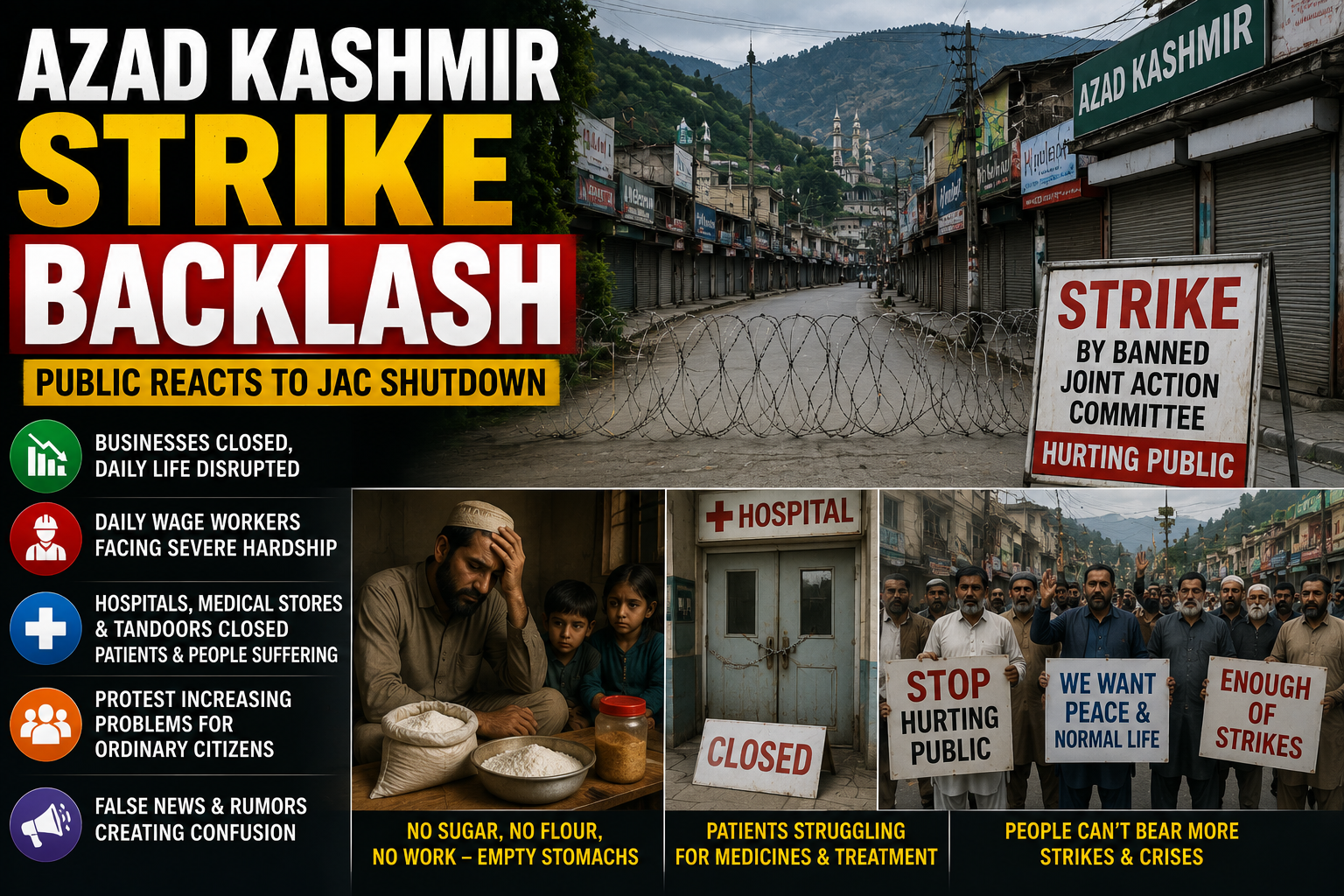
Azad Kashmir Strike has sparked strong reactions from residents, with many expressing frustration over disruptions caused by a shutdown call attributed to a banned Joint Action Committee.
The strike reportedly affected daily life across several areas, disrupting businesses, transportation, healthcare services, and other essential activities. Citizens have voiced concerns that the closure has created additional hardships for low-income families and daily wage workers already facing economic challenges.
The situation has generated debate among local residents, many of whom argue that prolonged strikes and shutdowns have a direct impact on ordinary people.
🚫 Strike Disrupts Daily Life Across Areas
Residents reported significant disruptions to routine activities as businesses and services remained closed during the strike.
Many markets, shops, and commercial centers were affected, limiting access to everyday necessities. Transportation services also experienced interruptions, creating difficulties for people traveling for work, education, or medical needs.
Citizens said the closure impacted normal economic activity and added to the challenges faced by families dependent on daily earnings.
Local observers noted that strikes often have the greatest effect on lower-income groups who rely on uninterrupted business activity for their livelihoods.
💼 Daily Wage Workers Among Hardest Hit
A major concern raised by residents relates to the impact on daily wage earners.
Many workers depend on daily income to meet household expenses, and any disruption in economic activity can immediately affect their financial situation.
Citizens interviewed during the shutdown expressed concerns about the difficulties faced by laborers, shop workers, transport operators, and small business owners.
Some residents stated that extended closures make it difficult for families to purchase basic necessities and manage routine expenses.
Economic analysts frequently point out that prolonged shutdowns can have a disproportionate effect on vulnerable segments of society.
🏥 Concerns Over Essential Services
Residents also highlighted concerns regarding access to essential services during the strike.
Reports indicated that some healthcare-related facilities, medical stores, and food outlets experienced disruptions, creating difficulties for people requiring urgent assistance.
Citizens emphasized that access to medicine, healthcare, and basic food supplies remains critical, particularly for vulnerable groups such as patients, elderly individuals, and children.
Community members urged authorities and stakeholders to ensure that essential services remain accessible during any future demonstrations or shutdowns.
Maintaining uninterrupted access to public services remains a key concern during periods of protest activity.
📢 Public Criticism of Protest Strategy
Many residents questioned whether the strike achieved its intended objectives.
According to local citizens, the shutdown increased public difficulties rather than reducing existing problems. Several residents argued that ordinary people should not bear the consequences of political or organizational disputes.
Public opinion expressed during the strike suggested growing frustration with disruptions that affect daily routines and economic activity.
Observers note that reactions to protest movements often depend on how significantly they impact the wider population.
As a result, public support can vary depending on the methods used and the consequences experienced by local communities.
⚠️ Calls for Accurate Information
Residents also expressed concerns about misinformation and rumors circulating during the situation.
Some citizens claimed that inaccurate reports and unverified information were being shared regarding developments on the ground.
Community leaders frequently emphasize the importance of relying on verified information during periods of uncertainty to avoid confusion and unnecessary concern.
Experts note that the rapid spread of rumors can complicate already sensitive situations and make it more difficult for authorities and communities to respond effectively.
Public awareness campaigns often encourage citizens to verify information through credible sources before sharing it.
📈 Residents Seek Stability and Relief
Many residents say their primary concern remains economic stability and access to essential services.
Citizens have called for solutions that address public concerns without causing widespread disruption to daily life. They argue that communities already facing economic pressures are less able to absorb the effects of prolonged strikes and shutdowns.
Analysts suggest that maintaining dialogue between stakeholders may help reduce tensions while minimizing the impact on ordinary citizens.
For now, public attention remains focused on restoring normal activity and ensuring that residents can access employment opportunities, healthcare services, and basic necessities without interruption.