
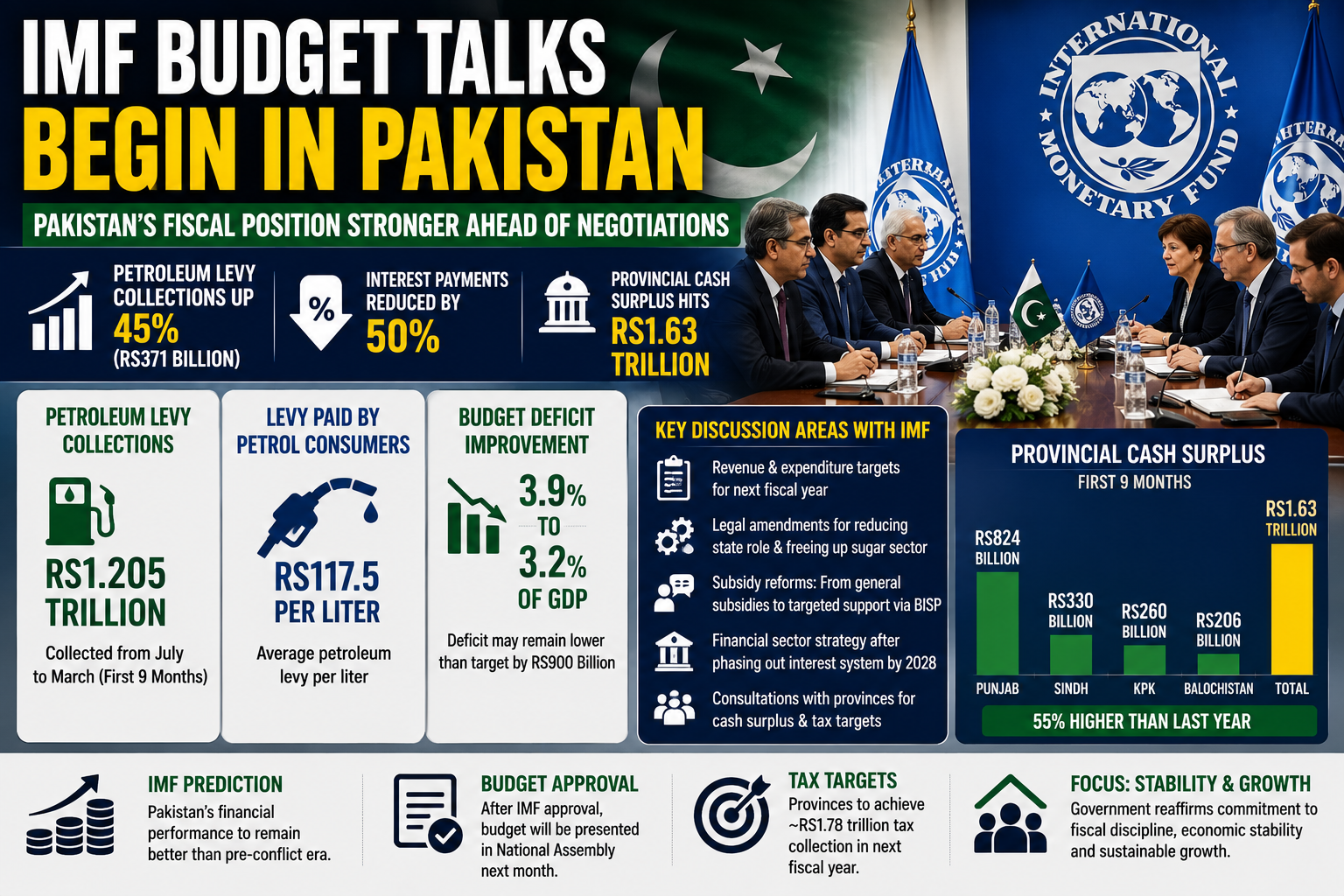
IMF budget talks are beginning today as Pakistan enters negotiations with a relatively stronger fiscal position following higher petroleum levy collections, reduced interest payments, and improved provincial cash surpluses. Government officials believe the country’s recent financial performance may strengthen its position during discussions with the International Monetary Fund regarding the upcoming federal budget and economic reform agenda.
According to officials, Pakistan’s fiscal indicators during the current financial year have shown notable improvement compared to earlier projections and even pre-conflict economic expectations highlighted by the IMF.
💰 Petroleum Levy Collections Rise Sharply
The federal government informed that petroleum levy collections increased significantly during the first nine months of the current fiscal year.
Officials stated that between July and March, the government collected nearly Rs1.205 trillion through petroleum levy charges. The amount is close to the total levy collection achieved during the entire previous fiscal year.
According to reports, petroleum levy revenues increased by approximately Rs371 billion, representing a 45 percent rise compared to last year’s performance.
⛽ Petrol Consumers Paying High Levy Rates
Officials stated that an average petrol consumer is currently paying around Rs117.5 per liter in petroleum levy charges.
The substantial increase in levy collections has become one of the government’s major revenue sources during the ongoing fiscal year. Analysts believe these revenues have played an important role in improving Pakistan’s budgetary position before IMF negotiations.
Economic experts, however, continue debating the broader impact of high fuel-related taxation on inflation, transportation costs, and consumer spending.
📉 Lower Interest Payments Improve Fiscal Position
According to reports, Pakistan’s fiscal outlook has also improved because of nearly 50 percent reduction in interest payments.
Officials said lower debt servicing costs, combined with stronger provincial cash surpluses, have helped reduce pressure on the federal budget deficit.
The IMF has reportedly indicated that Pakistan’s financial performance may remain stronger than earlier expectations despite regional and economic challenges.
🤝 IMF Budget Mission Begins Negotiations
The IMF budget mission is scheduled to begin formal negotiations today with Pakistani authorities.
Sources stated that the mission’s discussions will not remain limited to the federal budget alone. The IMF delegation is also expected to review reforms linked to reducing the state’s role in the public sector and proposed legal amendments related to the sugar industry.
Officials said discussions will focus on revenue targets, expenditure management, fiscal discipline, and broader structural reforms planned for the next financial year.
📊 Budget Deficit May Stay Lower Than Expected
Government officials indicated that the overall budget deficit could remain significantly lower than earlier estimates.
The previous budget had targeted a fiscal deficit of 3.9 percent of GDP, equal to more than Rs5 trillion. However, authorities now expect the deficit to remain around 3.2 percent of GDP, nearly Rs900 billion better than earlier projections.
Analysts believe the stronger fiscal position suggests there may have been greater room for public relief measures during the fiscal year despite increased taxation.
🏛️ Provinces Generate Record Cash Surplus
According to reports, all four provincial governments together generated approximately Rs1.63 trillion in cash surplus during the first nine months of the fiscal year.
The amount was nearly 55 percent higher than the previous year’s provincial surplus performance. Officials stated that Punjab alone contributed around Rs824 billion, representing nearly half of the total provincial surplus.
The IMF mission is expected to continue discussions with provincial governments to secure additional fiscal support and achieve future revenue targets.
⚡ Subsidy Reforms and Financial Strategy Under Review
Officials said IMF discussions will also include reforms related to electricity and gas subsidies.
Authorities are expected to brief the IMF on plans to replace general electricity subsidies with targeted support through the Benazir Income Support Programme (BISP).
The mission will also review Pakistan’s financial sector strategy following plans to phase out the interest-based banking system by 2028.
📈 Government Focused on Economic Stability
Government officials reiterated their commitment to maintaining economic stability, fiscal discipline, and sustainable growth.
Analysts believe the outcome of IMF negotiations will play a key role in shaping Pakistan’s upcoming federal budget, taxation measures, subsidy reforms, and broader economic strategy for the next fiscal year.
The federal budget is expected to be presented before the National Assembly next month after receiving IMF approval.