
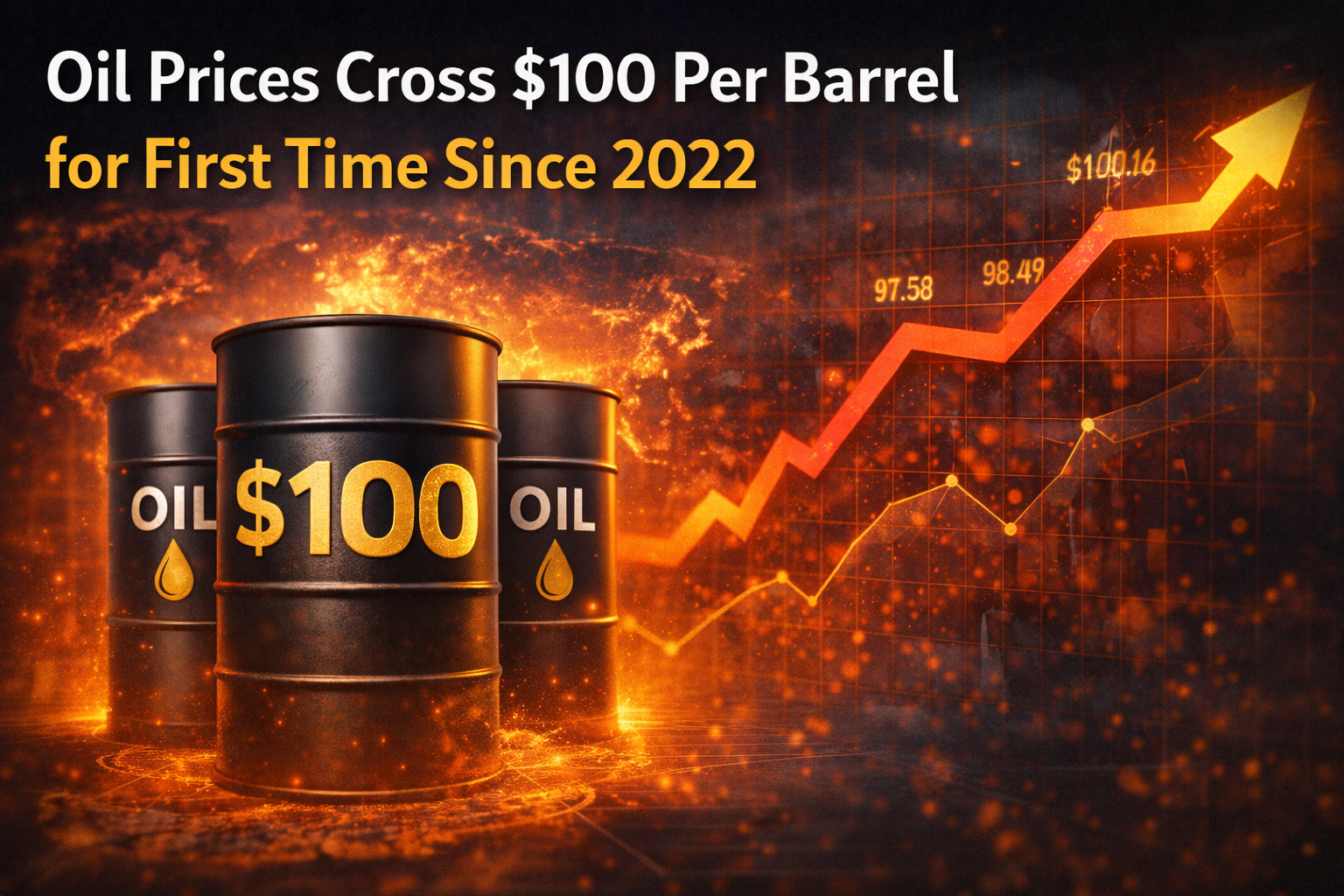
Oil Prices Cross $100 Per Barrel for First Time Since 2022 as escalating tensions in the Middle East, particularly the ongoing conflict involving Iran, the United States, and Israel, triggered a sharp surge in global crude oil markets.
Energy traders reacted strongly to the heightened geopolitical risk, pushing benchmark crude prices to their highest levels in more than two years amid concerns over possible disruptions to global oil supply routes.
Global Oil Benchmarks See Sharp Rise
International oil benchmarks experienced significant gains during the latest trading sessions. Brent crude, the global benchmark for oil prices, surged by approximately 24 percent, reaching nearly $114.74 per barrel.
Meanwhile, West Texas Intermediate (WTI), the primary US crude oil benchmark, climbed about 27 percent to around $115.11 per barrel.
The sudden price spike reflects investor concerns about prolonged instability in the Middle East, a region that plays a central role in global energy production and transportation.
Strait of Hormuz Disruption Raises Supply Concerns
One of the major factors driving the surge in oil prices is the continued disruption in the Strait of Hormuz, a critical maritime route through which roughly 20 percent of the world’s oil supply is transported.
Reports indicate that the waterway remains affected by security risks linked to the ongoing conflict, resulting in delays and congestion among oil tankers waiting to move through the passage.
Shipping data suggests that numerous vessels have been forced to anchor in nearby Gulf waters while awaiting safer navigation conditions.
Analysts Warn Prices Could Climb Higher
Energy analysts warn that if the conflict continues or escalates further, oil prices could rise even more dramatically in the coming weeks.
Some market experts estimate that crude oil could potentially reach $150 per barrel if supply disruptions intensify or if major production facilities become directly affected by the conflict.
Such a price surge would represent one of the most significant increases in global oil markets since the energy crisis triggered by geopolitical tensions in recent years.
Impact on Global Inflation and Economy
Rising oil prices often translate into higher transportation and manufacturing costs worldwide, increasing the risk of broader inflation.
Economists warn that sustained increases in energy costs could affect global economic stability by raising fuel prices, increasing shipping expenses, and pushing up the cost of goods and services.
Countries heavily dependent on imported energy resources may face the most immediate financial pressure as fuel prices climb.
Governments Monitoring Energy Markets Closely
Governments and financial institutions across the world are closely monitoring developments in energy markets as geopolitical tensions continue to influence commodity prices.
Policy experts stress that diplomatic solutions aimed at reducing regional conflict could help stabilize oil markets and prevent further economic disruption.
Until then, analysts expect continued volatility in global energy prices as markets react to ongoing political and military developments.