
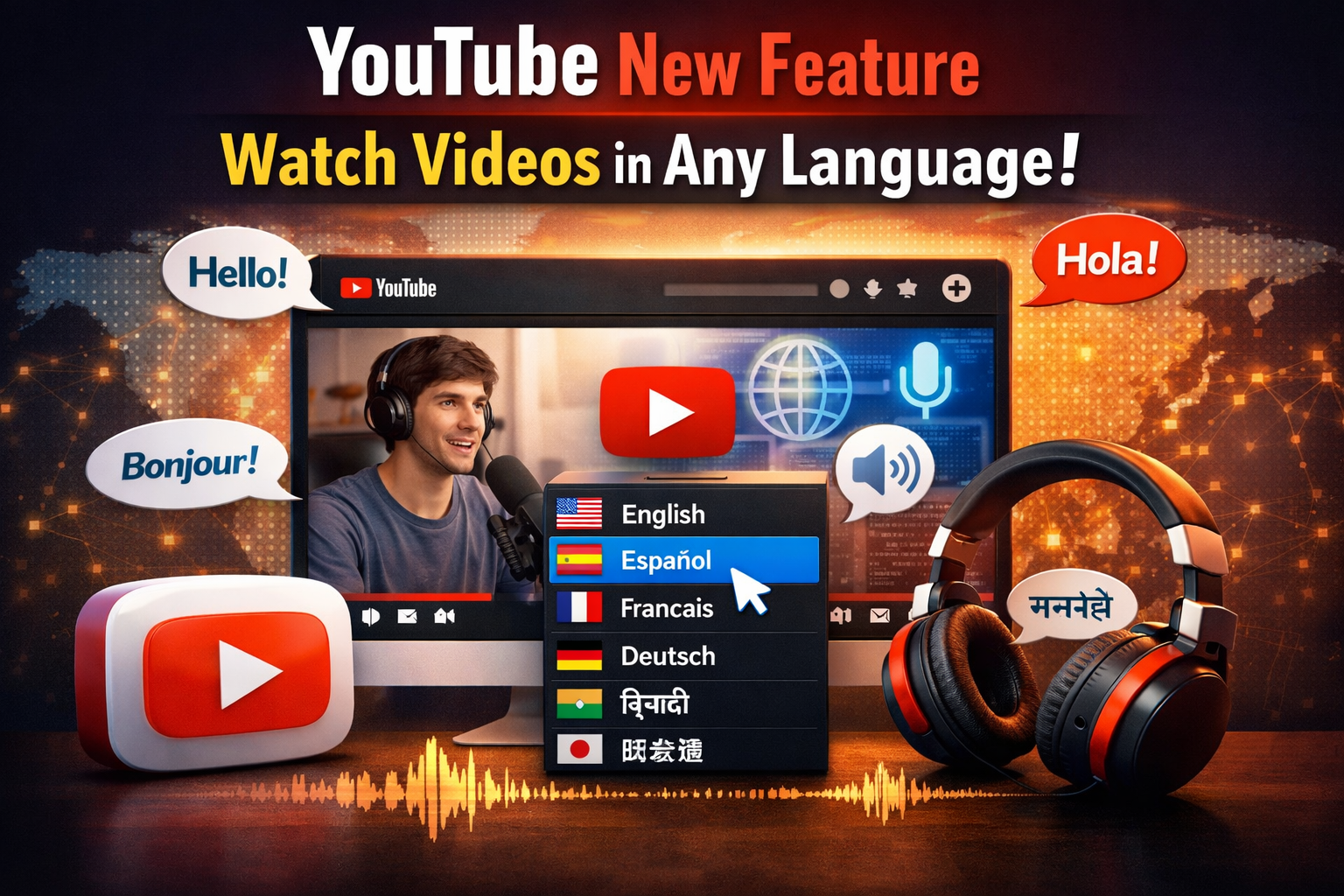
YouTube New Feature Lets Users Watch Videos in Any Language as the video-sharing platform introduces a major upgrade designed to make global content accessible in viewers’ native languages. The new capability allows users to watch and listen to videos translated and dubbed automatically, removing one of the biggest barriers in international content consumption — language.
The feature has been enhanced using advanced artificial intelligence, enabling more accurate translations and natural-sounding voice dubbing. With this rollout, YouTube aims to make cross-border video engagement easier for millions of users worldwide.
AI Auto-Dubbing Technology Expanded
According to international media reports, YouTube has significantly upgraded its AI-powered auto-dubbing system. The latest update expands language support to 27 different languages, allowing users from diverse regions to access global video content without needing subtitles.
This large-scale expansion reflects YouTube’s ongoing investment in AI tools that improve accessibility and viewing convenience. By automating dubbing across multiple languages, the platform is positioning itself to serve a more linguistically diverse audience.
How Language Selection Works
Under the new system, users can select their preferred language directly from video settings. If a dubbed version is available, the platform automatically plays the video in the chosen language.
This seamless integration ensures that viewers do not need to search for translated uploads or rely solely on captions. Instead, they can experience videos in audio formats tailored to their linguistic comfort.
Industry observers describe this development as a major shift in global viewing behavior, where language limitations will no longer restrict content discovery.
“Expressive Speech” AI Enhances Voice Quality
One of the most notable elements of the upgrade is a new AI technology called “Expressive Speech.” This system has been engineered to preserve the original creator’s vocal tone, emotional delivery, and speaking style during dubbing.
Traditional dubbing has often been criticized for producing flat, robotic voiceovers that reduce content authenticity. Expressive Speech addresses this issue by generating more lifelike audio that reflects pauses, emphasis, and emotional cues present in the original recording.
YouTube says the goal is to eliminate mechanical-sounding translations and maintain the storytelling impact of videos across languages.
Languages Currently Supported
At present, Expressive Speech is available for translated videos in several major global languages, including:
-
English
-
French
-
German
-
Hindi
-
Indonesian
-
Italian
-
Portuguese
-
Spanish
The company has indicated that more languages will be added in upcoming phases as AI voice modeling continues to improve.
Benefits for Global Creators
The multilingual dubbing expansion is expected to create new growth opportunities for content creators. Videos produced in one language can now reach audiences across multiple regions without requiring separate recordings or manual translation.
Creators may benefit through:
-
Increased international viewership
-
Higher watch time metrics
-
Subscriber growth from new regions
-
Expanded monetization potential
Educational, documentary, and explainer content creators are particularly likely to gain from multilingual accessibility.
A Shift in Global Content Consumption
For viewers, the feature introduces a new way to experience global media. Users can now explore tutorials, entertainment, and informational videos from different countries in their native languages.
Analysts believe this could accelerate cross-cultural knowledge exchange and broaden the reach of regional creators who previously struggled to connect with international audiences.
By reducing language friction, YouTube is reinforcing its position as a truly global video platform.
Future Expansion Plans
While the feature is already active across multiple languages, its rollout remains gradual. Availability may vary depending on region, creator participation, and AI readiness for specific languages.
YouTube has signaled continued investment in translation accuracy and voice realism, suggesting that multilingual dubbing could soon become a standard feature across most videos on the platform.