
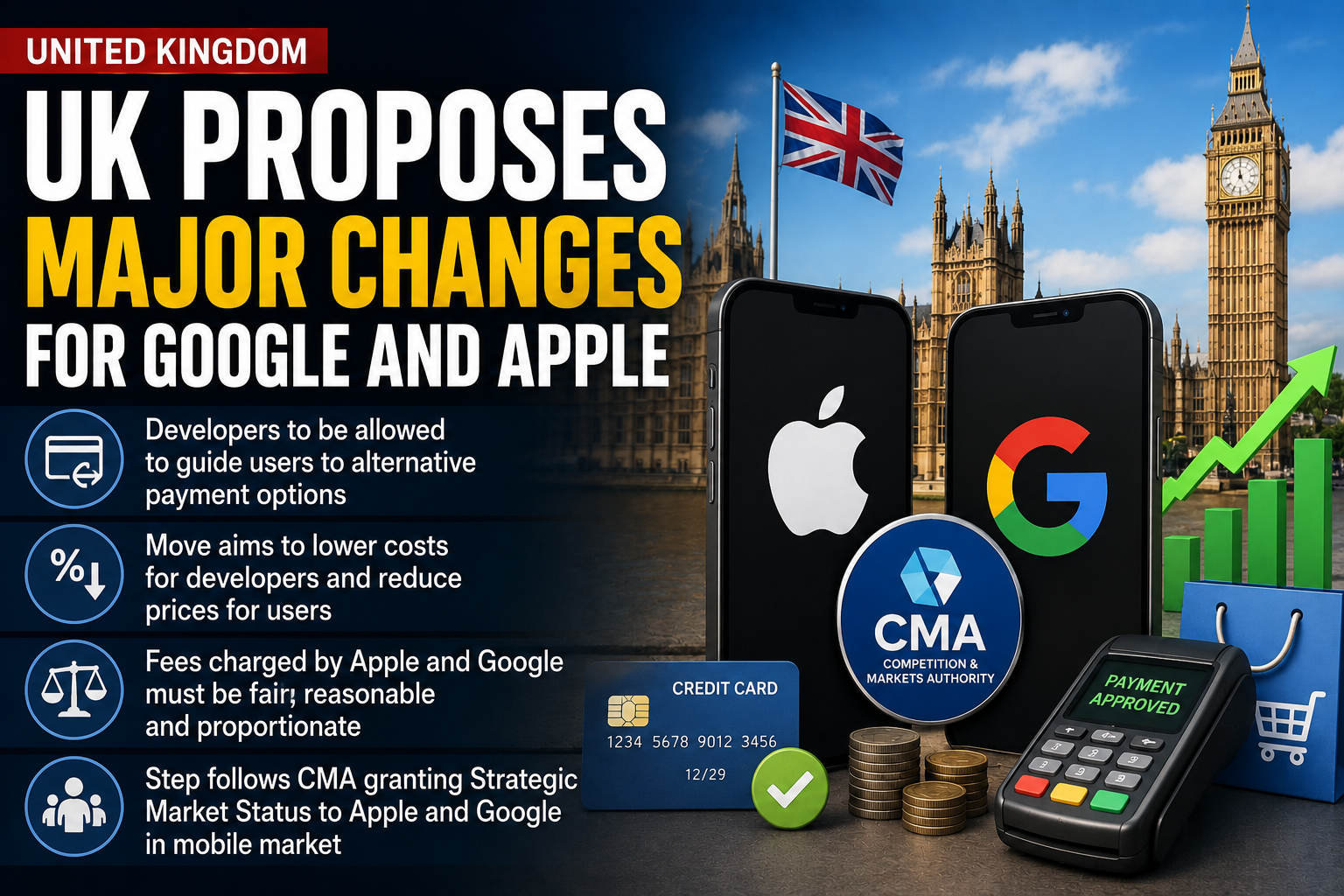
UK App Payment Rules Proposal has emerged as a significant regulatory move after Britain’s Competition and Markets Authority (CMA) proposed major changes to the app payment systems used by Apple and Google. The proposed reforms are designed to reduce costs for app developers, encourage greater competition, and ultimately lower prices for consumers.
The recommendations come as regulators continue increasing scrutiny of the world’s largest technology companies. According to the CMA, giving developers more freedom over payment options could improve competition in the digital marketplace while creating a fairer environment for businesses and consumers alike.
If approved, the proposed rules could reshape how app stores operate in the United Kingdom and influence similar regulatory discussions in other countries.
📱 CMA Proposes Major Changes
The Competition and Markets Authority has proposed significant reforms to the payment systems used by Apple and Google within their app marketplaces.
The regulator believes developers should have greater flexibility when offering payment choices to customers rather than relying solely on the payment systems provided by the platforms.
According to the proposal, increasing competition could reduce operating costs for developers and improve value for consumers.
The recommendations are currently part of the CMA’s wider efforts to strengthen competition in Britain’s growing digital economy.
💳 Developers Could Offer Alternative Payments
One of the most important recommendations would allow app developers to direct users toward alternative payment methods.
At present, Apple generally requires developers to use its own payment system, while Google allows limited alternatives under specific restrictions.
Developers have long argued that mandatory platform payment systems increase costs because commissions are charged on digital purchases.
The proposed reforms aim to give businesses more freedom while encouraging innovation in digital payment services.
💰 Lower Costs for Developers and Consumers
The CMA believes increased competition could reduce the fees currently paid by developers.
According to the regulator, any savings resulting from lower platform fees should either be passed on to consumers through reduced prices or invested by developers to improve their applications.
Officials say greater pricing flexibility could benefit both businesses and users by encouraging better services and more competitive app pricing.
Technology analysts believe the proposal may particularly help smaller developers competing against larger companies.
⚖️ Fair Fees Remain a Priority
Another key recommendation focuses on platform commissions charged by Apple and Google.
The CMA stated that any fees collected by the companies should remain fair, transparent, and proportionate to the services being provided.
Regulators believe maintaining reasonable commission structures would help create a healthier digital marketplace while supporting continued investment in app development.
Industry observers note that commission rates have remained one of the most debated issues in the global app economy.
🌍 Strategic Market Status Behind the Proposal
The latest recommendations follow the CMA’s earlier decision to designate Apple and Google with Strategic Market Status within the UK mobile ecosystem.
That designation provides the regulator with stronger powers to introduce measures aimed at improving competition in digital markets.
Officials believe these powers are necessary because of the significant influence both companies have over mobile applications, digital payments, and software distribution.
The proposals represent one of the first major regulatory initiatives under the strengthened competition framework.
🚀 What Happens Next?
The proposals will undergo further consultation before any final regulatory decisions are made.
If implemented, the new framework could significantly change how mobile app marketplaces operate in the United Kingdom.
Technology companies, developers, and consumer groups are expected to participate in discussions before the rules become final.
Analysts also believe regulators in Europe, North America, and other regions will closely monitor the UK’s approach, as similar competition concerns have emerged worldwide.
The outcome of the consultation could influence future digital market regulations well beyond the United Kingdom.