
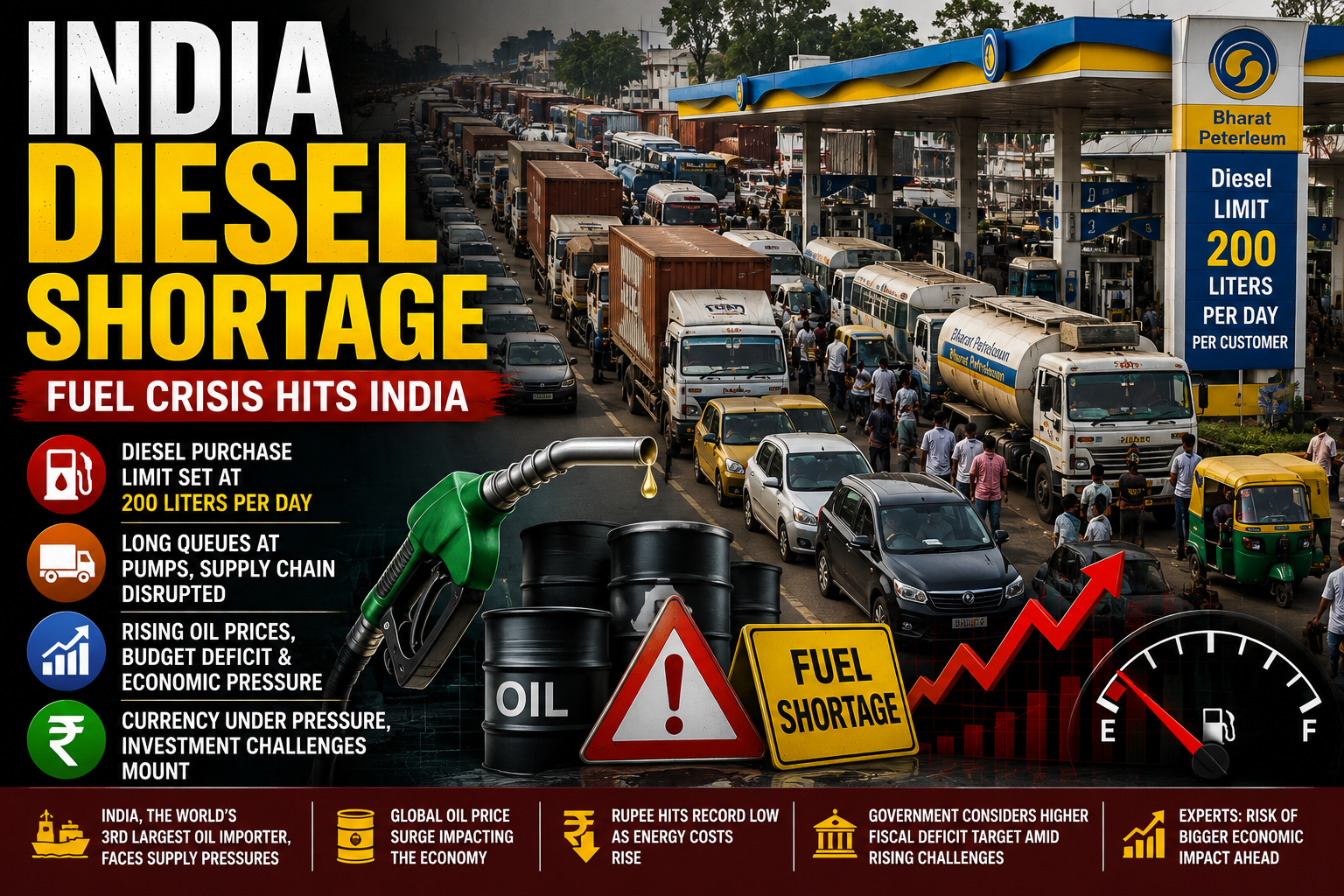
India Diesel Shortage has emerged as a major economic concern after authorities reportedly introduced restrictions on diesel purchases amid supply pressures and rising energy costs.
According to reports, diesel availability has come under strain in several parts of the country, prompting measures aimed at managing demand and maintaining fuel supplies. The development has led to long queues at fuel stations and increased concerns among businesses that rely heavily on diesel for transportation and logistics operations.
The situation comes at a time when global energy markets continue to face uncertainty, placing additional pressure on major fuel-importing economies.
⛽ Diesel Purchase Limits Introduced
One of the most significant measures announced involves restrictions on diesel purchases.
Reports indicate that authorities have set a daily purchase limit of 200 liters per customer in an effort to manage available supplies and prevent excessive buying.
The restrictions have reportedly affected transportation operators, logistics companies, and commercial vehicle owners who depend on diesel for daily operations.
Industry observers note that diesel plays a crucial role in economic activity because it is widely used in freight transportation, agriculture, construction, and backup power generation.
The introduction of purchase limits highlights concerns about balancing demand with available supply.
🚚 Supply Chain and Transport Sector Under Pressure
The diesel shortage has reportedly created challenges for transportation networks in several areas.
Long queues of trucks, container vehicles, and heavy transport units have been reported as operators attempt to secure fuel supplies. Logistics firms are closely monitoring the situation because disruptions in fuel availability can affect delivery schedules and transportation costs.
Diesel accounts for a significant portion of fuel consumption across the country and remains essential for moving goods between ports, industrial centers, and commercial markets.
Businesses involved in manufacturing, trade, and distribution are particularly sensitive to fuel supply disruptions because transportation costs directly influence operating expenses.
🌍 Rising Global Energy Costs Add Pressure
Energy market conditions are also contributing to the challenges.
India remains one of the world’s largest importers of crude oil and relies heavily on international energy supplies to meet domestic demand.
Market analysts note that fluctuations in global oil prices can have a significant impact on fuel costs and supply management strategies.
The country imports large quantities of crude oil, liquefied petroleum gas (LPG), and other energy products, making it vulnerable to disruptions in international supply chains.
As global energy prices fluctuate, governments often face difficult decisions regarding fuel pricing, subsidies, and supply management.
📊 Budget Deficit Concerns Grow
Beyond fuel supply issues, reports suggest policymakers are also reviewing fiscal projections for the current financial year.
According to media reports, authorities are considering the possibility that the budget deficit could exceed earlier targets due to rising expenditures and economic pressures.
A larger deficit could create additional challenges for policymakers seeking to balance economic growth with fiscal discipline.
Economists generally view budget performance as an important indicator of a government’s ability to manage spending, revenue generation, and economic stability.
The latest discussions have increased attention on broader economic conditions and future policy decisions.
💱 Currency and Investment Challenges
The energy situation has also drawn attention to financial market conditions.
Higher energy import costs can place pressure on national currencies because countries must spend more foreign exchange to purchase fuel from international markets.
Reports indicate that policymakers have recently introduced measures designed to attract foreign investment and strengthen economic confidence.
Such initiatives often include regulatory adjustments, incentives for investors, and efforts to improve capital inflows.
Financial analysts believe investment trends will remain an important factor in determining economic resilience during periods of global uncertainty.
📈 Experts Monitor Economic Impact
Economic experts continue to assess the potential consequences of fuel supply pressures and rising energy costs.
Many analysts believe policymakers are attempting to prevent short-term fuel challenges from evolving into broader economic difficulties. At the same time, authorities face the challenge of supporting growth while managing inflationary pressures and fiscal constraints.
The coming months will likely be important in determining how effectively supply concerns are addressed and whether global energy market conditions stabilize.
For now, diesel purchase limits and supply management measures remain at the center of attention as businesses, consumers, and policymakers monitor developments closely.