
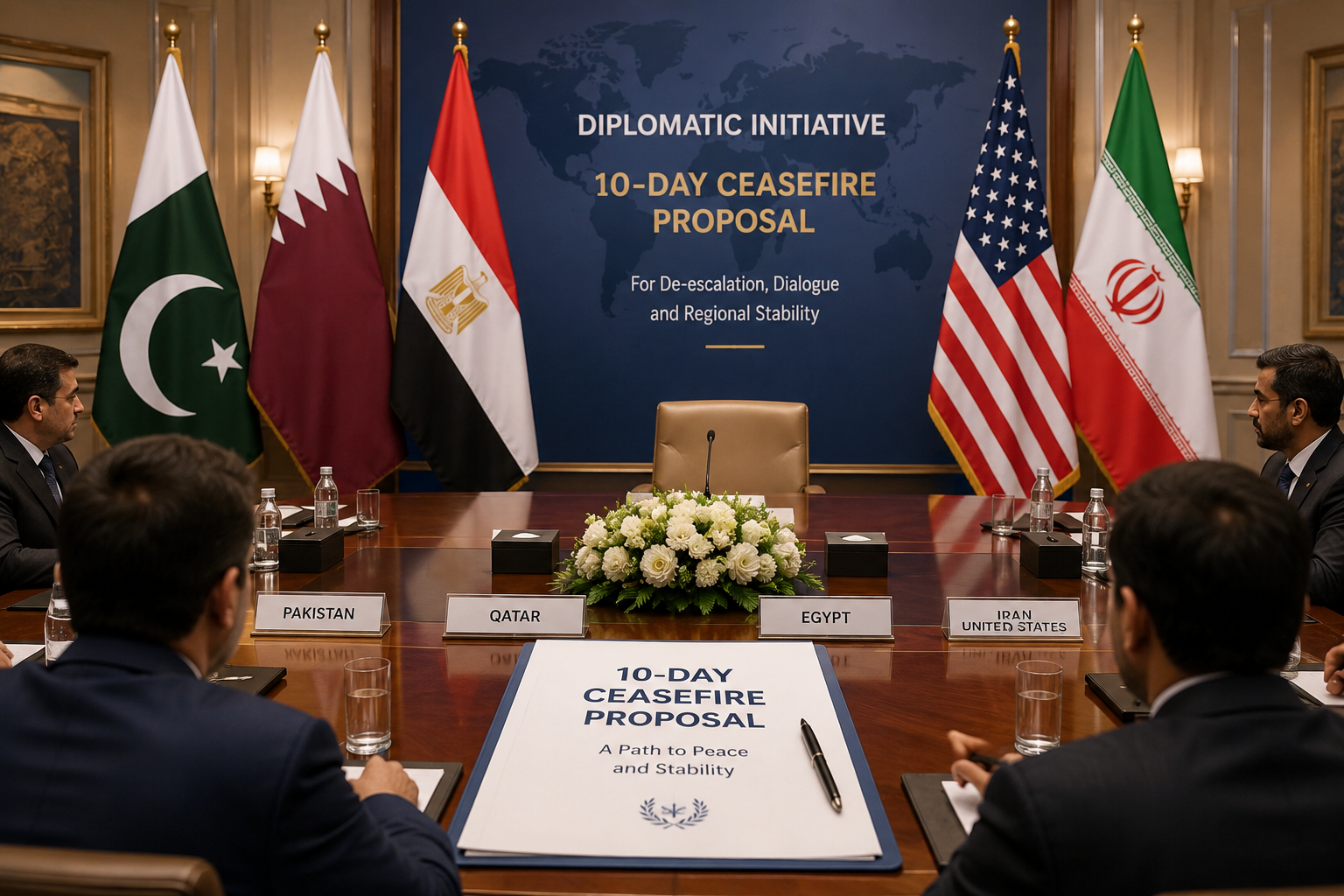
US Iran Ceasefire efforts have entered a significant diplomatic phase after Pakistan, Qatar, Egypt and several other regional mediators reportedly proposed a 10-day ceasefire between the United States and Iran. According to an Axios report, the proposal aims to reduce military tensions, restore stability in the region and create an opportunity for diplomatic negotiations. However, neither Washington nor Tehran has formally accepted the proposal so far.
The reported initiative comes as military exchanges continue across the Middle East, raising international concern over the possibility of a wider regional conflict. Diplomats believe that even a temporary pause in hostilities could create room for negotiations and help prevent further escalation.
🤝 US Iran Ceasefire Proposal Includes 10-Day Truce
According to Axios, regional mediators have presented a proposal calling for a 10-day ceasefire between the United States and Iran. The primary objective is to suspend military operations temporarily and encourage both sides to return to diplomatic discussions.
The proposal reportedly seeks to reduce tensions, improve regional stability and create favorable conditions for broader negotiations. Sources familiar with the mediation effort say neither side has yet agreed to the plan, although diplomatic contacts remain active.
🌍 Pakistan, Qatar and Egypt Lead Diplomatic Initiative
Pakistan, Qatar and Egypt are reportedly among the key countries participating in the mediation effort. According to regional sources cited in the report, these countries believe a temporary 10-day ceasefire could provide enough time for confidence-building measures and renewed dialogue.
The mediators are attempting to prevent further military escalation while encouraging both governments to pursue diplomatic solutions instead of expanding the conflict. Other regional partners are also said to be supporting the initiative.
⚖️ Trump Weighs Two Strategic Options
According to Axios, US President Donald Trump is currently considering two major options regarding the conflict.
One option is to support the proposed 10-day ceasefire, allowing maritime traffic through the Strait of Hormuz to recover while diplomatic negotiations continue.
The second option reportedly involves expanding military operations alongside Israel to increase pressure on Iran before considering any political settlement.
The report states that no final decision has been announced, and US officials believe the coming days will play a crucial role in determining Washington’s next course of action.
🚢 Strait of Hormuz Remains Central to the Proposal
The proposed ceasefire is closely linked to the security of the Strait of Hormuz, one of the world’s most important energy shipping routes.
According to the report, despite several days of military operations, the United States and Israel have not succeeded in eliminating Iran’s influence over the strategic waterway. Restoring safe commercial navigation remains one of the reported objectives behind the proposed 10-day truce.
⛽ Rising Fuel Prices Increase Political Pressure
The report also says rising fuel prices in the United States are adding domestic political pressure on the US administration.
Higher energy costs have increased public concern over the economic impact of a prolonged conflict. Analysts believe continued instability around the Strait of Hormuz could further affect global oil markets if diplomatic efforts fail.
🚨 Military Developments Complicate Negotiations
According to regional sources quoted by Axios, ceasefire efforts had reportedly been making progress before an alleged Iranian missile attack in Jordan reportedly killed two American soldiers.
Following that incident, Washington reportedly adopted a tougher position. A senior US official confirmed that diplomatic contacts remain ongoing, but military operations may continue if considered necessary by the administration.
🌐 No Agreement Yet on 10-Day Ceasefire
Despite ongoing diplomatic engagement, the proposed 10-day ceasefire has not been accepted by either the United States or Iran.
According to the report, both countries are believed to be strengthening their military positions before making any decision regarding a temporary truce. Regional mediators, however, continue working toward a broader diplomatic settlement aimed at reducing tensions and reopening negotiations.
Observers believe the coming days could determine whether diplomacy succeeds or whether the conflict moves toward another phase of military escalation.