
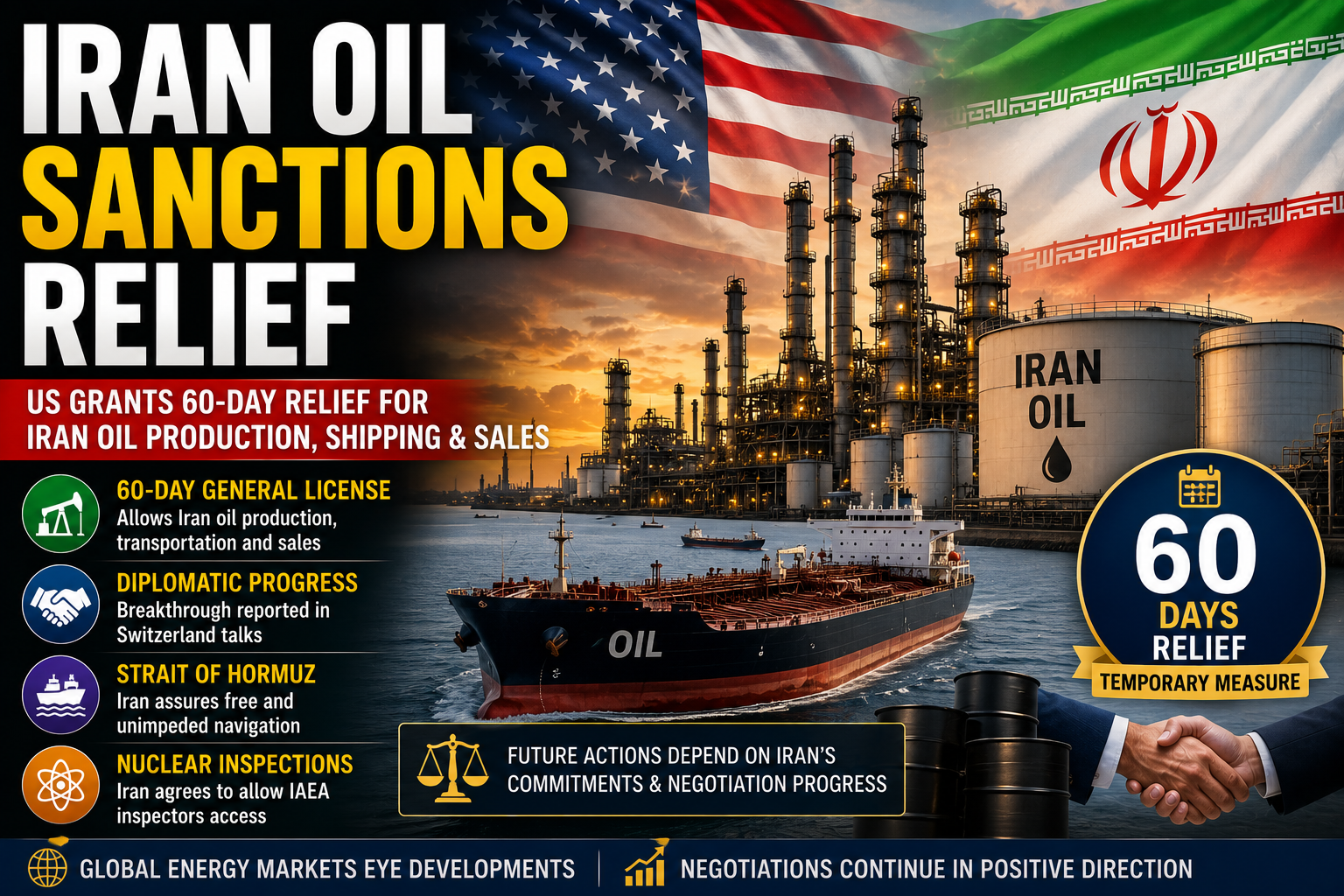
Iran Oil Sanctions Relief has emerged as a major development in ongoing diplomatic efforts between Washington and Tehran after the United States announced a temporary easing of restrictions on Iran’s oil sector.
The decision follows recent negotiations in Switzerland, where both countries reportedly discussed a framework aimed at reducing tensions and advancing broader diplomatic engagement. According to statements attributed to the US administration, Iran has provided assurances regarding maritime navigation and international nuclear inspections, paving the way for a temporary sanctions exemption.
The move is being closely watched by global energy markets, policymakers, and international observers due to its potential impact on oil supplies and regional stability.
🛢️ US Announces Temporary Oil Relief
The United States has issued a temporary 60-day general license allowing certain activities related to Iranian oil production, transportation, and sales.
According to reports, the authorization was granted following progress achieved during diplomatic discussions between American and Iranian representatives.
Officials described the measure as temporary and emphasized that future decisions would depend on continued cooperation and developments in ongoing negotiations.
The announcement represents one of the most significant recent steps aimed at supporting diplomatic engagement between the two countries.
Analysts note that even temporary sanctions relief can influence global energy expectations and market sentiment.
🤝 Progress Reported During Switzerland Talks
Recent negotiations in Switzerland reportedly played a key role in the latest development.
According to statements from the US administration, discussions have advanced in a constructive direction, leading to greater confidence regarding potential areas of cooperation.
Reports indicate that both sides have continued working on a broader framework intended to address key security and economic concerns.
Diplomatic observers describe the talks as an important opportunity to reduce tensions and encourage dialogue after years of strained relations.
While challenges remain, officials from both sides appear committed to maintaining communication channels.
🚢 Focus on Strait of Hormuz Navigation
One of the issues reportedly discussed during negotiations involves maritime traffic through the Strait of Hormuz.
According to reports, Iran provided assurances regarding the continuation of free and uninterrupted navigation through the strategically important waterway.
The Strait of Hormuz serves as one of the world’s most critical energy transportation corridors, carrying a significant share of global oil exports.
Any commitment related to navigation in the area is closely monitored by governments, shipping companies, and energy markets.
Analysts believe stability in the waterway remains essential for maintaining confidence in international trade and energy supplies.
☢️ Nuclear Inspection Cooperation Discussed
Another key issue reportedly addressed during negotiations concerns cooperation with the International Atomic Energy Agency.
According to reports, Iran expressed willingness to allow international inspectors access for monitoring activities under existing frameworks.
International monitoring mechanisms remain an important aspect of diplomatic efforts involving Iran and the global community.
Observers note that transparency measures often play a significant role in building confidence during complex international negotiations.
Officials have indicated that continued cooperation in this area could influence future diplomatic and economic decisions.
📈 Global Energy Markets Watching Closely
The announcement has attracted attention from global energy markets due to Iran’s position as a major oil-producing nation.
Market participants are assessing how the temporary authorization could affect oil supply expectations and broader market conditions.
Although the relief remains limited in duration, analysts say it signals a willingness among negotiators to support diplomatic progress through practical measures.
Energy traders continue monitoring developments for indications regarding future production levels and export activity.
Any long-term change in sanctions policy could have wider implications for international energy flows and pricing.
🌍 Future Steps Depend on Continued Progress
US officials have emphasized that the current relief is temporary and linked to ongoing diplomatic efforts.
Future decisions will depend on implementation of commitments, continued negotiations, and broader progress between the two countries.
The administration stated that the objective is to support the framework emerging from discussions while providing an opportunity for further confidence-building measures.
Political observers believe the coming weeks will be important in determining whether negotiations can translate into more permanent arrangements.
For now, the temporary authorization represents a significant diplomatic signal and highlights continuing efforts to manage regional tensions through dialogue rather than confrontation.