
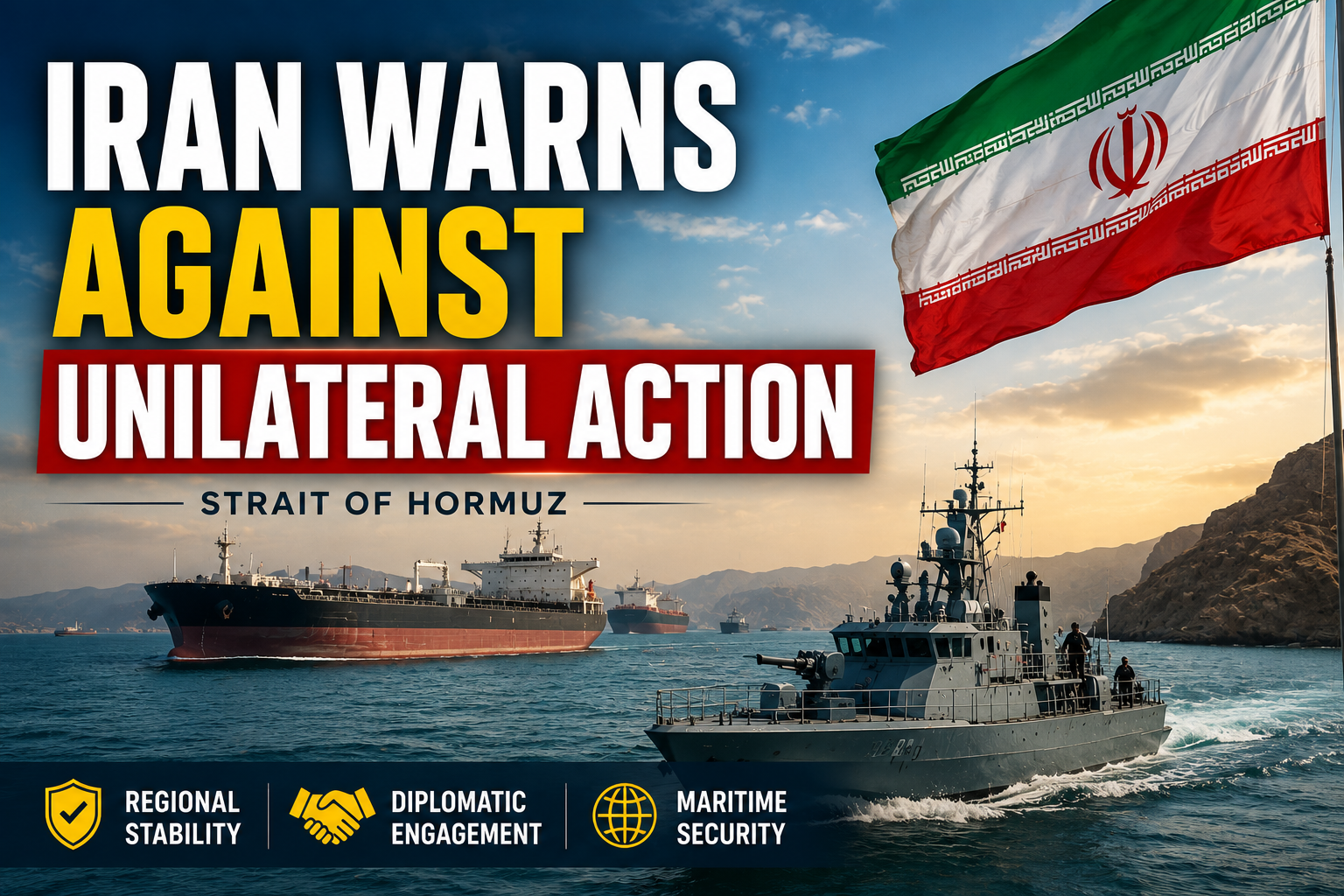
Iran Strait of Hormuz Warning has drawn international attention after Iranian Foreign Minister Abbas Araghchi cautioned that any unilateral action could further destabilize the region and increase tensions across the Middle East.
Speaking during an official visit to Iraq, Araghchi emphasized the importance of dialogue, regional cooperation, and avoiding steps that could escalate an already fragile security situation. His remarks came during a joint press conference with Iraqi Foreign Minister Fuad Hussein, where both leaders discussed recent diplomatic developments, maritime security, and the future of regional stability.
The meeting follows recent diplomatic engagement between Iran and the United States, making Araghchi’s visit to Baghdad particularly significant.
🌍 Iran and Iraq Hold High-Level Talks
Iranian Foreign Minister Abbas Araghchi met with Iraqi Foreign Minister Fuad Hussein during an official visit to Baghdad to discuss regional security and bilateral cooperation.
The Iraqi foreign minister said the discussions included recent diplomatic understandings between Tehran and Washington as well as the evolving security environment in the Gulf region.
Both leaders reaffirmed their commitment to maintaining close cooperation and strengthening strategic relations between their neighboring countries.
Officials described the meeting as an important opportunity to exchange views on regional developments and promote continued diplomatic engagement.
🚢 Strait of Hormuz Remains a Key Focus
A major part of the discussions centered on the Strait of Hormuz, one of the world’s most strategically important maritime routes.
According to Iraqi officials, disruptions in the waterway have already affected Iraq’s oil exports and regional trade.
Araghchi stated that conditions in the Strait of Hormuz are expected to return to normal once existing obstacles are resolved.
He also stressed that maritime stability is essential for regional security and the uninterrupted flow of global energy supplies.
International markets continue monitoring developments in the Gulf due to the waterway’s importance for global oil transportation.
⚠️ Iran Warns Against Unilateral Decisions
During the joint press conference, Araghchi warned that unilateral actions by any party could further worsen the regional situation.
He emphasized that maintaining peace requires dialogue, coordination, and respect for international commitments rather than unilateral measures.
According to the Iranian foreign minister, escalating tensions would have consequences extending beyond the Gulf region and could affect international trade, energy markets, and regional stability.
Diplomatic observers believe such statements reflect continued efforts to encourage political solutions instead of military escalation.
🤝 Diplomatic Engagement Continues
The Iranian foreign minister also briefed Iraqi officials on the latest diplomatic progress involving recent discussions with the United States.
He said details of the recently signed memorandum of understanding were shared during meetings with Iraqi leadership.
Araghchi thanked Iraq for its continued cooperation and support while expressing Iran’s commitment to expanding strategic relations with Baghdad.
Officials from both countries agreed that regional dialogue remains essential for resolving security challenges peacefully.
Analysts note that Iraq continues to play an important diplomatic role due to its close relations with multiple regional stakeholders.
🇮🇶 Strategic Partnership Between Iran and Iraq
Araghchi congratulated Iraq’s new government and reaffirmed Tehran’s commitment to strengthening long-term cooperation.
He stated that Iran values its strategic partnership with Iraq and intends to continue working together in areas including security, trade, and regional development.
The foreign minister said close coordination between neighboring countries contributes to regional stability and economic cooperation.
Government officials from both sides expressed optimism about expanding bilateral relations in the coming months.
📈 Regional Stability Remains the Priority
Political analysts believe developments surrounding the Strait of Hormuz will continue attracting global attention because of the waterway’s significance to international energy markets.
Diplomatic efforts aimed at reducing tensions remain critical as countries seek to avoid further instability across the Middle East.
Observers say continued dialogue between regional governments and international partners could help lower risks while supporting broader peace initiatives.
For now, officials from both Iran and Iraq continue emphasizing diplomacy, cooperation, and regional stability as the preferred path forward.