
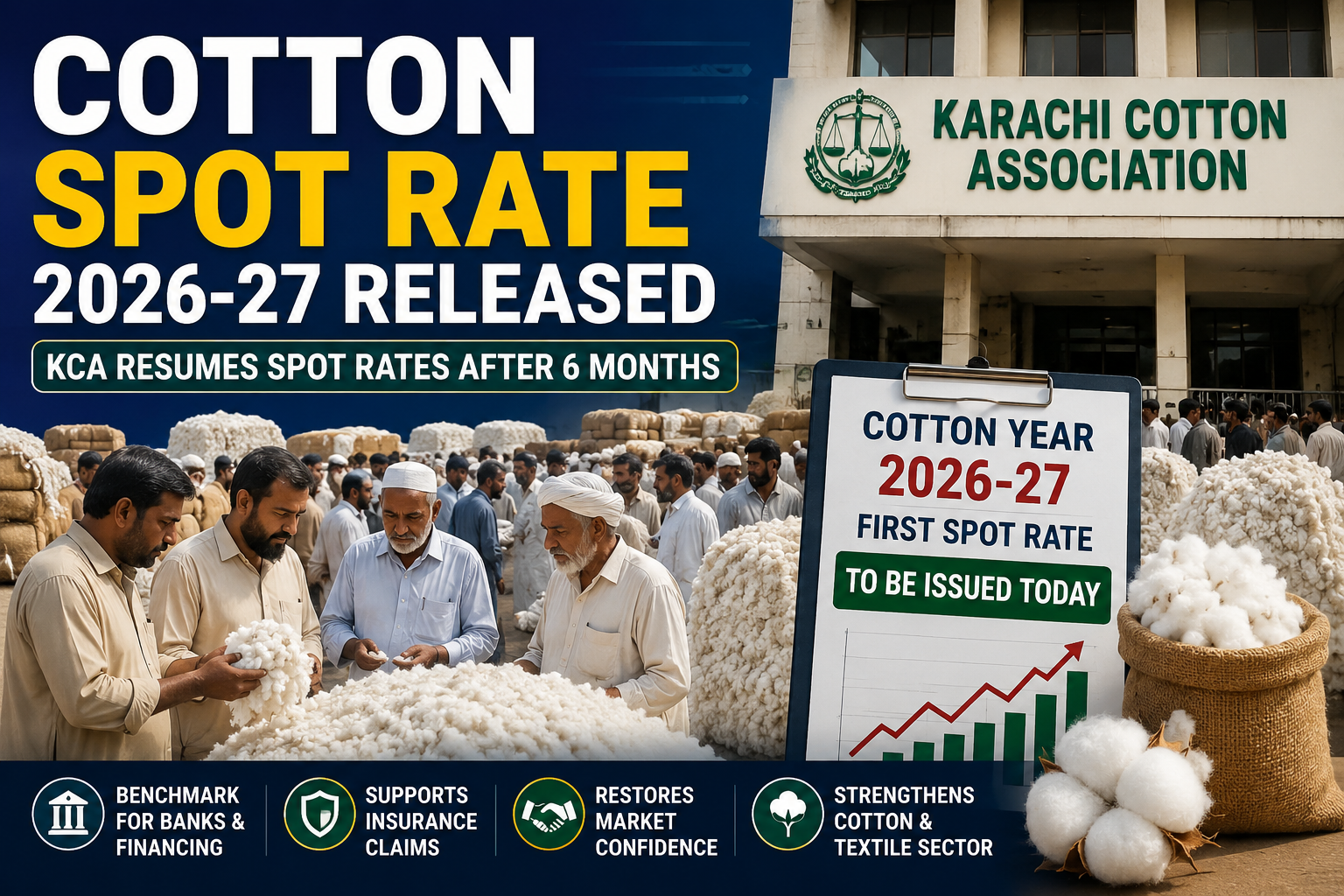
Cotton Spot Rate for 2026-27 is set to be released today, marking an important development for Pakistan’s cotton and textile sectors after months of uncertainty surrounding benchmark pricing in the domestic market.
The announcement comes after the Karachi Cotton Association (KCA) resumed the publication of cotton spot rates following a suspension that lasted nearly six months. Industry stakeholders have welcomed the move, saying it will help restore transparency and improve confidence across the cotton value chain.
KCA Resumes Spot Rate Publication
The KCA issued the final spot rate for Cotton Year 2025-26 on June 6, 2026, setting it at Rs21,000 per maund. This was the first rate published since December 12, 2025, when the association stopped issuing daily spot rates.
According to industry sources, the first official spot rate for Cotton Year 2026-27 will be released on June 8. Market participants view the development as a significant step toward stabilizing cotton trading and financial transactions linked to the textile sector.
Six-Month Suspension Created Market Challenges
The suspension of spot rate announcements began after the Karachi Cotton Exchange building came under official control due to ownership-related disputes. As a result, Pakistan’s cotton benchmark pricing mechanism became inactive.
Industry representatives say the absence of a benchmark rate created multiple difficulties for stakeholders. Without an officially recognized spot rate, local cotton pricing became less transparent, and Pakistan’s cotton market lost an important reference point used in international trade discussions.
The disruption also affected financing arrangements between banks, textile mills, and cotton ginning factories.
Impact on Banking and Financing
Chairman of the Cotton Ginners Forum, Ahsan-ul-Haq, stated that banks faced challenges in evaluating cotton stocks pledged as collateral for financing.
Financial institutions typically rely on officially published cotton spot rates when determining the value of cotton inventories used to secure loans. The absence of updated benchmark rates complicated the lending process and created uncertainty for both lenders and borrowers.
Industry officials noted that insurance companies also encountered difficulties while assessing claims related to cotton inventories because no regularly updated benchmark price was available during the suspension period.
Textile Industry Raised Concerns
The issue attracted attention from the textile sector, which relies heavily on accurate market pricing for raw cotton procurement and financing.
Last week, the All Pakistan Textile Mills Association reportedly urged the central bank to address concerns related to cotton valuation. According to industry sources, commercial banks continued using an older benchmark rate of Rs15,500 per maund when evaluating cotton-backed financing arrangements.
However, market participants indicated that open-market cotton prices were trading near Rs22,000 per maund, creating a significant gap between official lending benchmarks and prevailing market values.
Textile manufacturers argued that this difference reduced their borrowing capacity and created financial pressure for mills operating in a competitive environment.
Cotton Prices Show Upward Trend
Meanwhile, market activity remained firm during the past week. Industry observers reported an increase in cotton and phutti (seed cotton) prices, while cotton cultivation in Punjab was said to be lower than earlier expectations.
Lower-than-expected sowing levels have raised concerns about future production, contributing to stronger sentiment in the cotton market. Traders and manufacturers are closely monitoring crop conditions and pricing trends as the new cotton year begins.
Industry Expects Greater Stability
The resumption of KCA spot rates is expected to improve transparency and provide a reliable benchmark for cotton transactions, financing arrangements, and insurance assessments.
Stakeholders believe the return of daily spot rates will help strengthen confidence among growers, traders, ginners, textile mills, banks, and insurers. The release of the first Cotton Year 2026-27 spot rate today is therefore being viewed as an important milestone for Pakistan’s cotton and textile industries.