
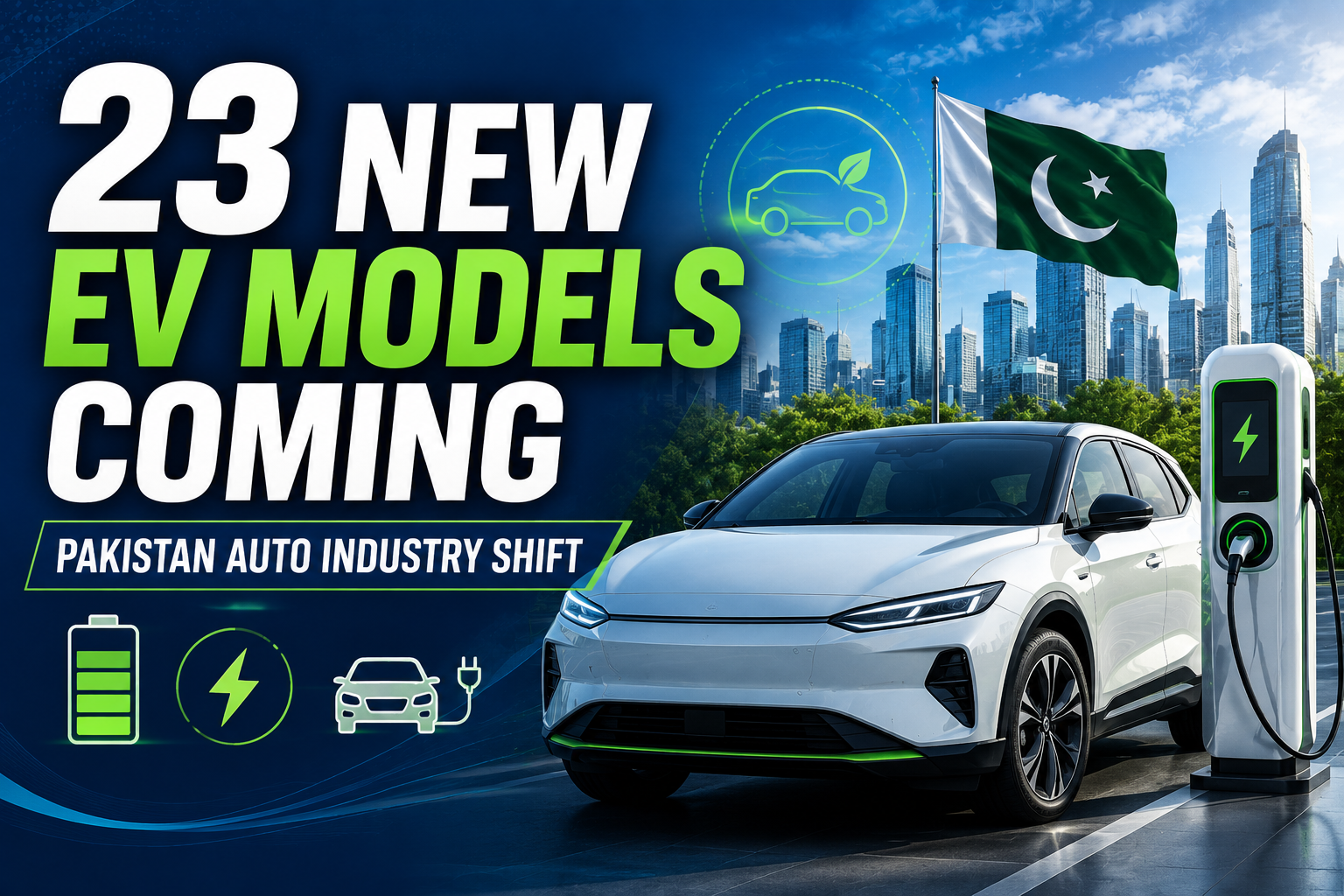
Electric vehicle boom is expected to reshape Pakistan’s automotive sector as the country prepares for one of the biggest transitions in its transportation industry. Industry estimates suggest that 23 new vehicle models could be introduced in Pakistan between June and December 2026, with the vast majority featuring electric, hybrid, or range-extended technologies.
Experts believe the shift marks a significant move away from conventional fuel-powered vehicles and reflects the growing global trend toward cleaner transportation solutions.
🚗 Pakistan Auto Industry Enters New Era
Pakistan’s automobile sector is approaching a major transformation as manufacturers increasingly focus on electric and hybrid vehicles.
According to industry estimates, 23 new vehicles are expected to enter the local market during the second half of 2026.
Analysts say the expected launches represent one of the largest waves of new automotive technology introductions in the country’s history.
⚡ 87 Percent of New Models Feature Electric Technology
Industry data indicates that nearly 87 percent of the upcoming vehicle models will include electric, hybrid, or range-extended powertrain technology.
This suggests that most future launches will rely on alternative energy systems rather than traditional gasoline-powered engines.
Experts believe the trend reflects changing consumer preferences and government support for cleaner transportation.
🇨🇳 Chinese Companies Expanding Presence
Automotive analysts report that several Chinese vehicle manufacturers are rapidly expanding their presence in Pakistan through partnerships with local companies.
The growing involvement of Chinese firms is expected to accelerate the adoption of electric mobility technologies across the country.
Industry observers note that China remains one of the world’s leading electric vehicle markets and manufacturers.
📈 Government Policy Driving Change
According to auto industry expert Shafiq Ahmed Sheikh, the transformation began under Pakistan’s Auto Industry Development and Export Policy 2021-26.
The policy encouraged investment in modern vehicle technologies and helped create opportunities for electric vehicle manufacturers.
Experts expect the momentum to continue under the upcoming automotive policy framework.
🔋 New Auto Policy May Accelerate EV Adoption
Industry stakeholders believe the proposed Auto Policy 2026-31 could further increase investment in electric transportation.
The government aims to gradually electrify the transport sector as part of efforts to reduce dependence on imported petroleum products and liquefied natural gas (LNG).
Officials view transportation electrification as an important step toward improving energy security and reducing import costs.
💰 Potential Savings of $4.5 Billion Annually
Experts estimate that wider adoption of electric vehicles could help Pakistan save approximately $4.5 billion annually by reducing fuel imports.
Economic analysts say lower dependence on imported energy resources would improve the country’s trade balance and foreign exchange position.
The transition could also contribute to long-term economic stability and energy efficiency goals.
🎯 Incentives Supporting Electric Vehicles
The government has introduced various incentives aimed at encouraging electric vehicle adoption.
Industry observers believe such measures can help attract investment, expand charging infrastructure, and make EVs more accessible to consumers.
Supportive policies are also expected to encourage local manufacturing and technology development.
🌱 Environmental Benefits Expected
Experts say greater adoption of electric and hybrid vehicles could help reduce carbon emissions and improve urban air quality.
As cities continue facing environmental challenges, cleaner transportation options are becoming increasingly important.
The shift toward electric mobility aligns with broader global efforts to promote sustainable transportation and reduce environmental impact.
🚘 Future of Pakistan’s Auto Market
Industry analysts believe the coming years could mark a turning point for Pakistan’s automotive sector.
With new technologies entering the market, increasing foreign investment, and supportive government policies, electric and hybrid vehicles are expected to play a larger role in future transportation.
The anticipated launch of 23 new vehicle models highlights the growing momentum behind Pakistan’s transition toward a more modern and energy-efficient auto industry.