
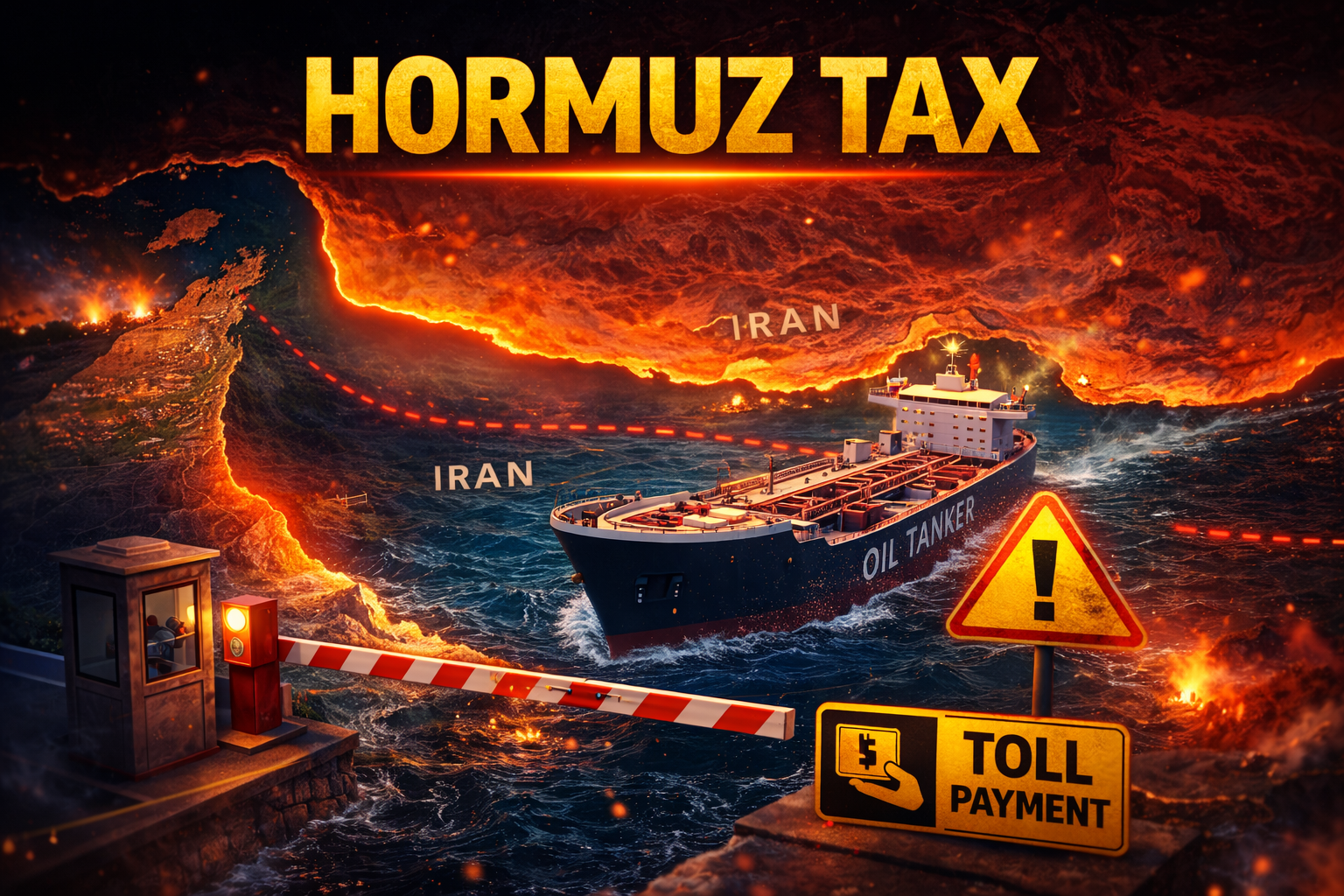
Hormuz toll tax announced as Iran introduced a new policy requiring all ships passing through the Strait of Hormuz to pay fees under a revised control system.
⚓ Iran Announces New Toll System
Iran has declared that all vessels transiting through the Strait of Hormuz will now be subject to a toll tax.
The decision was confirmed by Ibrahim Azizi, head of Iran’s parliamentary national security committee, who stated that the move is part of a broader strategy to regulate and manage one of the world’s most critical maritime routes.
🌍 Strategic Importance of Strait of Hormuz
The Strait of Hormuz is one of the most vital global shipping routes, particularly for energy transportation.
A significant portion of the world’s oil supply passes through this narrow waterway, making any policy changes in the region highly impactful on global trade and energy markets.
⚠️ Policy Linked to Regional Tensions
Officials indicated that the introduction of toll charges comes amid rising regional tensions.
The decision reflects Iran’s intent to exercise stronger control over maritime operations in the area, while also addressing security and management concerns.
💰 Ships Required to Pay Transit Fees
Under the new system, all ships passing through the strait will be required to pay a designated fee.
Authorities have stated that the measure will ensure better oversight and operational management of maritime traffic in the region.
🛢️ Oil Sector Recovery Efforts Continue
Meanwhile, Iranian officials confirmed that efforts are ongoing to restore oil refining capacity affected by recent attacks.
The Deputy Oil Minister stated that around 70% to 80% of production capacity is expected to be restored within the next two months.
🏭 Refinery Operations Gradually Resuming
Officials also indicated that parts of the Lavan refinery may resume operations within the next 10 days.
This gradual recovery is expected to contribute to improved oil production levels in the near future.
📊 Global Economic Implications
Experts suggest that any new policy affecting the Strait of Hormuz could have wide-reaching consequences for global markets.
Changes in shipping costs, oil supply, and trade logistics may influence energy prices and broader economic conditions worldwide.