
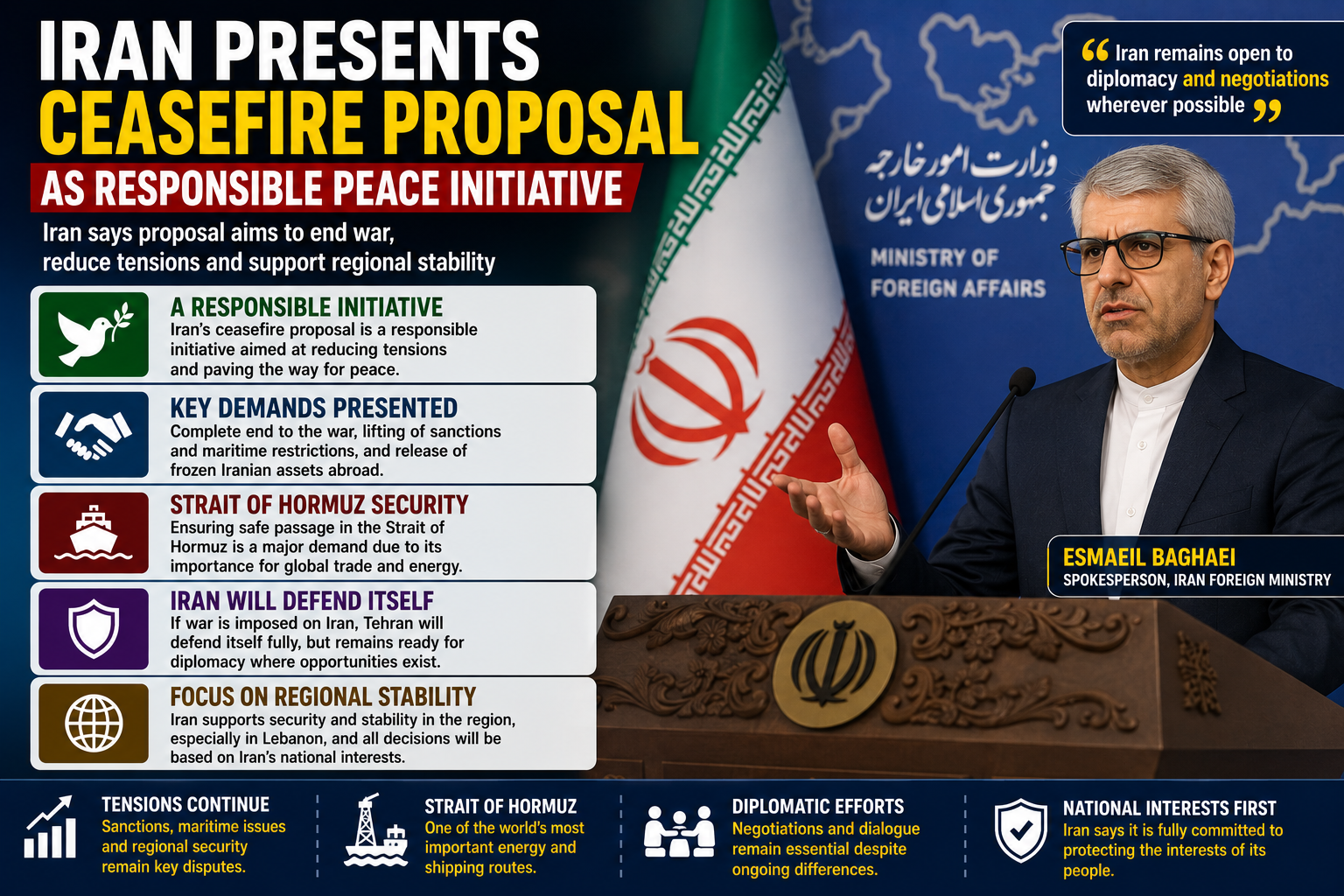
Iran ceasefire proposal was described as a “responsible initiative” by Iran’s Foreign Ministry during a press briefing, where officials said Tehran had presented clear demands aimed at reducing regional tensions and supporting efforts toward peace and stability. Iranian authorities stated that the proposal was intended to create conditions for ending conflict and reopening diplomatic dialogue.
Speaking during the press conference, Iranian Foreign Ministry spokesperson Esmaeil Baghaei said Iran remains committed to protecting its national interests while also remaining open to negotiations and diplomacy where possible.
🇮🇷 Iran Calls Proposal a Responsible Initiative
Esmaeil Baghaei stated that Iran’s proposal for ending the conflict was presented as a responsible effort to reduce tensions in the region.
According to Iranian officials, the proposal aimed to create a path toward de-escalation and improve the possibility of restoring stability in the Middle East amid ongoing geopolitical challenges.
Iranian authorities emphasized that diplomacy and political dialogue remain important tools for resolving regional disputes and avoiding further instability.
🌍 Iran Presented Key Demands During Talks
The Iranian spokesperson said Tehran submitted several clear demands during discussions related to ceasefire and regional tensions.
According to him, Iran’s demands included a complete end to the conflict, removal of what Tehran described as American blockade measures, and an end to actions affecting Iranian maritime trade activities.
Iran also reportedly demanded the release of Iranian assets frozen abroad due to sanctions and international pressure.
⚓ Strait of Hormuz Security Remains Key Issue
Baghaei stated that secure passage through the Strait of Hormuz remains one of Iran’s major concerns.
He described the waterway as a critical global trade and energy route that plays an important role in international shipping and oil transportation. Iranian officials stressed the importance of maintaining safe maritime movement in the region.
The Strait of Hormuz continues to remain a major strategic area amid rising tensions between Iran, the United States, and regional allies.
🛡️ Iran Says It Will Defend Itself if Necessary
During the briefing, the Iranian spokesperson stated that Tehran would strongly defend itself if war was imposed on the country.
However, he also clarified that Iran remains prepared to benefit from opportunities for diplomacy and negotiations whenever possible. Officials said future decisions would continue to prioritize Iran’s national interests and regional security concerns.
Iranian authorities maintained that protecting the interests of the Iranian public remains a central priority for the government.
🇱🇧 Iran Highlights Regional Stability Concerns
Iran also expressed support for stability and security across the region, particularly in Lebanon and neighboring areas affected by regional tensions.
Officials stated that long-term peace and security require diplomatic engagement and broader regional cooperation between countries involved in ongoing disputes.
Analysts believe regional conflicts and political tensions continue influencing security conditions across the Middle East.
📊 Regional Tensions Continue Affecting Global Markets
Experts say tensions between Iran and the United States continue to center around sanctions, maritime security, and regional military influence.
The Strait of Hormuz remains one of the world’s most important shipping routes, particularly for oil exports and energy supplies. Any instability in the area often affects global markets and international trade activity.
Analysts also noted that diplomatic efforts and ceasefire discussions are continuing alongside rising regional security concerns.
🤝 Diplomatic Efforts Still Ongoing
Political observers believe both diplomatic communication and indirect negotiations remain important despite continued disagreements between Tehran and Washington.
International attention remains focused on whether ongoing discussions could eventually reduce tensions and support broader regional stability in the Middle East.