
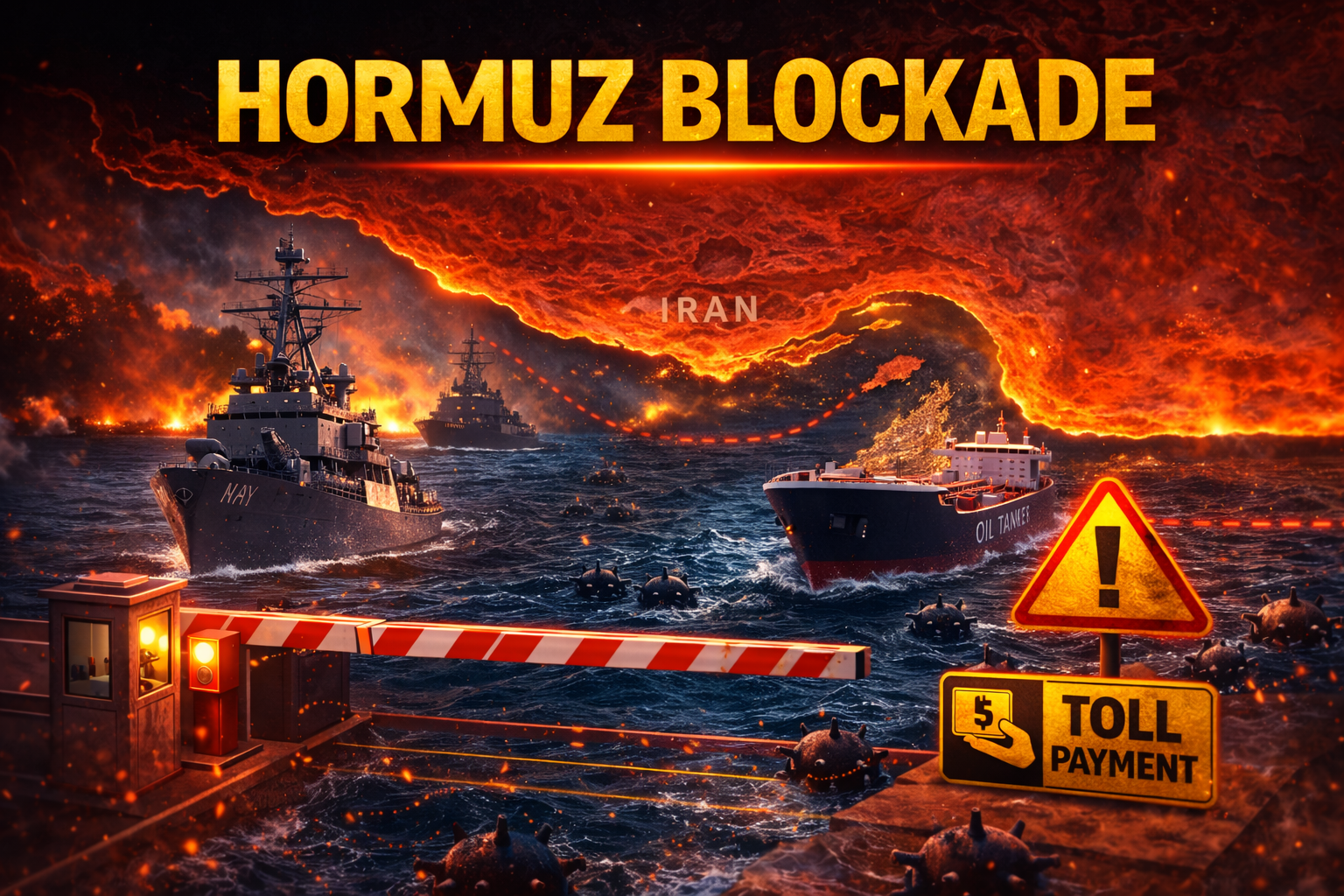
Hormuz blockade US orders have been issued as former US President Donald Trump announced plans to stop ships that pay toll fees to Iran from passing through the Strait of Hormuz.
⚓ US Announces Planned Blockade Measures
The United States has announced immediate steps to enforce restrictions in the Strait of Hormuz. Donald Trump stated that ships entering or exiting the waterway will be monitored and controlled under new directives.
He added that the US Navy has been instructed to begin operations aimed at restricting vessel movement in the region.
🚢 Ships Paying Iran Toll to Be Targeted
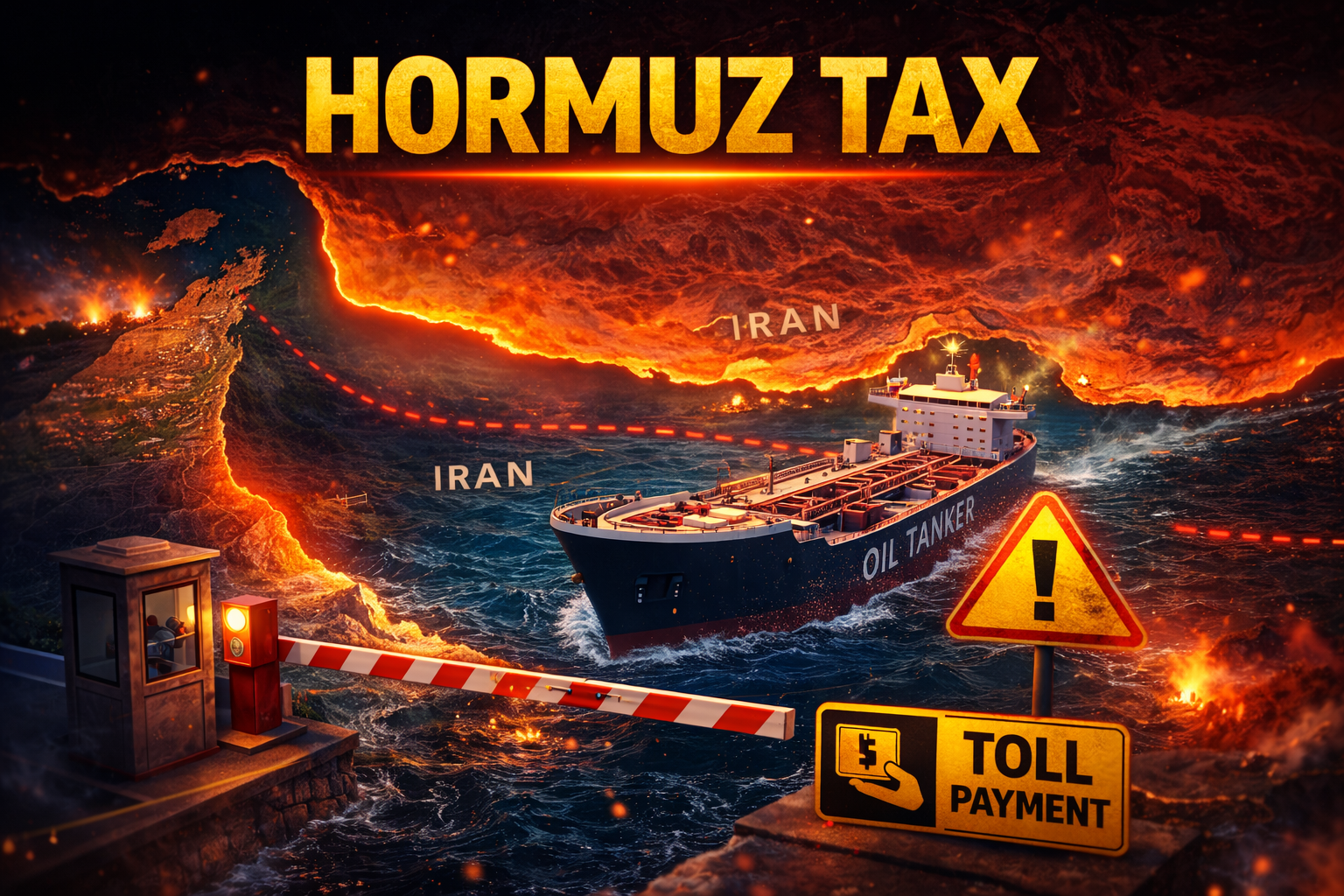
According to the statement, vessels that pay toll fees to Iran will not be allowed to pass through the strait.
US authorities plan to identify such ships in international waters and take action against those complying with Iran’s newly introduced toll system.
⚠️ Focus on Maritime Control and Security
The move is being presented as an effort to maintain control and security in international waters.
Officials indicated that unrestricted navigation will be allowed only for ships that do not engage with the toll system introduced by Iran.
💣 Concerns Over Naval Mines
The statement also referenced concerns regarding underwater mines reportedly placed in the Strait of Hormuz.
US authorities believe that the presence of such hazards complicates navigation and adds to the urgency of intervention in the region.
🌍 Impact on Global Shipping Routes
The Strait of Hormuz remains one of the most critical global shipping routes, particularly for oil transportation.
Any blockade or restriction in the area could significantly impact global supply chains and energy markets.
🛢️ Rising Tensions and Economic Risks
The latest development comes amid increasing geopolitical tensions involving Iran, the United States, and regional actors.
Experts suggest that restrictions on shipping could lead to disruptions in oil supply and potential increases in global energy prices.
📊 International Implications
The proposed blockade may involve participation from other countries, according to the statement.
The situation continues to evolve as global stakeholders monitor developments that could affect international trade and maritime operations.