
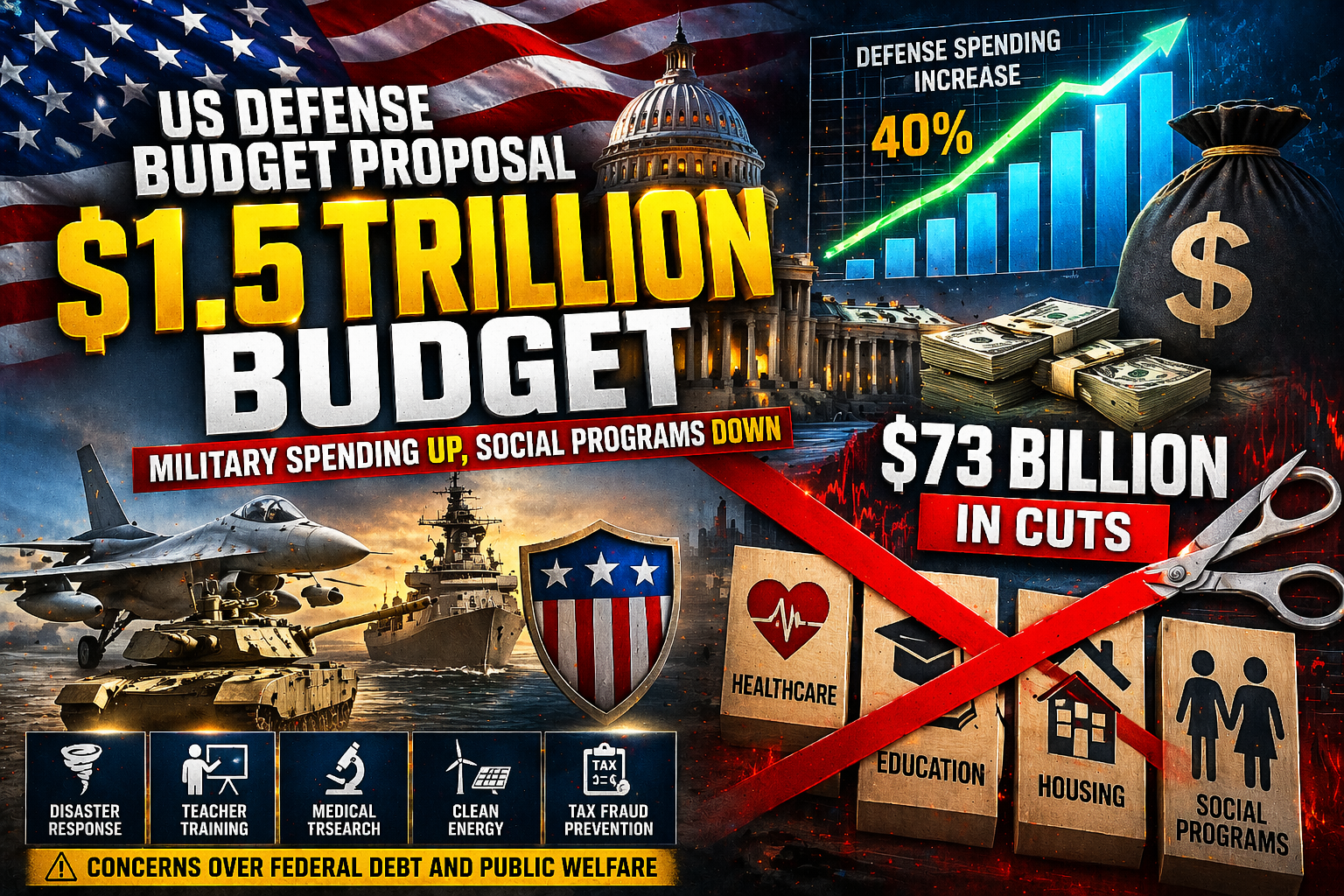
US defense budget proposal has reached a record level, with plans to increase military spending to approximately $1.5 trillion while reducing funding for several domestic programs.
📌 Record Increase in Defense Spending
The administration of Donald Trump has submitted a proposal to Congress for the fiscal year 2027, requesting approval for a defense budget of nearly $1.5 trillion.
If approved, this would represent the highest level of military spending in modern US history. The proposal includes an estimated 40 percent increase in defense expenditures compared to previous allocations.
Officials have described the increase as necessary to address evolving global security challenges.
📊 Proposed Cuts in Domestic Programs
Alongside the increase in defense spending, the proposal includes recommendations to reduce approximately $73 billion from various domestic government programs.
These cuts are expected to affect sectors such as healthcare, education, housing, and support programs for low-income populations.
The plan also includes an overall reduction of about 10 percent in internal government spending, targeting multiple departments and initiatives.
⚠️ Areas Affected by Budget Reductions
Several key areas may experience funding reductions under the proposed plan. These include programs related to disaster management, teacher training, medical research, clean energy, and efforts to combat tax fraud.
Some initiatives aimed at supporting vulnerable and minority communities could face significant changes or possible elimination if the proposal is approved.
These adjustments are part of a broader effort to reallocate government resources.
🌍 Justification Linked to Global Conflicts
According to the administration, the increase in defense spending is linked to ongoing global conflicts and security concerns. Officials have highlighted tensions involving Iran as one of the reasons for prioritizing military funding.
The proposal emphasizes national security as a primary focus, even if it requires reductions in other areas of government expenditure.
🏛️ Political Response and Concerns
The proposed budget has received mixed reactions from lawmakers. Members of both the Democratic and Republican parties have expressed concerns about the scale of the increase in defense spending.
Critics argue that such a large rise in military expenditure could lead to further growth in the federal deficit and negatively impact public welfare programs.
Debate is expected to continue as the proposal moves through the legislative process.
💰 Impact on National Debt
Experts have indicated that if the proposal is approved without major changes, it could significantly increase the national debt over the coming years.
The US national debt is already estimated at around $39 trillion, and additional spending could add further pressure to fiscal stability.
Concerns about long-term economic impact remain a key part of the discussion surrounding the budget.
⚖️ Congressional Approval Required
Under the US Constitution, the final approval of the federal budget lies with Congress. The administration’s proposal must be reviewed, debated, and approved by lawmakers before it can become law.
This process may involve revisions and negotiations before a final budget is passed.
The outcome will determine how funding is allocated across defense and domestic sectors in the coming fiscal year.