
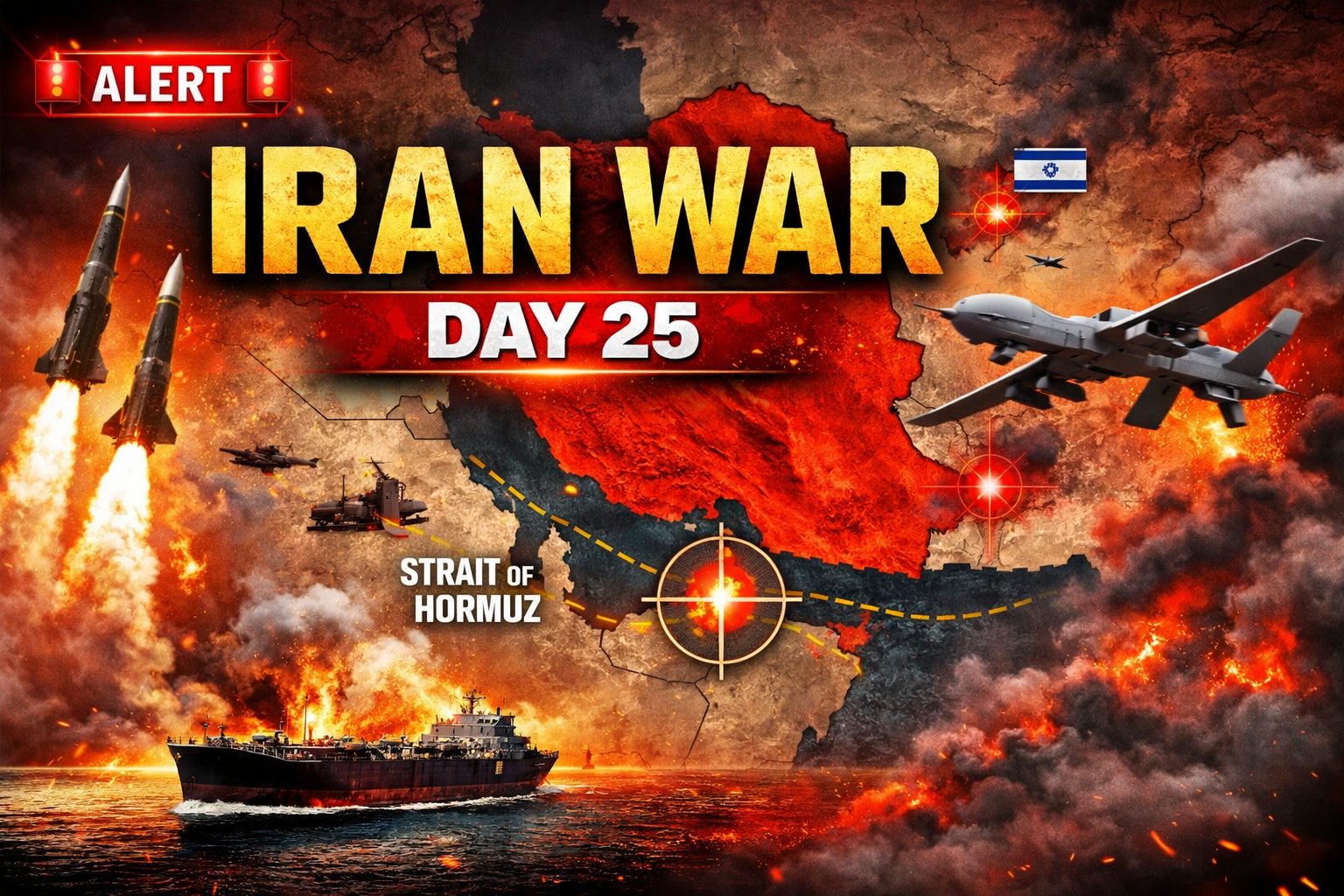
Iran war entered day 25 with conflicting statements on possible talks, as claims of negotiations were rejected by Tehran while regional tensions continued to rise.
⚔️ War Enters 25th Day
The ongoing conflict involving Iran, the United States, and Israel has reached its 25th day. The situation remains tense across the region, with continued military actions and no confirmed progress toward a ceasefire.
🗣️ Claims of Talks and Immediate Rejection
US President Donald Trump stated that discussions with Iran are ongoing and suggested that a broader agreement could be possible. However, Iranian officials strongly denied these claims, calling them misleading and false. Tehran maintained that no such negotiations are currently taking place.
⛽ Delay in Potential Military Action
Reports indicate that proposed US strikes on Iran’s energy infrastructure have been temporarily delayed for five days. This development follows earlier warnings issued by the United States, which had previously set a 48-hour ultimatum for Iran.
🌊 Strait of Hormuz Remains Central Issue
The Strait of Hormuz continues to be a major point of concern in the conflict. The United States had demanded that Iran reopen the strategic waterway, warning of consequences if the demand was not met. Iran has reiterated that its position on the issue remains unchanged.
The ongoing situation has disrupted global oil supply routes. Several Asian countries, including South Korea and Japan, are being significantly affected due to their reliance on oil shipments passing through the strait.
🚀 Continued Attacks Across the Region
Military activity in the region remains active. Iran has launched additional missile strikes targeting Israel, while multiple drone and missile attacks in Gulf countries have been intercepted.
Saudi Arabia reported destroying approximately 20 incoming drones targeting its eastern region. Meanwhile, warning sirens were repeatedly activated in Kuwait and Bahrain due to potential threats.
🌍 Expanding Regional Tensions
Clashes have intensified in multiple areas, including Lebanon, Iraq, and Syria. Israeli forces carried out strikes in the southern suburbs of Beirut, while US forces targeted a location linked to an Iran-backed group in Iraq’s Anbar province.
Analysts suggest that Iraq is increasingly becoming a secondary zone of conflict between the United States and Iran, adding further complexity to the situation.
👥 Public Response and Global Pressure
Large-scale protests were reported in Tehran and other cities, where demonstrators gathered to oppose US and Israeli actions. Iranian leadership emphasized resistance during these developments.
At the same time, pressure is rising within the United States due to increasing fuel and oil prices. Analysts indicate that economic factors may influence future decisions regarding the conflict.
🛡️ International Response
The United Kingdom has announced plans to deploy air defense systems to the Middle East in response to missile threats. Regional countries continue to call for de-escalation and urge all parties to pursue dialogue to reduce tensions.