
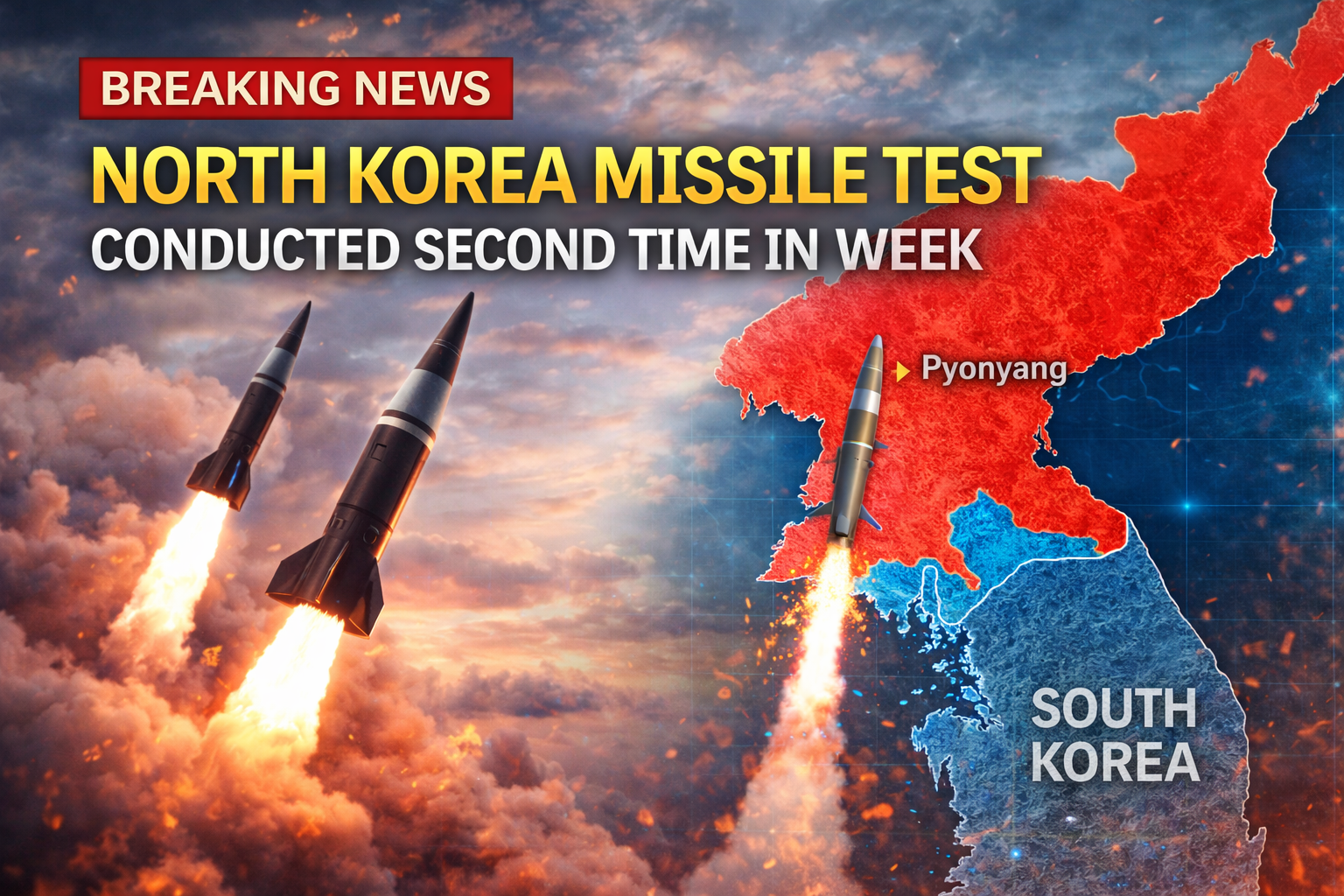
North Korea Missile Test Conducted Second Time in Week as the country launched multiple ballistic missiles toward the sea, raising concerns about rising security tensions in East Asia. The latest missile launch comes only days after a previous weapons test, highlighting continued military activity by Pyongyang.
According to regional reports, the launches took place on March 14, 2026, when North Korea fired around ten ballistic missiles toward waters off the Korean Peninsula.
Officials in neighboring countries closely monitored the launch as part of ongoing surveillance of North Korea’s missile program.
Missiles Fired Toward the Sea of Japan
Defense authorities in South Korea reported that the missiles were launched from the Sunan area near Pyongyang, North Korea’s capital.
One of the missiles reportedly traveled approximately 340 to 350 kilometers before landing in waters of the Sea of Japan, also known as the East Sea.
South Korean and Japanese officials confirmed that the missiles fell outside their respective Exclusive Economic Zones (EEZs) and no damage or casualties were reported.
However, security experts say repeated missile launches continue to raise concerns about regional stability.
Second Weapons Test Within Days
The latest ballistic missile launch marks the second weapons test conducted by North Korea within a single week.
Just days earlier, the country carried out a strategic cruise missile test, which was reportedly observed by North Korean leader Kim Jong Un.
According to state media reports, that test was conducted using a new warship platform, suggesting that the country may be expanding its naval strike capabilities.
Military analysts believe these tests are aimed at evaluating new weapons systems and strengthening North Korea’s strategic defense capabilities.
Regional Reactions to Missile Launch
South Korea and Japan immediately tracked the missiles after the launch and shared information through their defense monitoring systems.
Both countries maintain advanced missile detection and early warning systems to track launches originating from North Korea.
While the missiles did not land within their economic zones, defense authorities in the region described the tests as provocative actions that could increase tensions in East Asia.
International observers often view such missile launches as signals related to geopolitical developments and regional security policies.
Growing Concerns Over Security in East Asia
North Korea’s continued weapons testing has long been a major concern for countries in East Asia and the broader international community.
Ballistic missile launches are closely monitored because such weapons can potentially carry conventional or nuclear payloads over long distances.
Experts say that repeated missile tests could further complicate diplomatic efforts aimed at reducing tensions and encouraging dialogue in the region.
However, North Korea has consistently maintained that its weapons testing activities are part of its sovereign right to develop national defense capabilities.
Monitoring of Future Missile Activity
Regional governments and international organizations are expected to continue monitoring North Korea’s military activities closely.
Defense analysts say future missile launches or military demonstrations could further affect regional security dynamics and diplomatic relations in the Asia-Pacific region.
As tensions remain sensitive, governments in neighboring countries are expected to maintain heightened surveillance and defense readiness.