
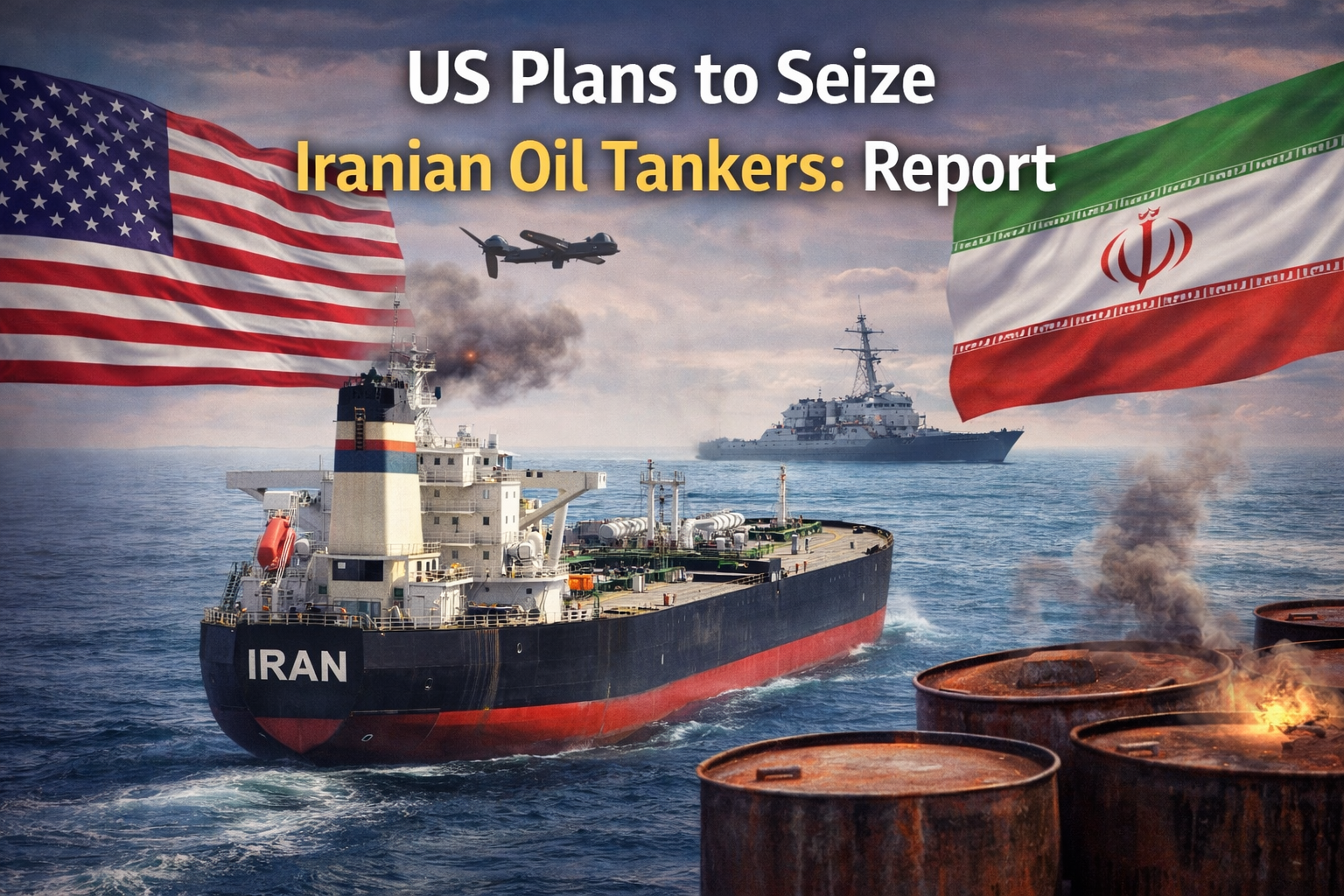
US plans to seize Iranian oil tankers: report as Washington considers expanding pressure on Tehran by targeting its oil export network — a move that could heighten tensions across the Middle East and disrupt global energy markets.
Plan Under Consideration in Washington
According to a report by The Wall Street Journal, officials in the administration of former US President Donald Trump are weighing options to detain additional Iranian oil tankers.
The proposal is part of a broader strategy aimed at restricting Iran’s primary revenue stream — crude oil exports — which remain central to its national economy despite sanctions.
US officials cited in the report said enforcement measures are being reviewed but have not yet reached final approval stages.
Targeting Iran’s Oil Revenue
Energy exports represent a major financial lifeline for Iran, and previous sanctions enforcement has focused heavily on shipping, insurance, and maritime logistics.
By intercepting tankers, Washington aims to disrupt oil supply chains, limit foreign exchange inflows, and increase economic leverage in ongoing geopolitical negotiations.
However, analysts say operational enforcement at sea carries legal, diplomatic, and military complexities.
Risk of Iranian Retaliation
One of the most significant concerns surrounding the plan is the possibility of retaliation.
US officials reportedly believe Iran could respond by targeting oil shipments linked to American allies in the region.
Security experts warn that retaliatory actions may include harassment of commercial vessels, drone surveillance, or direct tanker seizures.
Strait of Hormuz Flashpoint
The report also highlighted fears that Iran could escalate tensions in the strategically critical Strait of Hormuz — one of the world’s most vital oil transit chokepoints.
Any disruption in the strait could affect a substantial share of global crude supply, triggering energy price volatility and shipping risks.
Military analysts note that even limited maritime confrontations in the area can rapidly escalate into broader regional crises.
Impact on Global Oil Markets
Energy economists warn that tanker seizures or countermeasures could send shockwaves through international oil markets.
Potential consequences include:
-
Sudden oil price spikes
-
Supply chain disruptions
-
Increased shipping insurance costs
-
Volatility in energy futures markets
Given the fragile balance of global supply, geopolitical escalations in the Gulf region often translate quickly into economic repercussions worldwide.
Military Posture May Expand
Alongside economic pressure tactics, Washington is also reviewing military deployment options.
President Trump has warned that failure in ongoing diplomatic engagements with Iran could lead to an expanded US military presence in the Middle East.
Officials are reportedly discussing the deployment of an additional aircraft carrier strike group to reinforce regional deterrence.
Existing Naval Presence
The United States already maintains a significant naval footprint in the region, including the deployment of the USS Abraham Lincoln and its full strike group.
The carrier formation includes advanced fighter aircraft, guided missile destroyers, and long-range strike capabilities such as Tomahawk cruise missiles.
Defense planners say any further buildup would signal escalation readiness rather than immediate conflict intent.
Regional Stability at Stake
Geopolitical observers caution that maritime seizures and military deployments risk amplifying instability in an already volatile region.
They stress that energy security, trade flows, and diplomatic channels could all be affected if tensions between Washington and Tehran intensify further.