
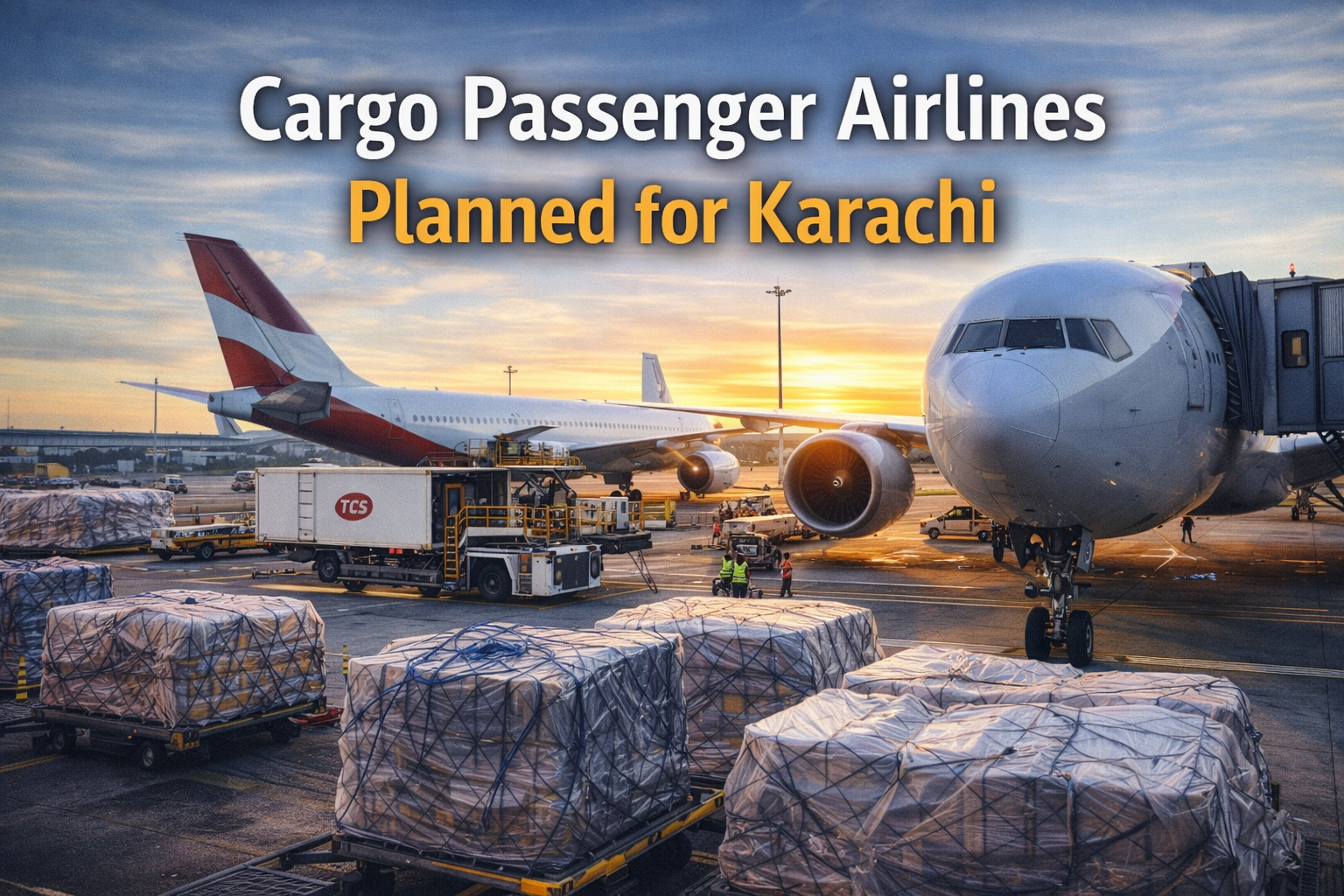
New cargo, passenger airlines planned for Karachi as Pakistan’s aviation sector prepares for expansion with the expected launch of two new airlines aimed at strengthening domestic travel and air freight capacity.
Preparations Completed for Airline Launch
Industry stakeholders and aviation authorities have finalized initial preparations for the launch of the upcoming carriers. According to developments shared with media sources, the new airlines will facilitate both passenger mobility and cargo transportation across domestic and international routes.
Officials say the expansion reflects growing demand for logistics services and improved travel connectivity within Pakistan.
“Air Karachi” Nears Operational Launch
One of the new entrants, expected to operate under the name Air Karachi, has finalized aircraft leasing arrangements and is preparing to begin flight operations.
Sources indicate the airline plans to commence services between May and June this year. Initial operations will focus on domestic routes, targeting major commercial and population centers.
Proposed destinations include:
-
Karachi
-
Lahore
-
Islamabad
-
Sukkur
-
Multan
-
Quetta
-
Peshawar
Aviation planners say the airline aims to improve intercity connectivity while offering competitive pricing and additional seat capacity.
International Expansion Planned
Officials involved in the project say Air Karachi intends to expand into international routes within its first operational year.
Once fleet strength, regulatory approvals, and operational capacity are scaled, the airline is expected to begin flights to regional destinations, potentially enhancing Pakistan’s outbound and inbound travel market.
Industry observers view the phased expansion model as a financially prudent approach for new carriers entering competitive airspace markets.
Dedicated Cargo Expansion Underway
Alongside passenger services, Pakistan’s air cargo sector is also set for major reinforcement.
Logistics company TCS is preparing to induct a Boeing 747-400 series aircraft dedicated exclusively to cargo operations.
The wide-body freighter is expected to significantly boost Pakistan’s air freight handling capacity, particularly for exports, e-commerce shipments, and industrial logistics.
Cargo aviation experts note that the addition of large-capacity aircraft can reduce reliance on foreign carriers and improve supply chain efficiency.
Additional Cargo Fleet Growth
Another domestic cargo operator — already running freight services — is also expanding its fleet.
The airline is reportedly acquiring an additional Boeing 747-400 series aircraft to scale its logistics operations. With increased cargo aircraft availability, Pakistan’s export handling, perishables transport, and industrial shipping capabilities are expected to strengthen.
Breaking Foreign Carrier Monopoly
Historically, Pakistan’s air cargo market has been dominated by foreign airlines, particularly for long-haul freight movement.
The induction of locally operated cargo aircraft is expected to shift market dynamics by:
-
Increasing domestic logistics control
-
Lowering freight costs
-
Improving export turnaround times
-
Supporting industrial supply chains
Manufacturers and exporters have welcomed the development, citing long-standing capacity shortages in cargo aviation.
Economic and Industrial Impact
Aviation sector analysts believe the launch of new passenger and cargo airlines could deliver broader economic benefits.
Potential impacts include:
-
Job creation in aviation and logistics
-
Tourism and business travel growth
-
Export facilitation
-
Airport revenue expansion
-
Regional trade connectivity
Karachi, being Pakistan’s largest commercial hub, is strategically positioned to serve as the operational base for both passenger and cargo aviation expansion.
Outlook for Pakistan’s Aviation Sector
The planned airline launches signal renewed momentum in Pakistan’s aviation industry following years of financial and operational challenges.
With increased private sector participation and cargo specialization, aviation authorities expect improved service competition, passenger convenience, and logistics performance in the coming years.