
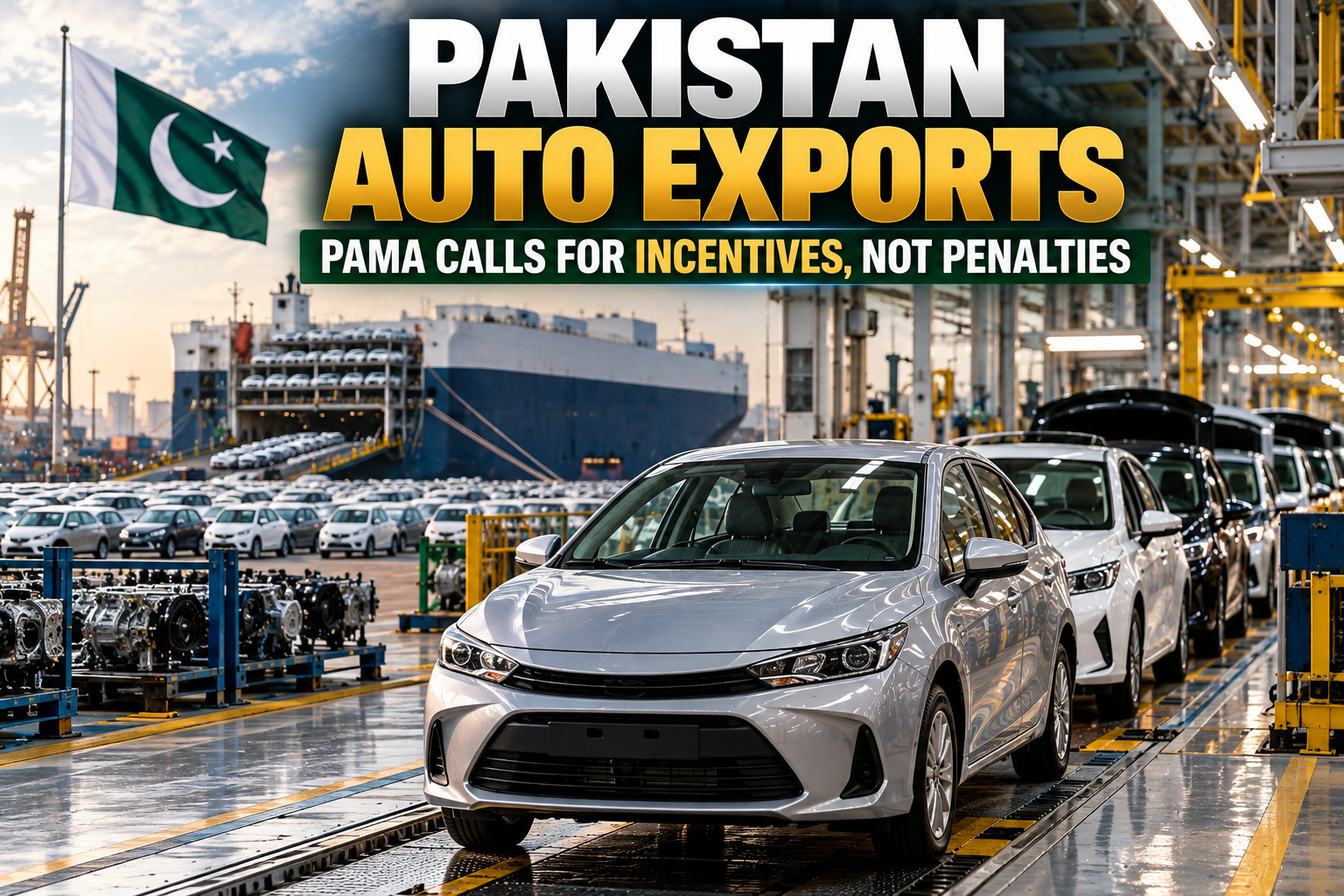
Auto Exports Need Support, Not Penalties: PAMA
Auto Exports should be encouraged through incentives and industry support rather than penalties, the Pakistan Automotive Manufacturers Association (PAMA) has said, calling for the government to share its proposed auto policy with industry representatives before approving it.
In a statement, PAMA expressed concern over reports that the proposed policy could introduce strict measures against manufacturers that fail to meet export targets. The reported measures include additional tariffs and possible licence cancellations for companies that do not achieve the prescribed targets.
The association’s director general said increasing exports would require facilitation and incentives rather than punitive measures. PAMA said it recognised the importance of expanding overseas sales and increasing the automotive industry’s contribution to Pakistan’s foreign exchange earnings.
🚗 PAMA Calls for Industry Consultation
PAMA has urged the government to share the draft of the new auto policy with industry stakeholders before granting approval. The association wants manufacturers to have an opportunity to review the proposals and submit constructive recommendations.
The request comes amid concerns about the potential consequences of strict enforcement measures for manufacturers that fall short of export targets.
According to the association, a transparent consultation process would allow policymakers to consider the practical challenges facing the automotive sector. It would also provide manufacturers with an opportunity to explain the conditions needed to expand production and develop export markets.
PAMA said the automotive industry was willing to cooperate with the government in efforts to increase exports. However, it stressed that the policy framework should support long-term industrial development rather than rely primarily on penalties.
📊 Concerns Over Export-Related Penalties
The association has raised concerns over reports that manufacturers could face additional tariffs or licence cancellations if they fail to meet export targets under the proposed policy.
These possible measures have prompted PAMA to call for greater clarity before the draft is approved. The association believes manufacturers should be given an opportunity to understand the proposed requirements and provide feedback on their feasibility.
The reported measures have not been presented in the supplied information as confirmed final policy provisions. PAMA’s request centres on reviewing the draft and discussing its potential implications with the industry before approval.
The association’s position is that export performance depends on several factors, making it important to design targets and enforcement mechanisms with industry conditions in mind.
🌍 Auto Exports and Pakistan’s Foreign Exchange
PAMA acknowledged that increasing automotive exports is important for Pakistan and said the industry recognised its potential role in generating foreign exchange.
The association also expressed its willingness to contribute to efforts to establish Pakistan as a competitive automotive manufacturing and export hub.
Expanding exports, however, requires more than setting targets. According to PAMA, manufacturers need time to invest in technology, strengthen local production capabilities and develop the capacity required to serve international markets.
The association’s statement presents export growth as a long-term process. It argues that the policy framework should take account of the time and investment needed to improve manufacturing capabilities and compete internationally.
A stable approach to policy development would help manufacturers assess requirements and plan their investments over a longer period.
🏭 Technology and Local Production Investment
PAMA has emphasised the importance of investment in technology and domestic production as part of a sustainable export strategy.
Manufacturers may need to develop production processes, improve capabilities and make longer-term investment decisions before they can expand their presence in international markets.
The association said export targets are influenced by several external and commercial factors, including conditions in global markets, exchange rates and trade agreements.
These factors can affect manufacturers’ ability to compete on price and reach customers abroad. As a result, PAMA has called for an approach that considers the wider business environment when setting export requirements.
The association’s position is that incentives and facilitation should accompany efforts to raise exports, allowing the industry to work towards the government’s objectives while addressing practical production and market challenges.
📋 Demand for a Stable and Transparent Policy
PAMA has called for the new auto policy to establish a stable, transparent and consultative framework.
The association believes manufacturers should be able to understand the policy requirements and contribute to their development before the government finalises its decisions.
The request for consultation also reflects concerns about the possible use of additional tariffs and licence cancellations as responses to missed export targets. PAMA wants the industry to have an opportunity to offer constructive proposals on the draft.
The director general reiterated that the government should focus on providing facilities and incentives to help increase exports rather than relying on punitive measures.
The statement does not detail the complete set of incentives proposed by the association or specify which provisions it wants changed. Its central request is that the draft policy be shared with industry representatives before approval.
🔎 What Happens Next?
The next key step will be whether the government shares the draft auto policy with PAMA and other relevant industry stakeholders for consultation.
The association has made clear that it supports efforts to expand exports and increase the automotive sector’s contribution to foreign exchange earnings. Its concerns relate to the proposed policy approach and the reported penalties for manufacturers that fail to meet export targets.
Further details about the draft, including the final export requirements, any proposed tariff changes and possible licence-related measures, would help clarify how the policy may affect manufacturers.
For now, PAMA is seeking a process that combines export ambitions with incentives, investment and consultation. The government’s response and the eventual contents of the approved policy will determine how these requests are addressed.