
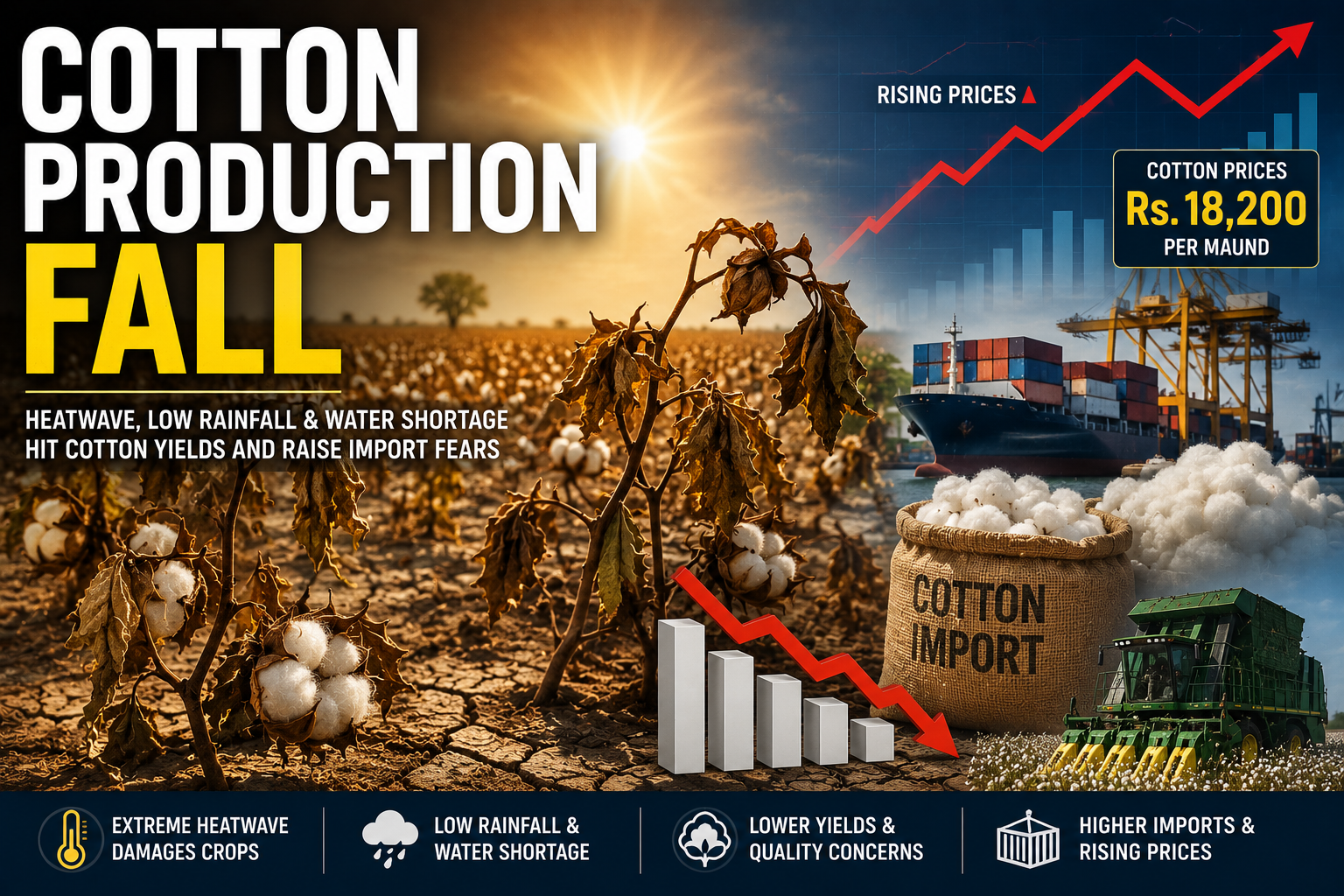
Pakistan Cotton Production Decline has raised fresh concerns across the country’s agriculture and textile sectors after prolonged heatwave conditions reportedly affected cotton crops in major growing regions. Industry representatives warn that lower cotton output could increase cotton imports, push up domestic prices, and place additional pressure on Pakistan’s textile industry.
According to representatives of the cotton sector, unusually high temperatures, below-normal rainfall, and water shortages have negatively affected crop development in key cotton-producing areas. The situation has increased uncertainty regarding both the quantity and quality of the upcoming cotton harvest.
Experts believe the performance of this year’s cotton crop will play a crucial role in determining raw material availability for Pakistan’s textile industry.
🌡️ Heatwave Threatens Cotton Crop
Industry officials say extreme temperatures have severely affected cotton fields in several major agricultural regions.
According to Cotton Ginners Forum Chairman Ehsan ul Haq, prolonged heatwave conditions, combined with insufficient rainfall and reduced canal water supplies, have placed cotton plants under significant stress.
He warned that crop growth has slowed in many areas, while reports of pest attacks and wilting plants have increased.
Agricultural experts fear these factors could reduce per-acre cotton yields during the current season.
🚜 Agriculture Department Advises Farmers
The Punjab Agriculture Department has issued recommendations aimed at minimizing heat-related damage to cotton crops.
Farmers have been advised to shorten irrigation intervals while carefully managing water usage during extreme weather conditions.
Officials also recommended the application of micronutrients, including boron, along with weekly potassium nitrate sprays for early cotton crops to help reduce heat stress.
Agricultural authorities believe timely crop management can help improve plant health despite difficult weather conditions.
📈 Cotton Prices Show Upward Trend
Reduced arrivals of seed cotton at ginning factories have already influenced market prices.
According to industry data, cotton prices in Punjab increased by Rs. 400 per maund, reaching approximately Rs. 18,200, while prices in Sindh climbed to around Rs. 17,700 per maund.
Market participants believe prices may continue rising if production estimates decline further.
Analysts say reduced domestic supply could increase dependence on imported cotton.
🏭 Textile and Ginning Industry Under Pressure
Representatives of the cotton industry say several ginning factories and textile units are already facing operational challenges.
According to industry sources, some ginning factories reportedly suspended operations shortly after reopening because of rising operational costs and taxation concerns.
Industry leaders also expressed concern over the impact of tax policies on cotton processing businesses.
They warned that continued financial pressure could affect employment and industrial production.
🌍 Higher Cotton Imports Expected
Experts believe Pakistan may need to increase cotton imports if domestic production falls below industry requirements.
Higher imports could increase production costs for textile manufacturers while placing additional pressure on foreign exchange reserves.
Pakistan’s textile sector relies heavily on a stable domestic cotton supply to remain competitive in international markets.
Industry representatives say improving agricultural productivity remains essential for reducing import dependence.
📊 Calls for Industry Support
Stakeholders have urged federal and provincial governments to introduce measures supporting agriculture, cotton production, and industrial development.
Industry representatives argue that strengthening domestic production would help improve employment opportunities, increase exports, and support long-term economic growth.
They also called for policies encouraging investment in agriculture, irrigation infrastructure, and the textile value chain.
Experts believe coordinated government support could help stabilize Pakistan’s cotton sector in future seasons.