
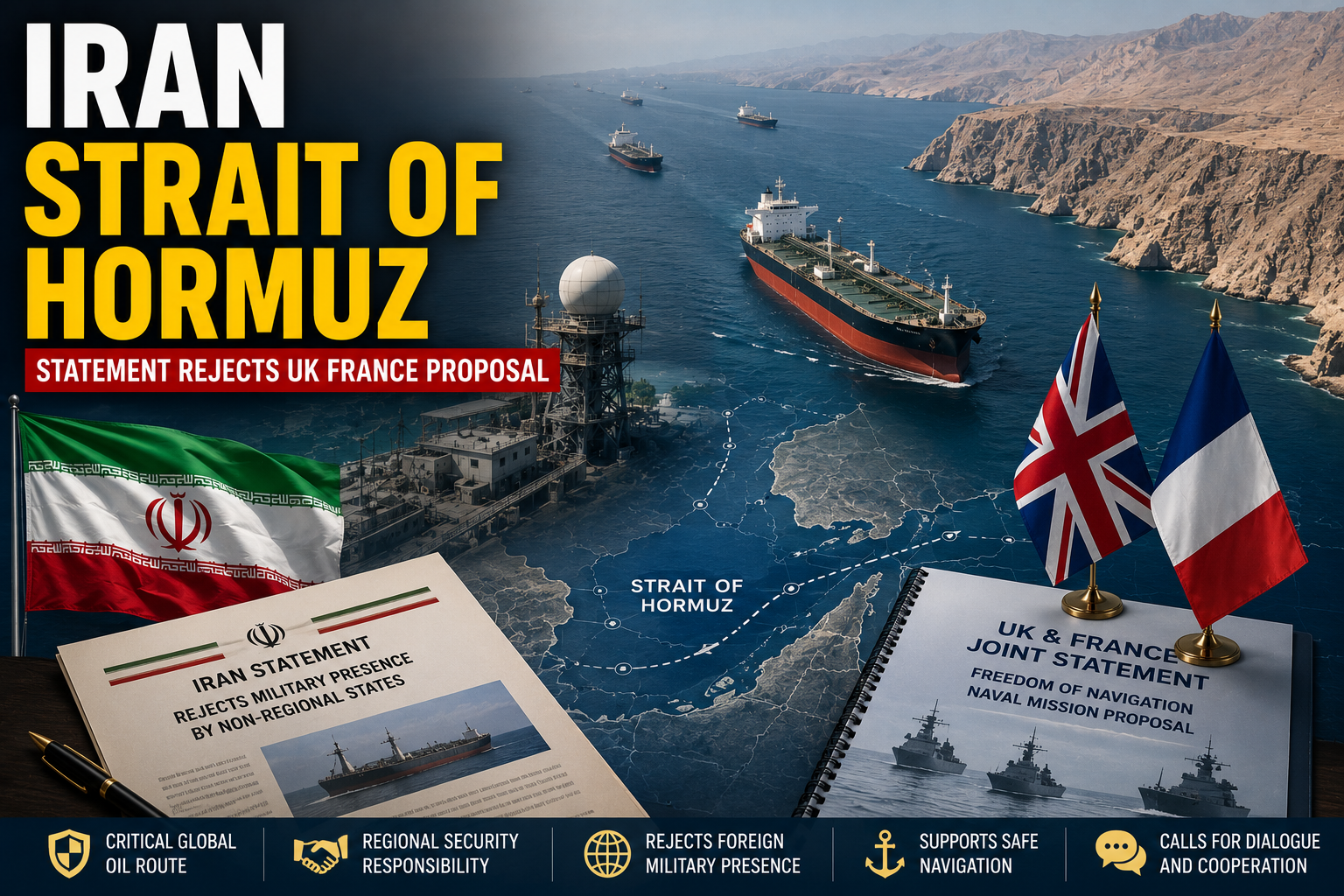
Iran Strait of Hormuz Statement has renewed diplomatic attention after Iran rejected a joint declaration by the United Kingdom and France regarding military deployment in the strategically important Strait of Hormuz.
Iranian Deputy Foreign Minister Kazem Gharibabadi stated that the waterway should not become a venue for military demonstrations by non-regional countries. His remarks came after Britain and France announced their readiness to support a naval mission aimed at protecting freedom of navigation in the Gulf.
The latest exchange reflects continuing differences over maritime security in one of the world’s most important energy corridors.
🌍 Iran Responds to UK and France
Iranian Deputy Foreign Minister Kazem Gharibabadi responded to the joint statement issued by the United Kingdom and France concerning security in the Strait of Hormuz.
In a message shared on the social media platform X, he said Iran, as a responsible regional power, remains committed to protecting the security of the strategic waterway.
He stressed that the Strait of Hormuz should not be used for military displays by countries outside the region.
According to Iranian officials, regional cooperation remains the most effective way to maintain maritime security.
🚢 Strait of Hormuz Remains Strategically Important
The Strait of Hormuz is one of the world’s most significant maritime routes for global energy transportation.
A large share of international oil shipments passes through the narrow waterway each day, making its stability important for global markets.
Any increase in tensions surrounding the strait often attracts international attention because of its impact on energy supplies and commercial shipping.
Analysts say uninterrupted navigation remains essential for maintaining regional and global economic stability.
🇬🇧 UK and France Support Naval Mission
Britain and France recently issued a joint statement expressing their willingness to support a naval mission aimed at protecting freedom of navigation in the Gulf.
Officials from both countries said the proposed mission would focus on ensuring the safe movement of commercial vessels through international waterways.
The announcement reflects ongoing international concern over maritime security in the region.
Several countries continue monitoring developments closely due to the strategic importance of Gulf shipping routes.
⚠️ Iran Rejects Foreign Military Presence
Iranian officials argued that responsibility for protecting the Strait of Hormuz should remain with regional countries.
According to Tehran, the presence of military forces from outside the region could increase tensions rather than improve security.
The deputy foreign minister emphasized that Iran continues to oppose any military activity by non-regional states within the sensitive maritime corridor.
Officials reiterated that dialogue and regional cooperation remain the preferred approach.
🤝 Regional Security Through Cooperation
Iran has repeatedly stated that neighboring countries are capable of maintaining maritime security through cooperation.
Officials believe regional partnerships can better address security concerns while reducing the risk of misunderstandings or military escalation.
Diplomatic observers note that maritime security continues to be an important topic in regional discussions involving Gulf countries.
Several governments continue encouraging peaceful dialogue to maintain stability.
📈 Global Attention on Gulf Developments
The latest statements have once again focused international attention on developments in the Gulf region.
Energy markets, shipping companies, and governments continue closely monitoring events related to the Strait of Hormuz because of its strategic importance.
Experts believe continued diplomatic engagement will remain essential to preserving stability and ensuring uninterrupted international trade.
As regional discussions continue, the Strait of Hormuz is expected to remain one of the world’s most closely watched maritime corridors.