
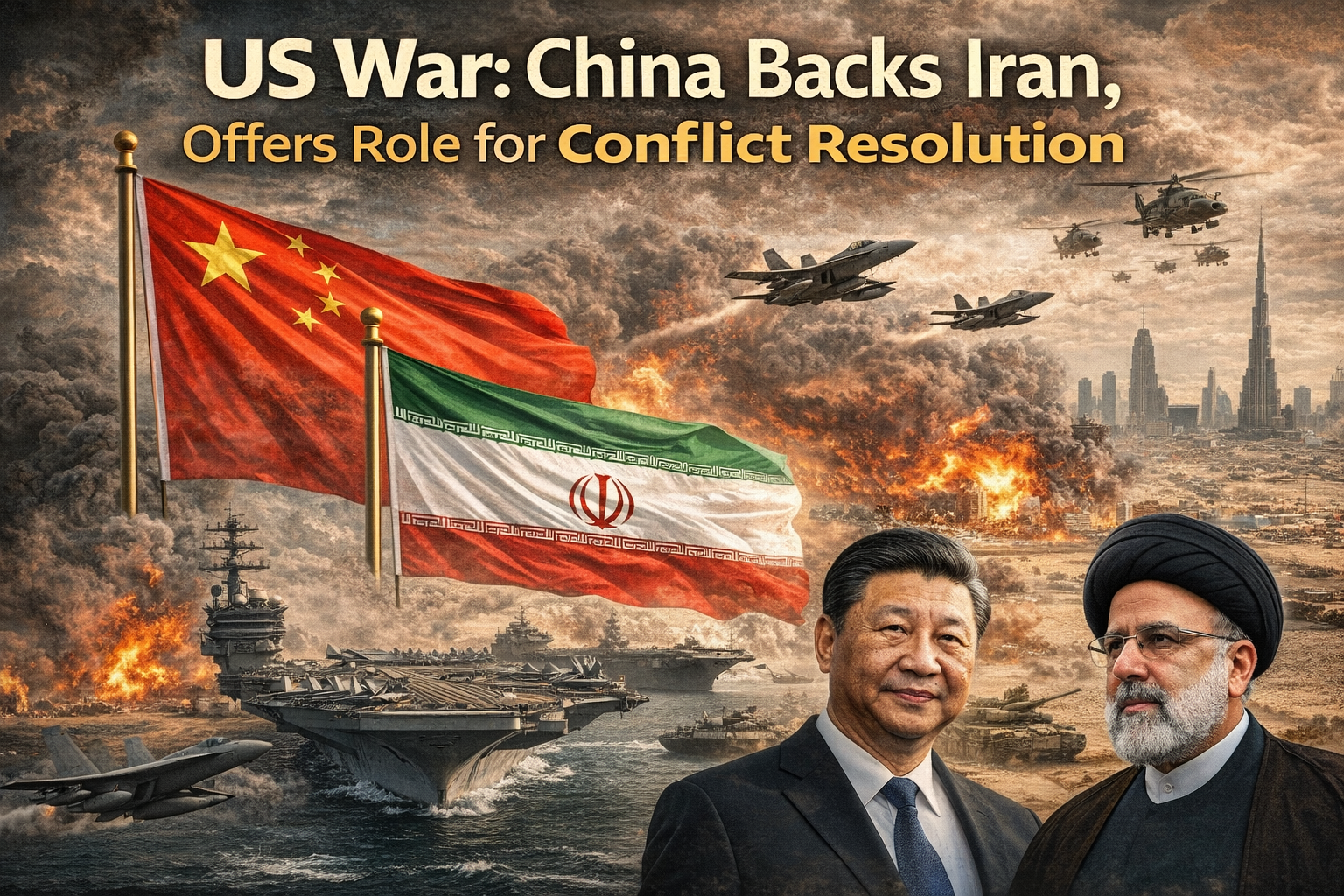
US War: China Backs Iran, Offers Role for Conflict Resolution as rising military tensions in the Middle East trigger fresh global concern over the possibility of escalation between Washington and Tehran.
The latest developments come amid reports of increasing US military deployments and renewed warnings directed at Iran over stalled nuclear negotiations.
Growing Military Pressure on Iran
The United States has intensified pressure on Iran by expanding its military presence in and around the Middle East.
Reports indicate that one of the world’s largest naval fleets has been deployed to the region as part of what Washington describes as strategic readiness.
In addition, US aircraft positioned at air bases in Portugal are reportedly on standby, while another fleet remains stationed in the Pacific.
Observers say such coordinated positioning suggests heightened preparedness rather than routine military movement.
China Voices Support for Iran
In response to these developments, China has expressed support for Iran’s sovereignty and stability.
According to international media reports, a spokesperson for the Chinese Foreign Ministry stated that Beijing is closely monitoring the evolving situation.
The spokesperson said China supports Iran in safeguarding its legitimate rights, national interests, and stability.
Call for Diplomatic Resolution
China reiterated its longstanding stance that international disputes should be resolved through political dialogue and diplomatic engagement rather than threats or military force.
The foreign ministry spokesperson emphasized that China opposes the use of coercion in international affairs and urged all parties to exercise restraint.
Beijing also signaled its readiness to play a constructive role in de-escalating tensions.
Trump’s Warning on Nuclear Talks
Amid rising tensions, former US President Donald Trump reportedly warned that a significant military strike could be launched if Iran does not agree to resume nuclear negotiations within a specified timeframe.
According to statements attributed to Trump, Iran was given a limited window — reportedly between 10 to 15 days — to demonstrate willingness for talks.
Such remarks have further fueled speculation about potential military action.
Regional Ripple Effects
The situation has also impacted other countries in the region.
Israel has reportedly warned Lebanon against allowing Hezbollah to become directly involved in any broader confrontation linked to Iran.
Israeli officials cautioned that escalation involving proxy groups could lead to serious consequences.
Concerns Over Wider Escalation
Analysts warn that any military confrontation between the United States and Iran could destabilize an already fragile regional security environment.
The Middle East remains a critical corridor for global energy supplies and maritime trade, meaning any prolonged conflict could have global economic repercussions.
International observers note that diplomatic backchannels may still remain active, despite the public rhetoric.
China’s Strategic Position
China’s involvement highlights the broader geopolitical implications of the crisis.
As a major global power with economic and strategic interests in the region, Beijing’s call for diplomacy reflects its preference for stability and negotiated settlements.
China’s offer to play a constructive mediating role signals its intention to remain engaged in shaping the outcome of the dispute.
Outlook
While military positioning continues, diplomatic efforts have not been formally suspended.
The coming days are likely to determine whether tensions move toward negotiation or further escalation.
Global stakeholders are closely watching developments as uncertainty persists.