
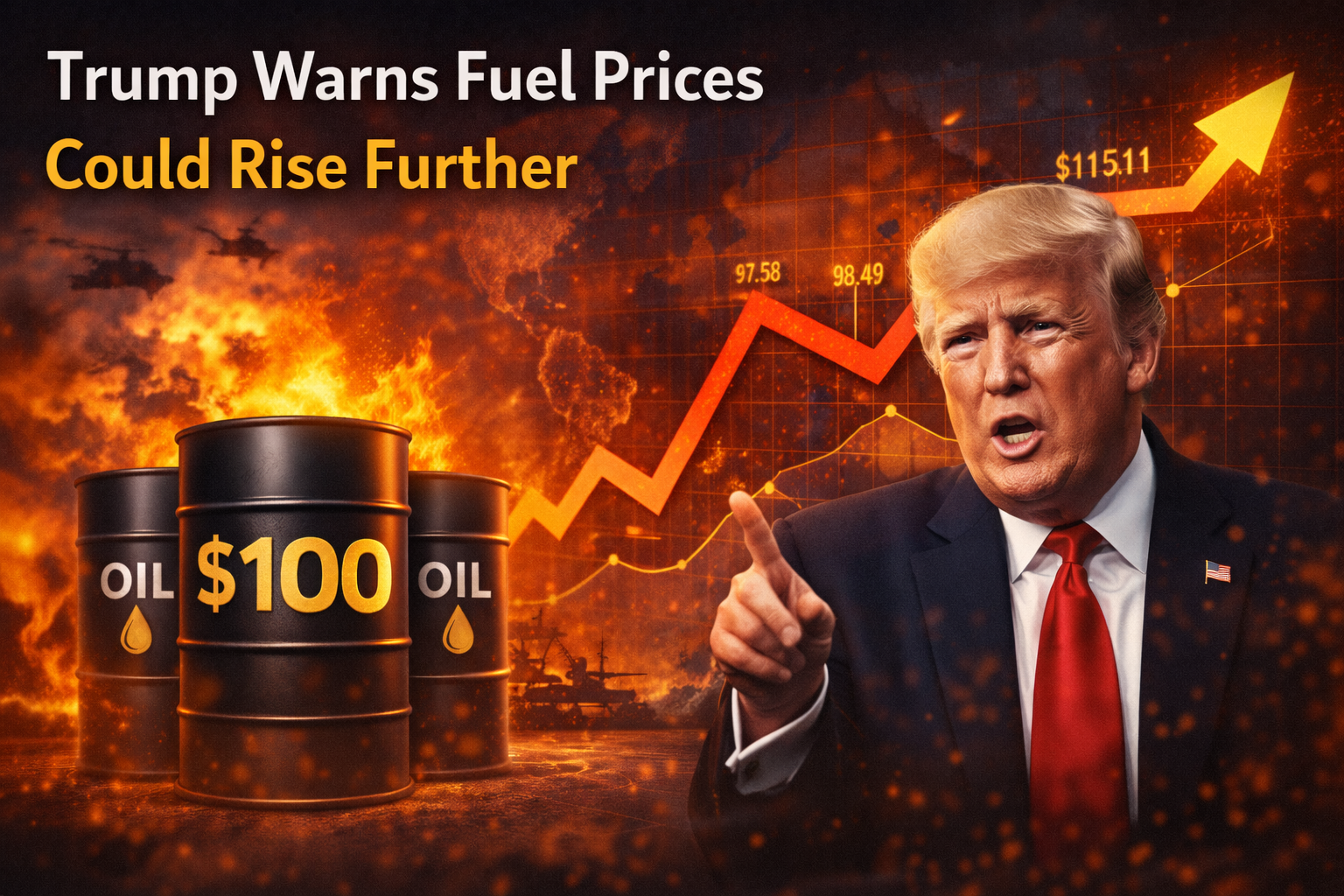
Trump Warns Fuel Prices Could Rise Further as global crude oil prices surged sharply following escalating tensions in the Middle East and the disruption of key energy shipping routes.
The price spike comes after Iran reportedly blocked the Strait of Hormuz, one of the world’s most important oil transit corridors, in response to ongoing military actions involving the United States and Israel.
Oil Prices Jump to Multi-Year High
According to international market data, global crude oil prices surged past $115 per barrel, marking one of the highest levels seen in several years.
The global benchmark Brent crude experienced a sharp increase as investors reacted to fears of supply disruptions in the Middle East.
Meanwhile, West Texas Intermediate (WTI), the main US crude oil benchmark, traded between $115 and $118 per barrel, reflecting a rapid increase of approximately 20 to 30 percent within just a few days.
Market analysts attribute the sudden rise to concerns over global supply security and the potential for prolonged geopolitical instability.
Strait of Hormuz Closure Triggers Market Panic
A major driver of the price surge is the reported disruption in the Strait of Hormuz, a strategic maritime route through which nearly 20 percent of the world’s oil supply passes daily.
Energy markets are particularly sensitive to developments in this region, as any disruption can quickly affect global fuel availability and transportation costs.
Reports indicate that oil tankers have been forced to delay transit through the waterway while shipping companies reassess security risks.
The uncertainty surrounding this vital corridor has fueled speculation that supply shortages could intensify if the situation persists.
Trump Comments on Rising Fuel Costs
Reacting to the surge in oil prices, US President Donald Trump addressed the issue on his social media platform, Truth Social.
Trump described the price increase as relatively minor compared with broader geopolitical concerns.
He stated that rising fuel costs represent a small price in the context of maintaining global security and addressing threats linked to Iran’s nuclear ambitions.
The US president also suggested that the current surge in oil prices could be temporary and may stabilize once geopolitical tensions ease.
Regional Conflict Fuels Energy Market Volatility
Tensions between Iran, the United States, and Israel continue to influence global energy markets.
Reports suggest that Iranian retaliation measures have intensified following leadership developments in Tehran, contributing to fears that the conflict could expand further.
The potential for prolonged confrontation has raised concerns among energy traders and policymakers about disruptions to oil and gas production facilities across the Gulf region.
Several Gulf states have reportedly experienced interruptions to energy transport routes, adding further uncertainty to the global supply outlook.
Economic Impact Being Closely Monitored
Economists warn that sustained high oil prices could lead to increased inflation worldwide, affecting transportation, manufacturing, and consumer goods prices.
Countries that rely heavily on energy imports may experience additional economic pressure if crude prices remain elevated for an extended period.
Global financial institutions and governments are closely monitoring developments in the Middle East, hoping diplomatic efforts can help stabilize markets and reduce volatility.