
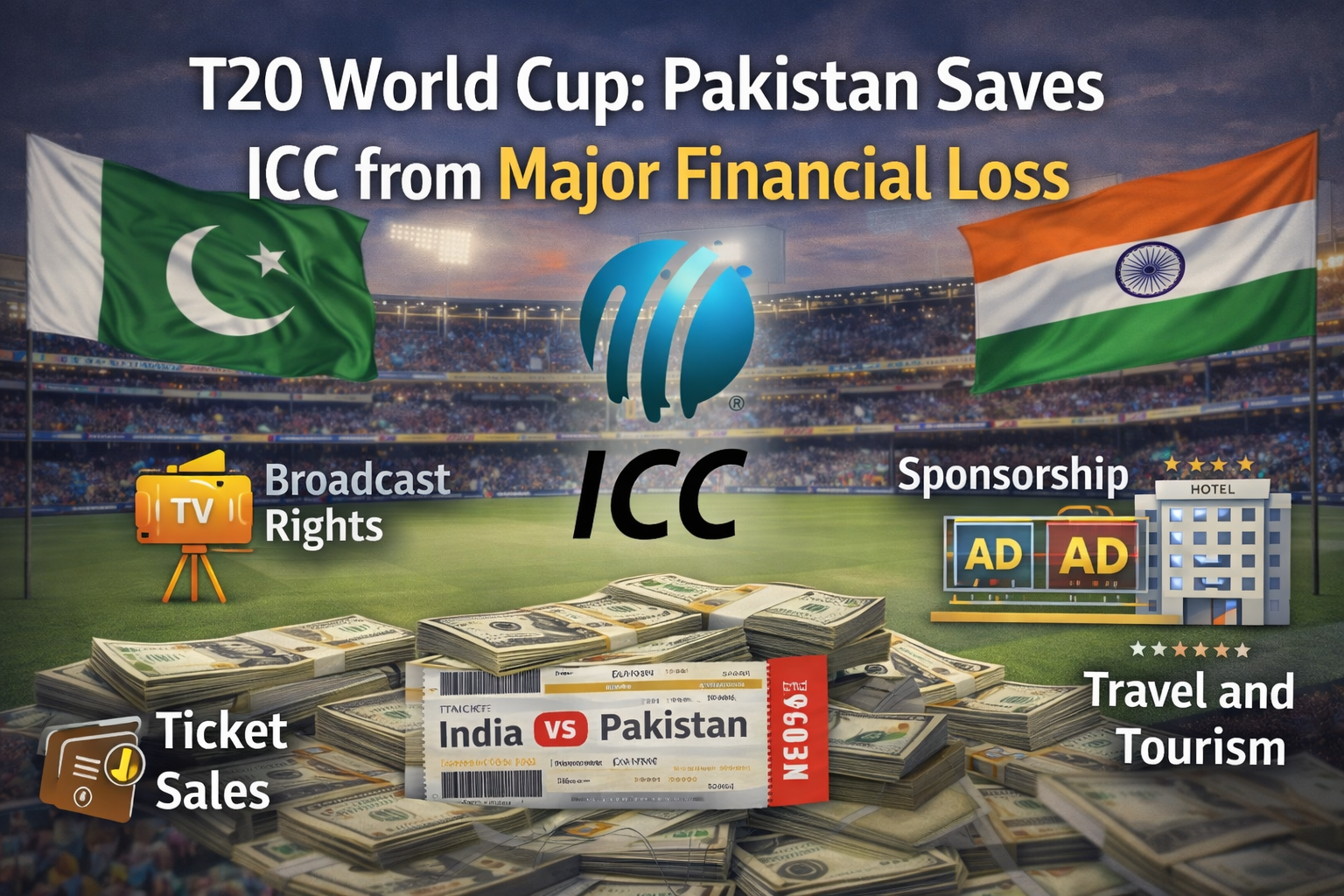
T20 World Cup: Pakistan saves ICC from major financial loss as the national team’s decision to play against India reportedly prevented significant revenue setbacks for global cricket authorities and commercial stakeholders.
Match Decision Carries Financial Weight
During the ICC Men’s T20 World Cup 2026, Pakistan’s participation in the high-profile fixture against India has been described as financially critical for the tournament.
According to media estimates, the decision helped the International Cricket Council avoid losses amounting to approximately $174 million.
The projected financial impact was linked to multiple revenue streams, including broadcast rights, matchday ticket sales, sponsorship agreements, and advertising commitments tied specifically to the Pakistan–India encounter.
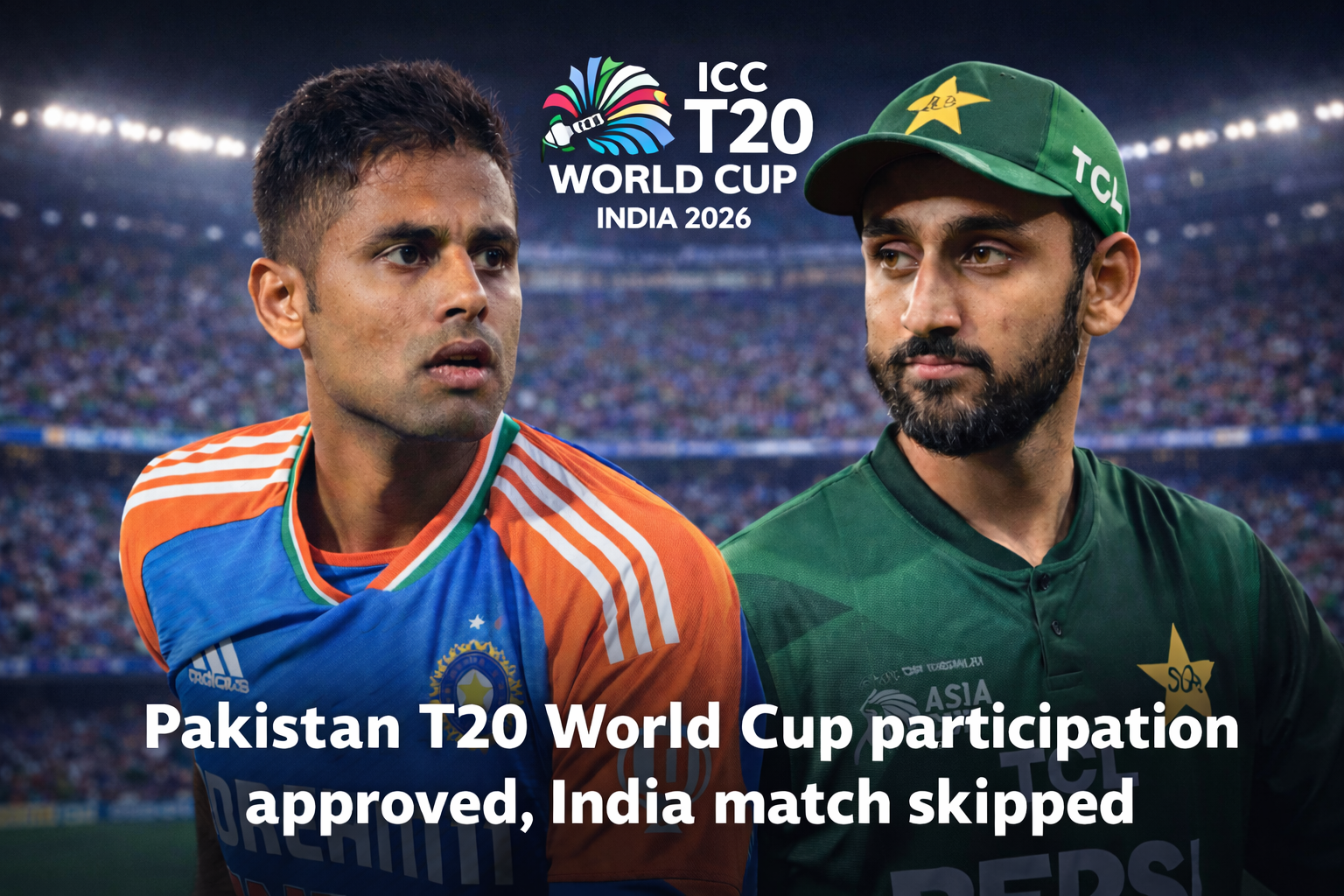
Broadcasters and Sponsors Relieved
Cricket’s biggest bilateral rivalry remains one of the sport’s most commercially valuable assets. Broadcasters allocate premium pricing structures and advertising slots around Pakistan–India matches due to exceptionally high global viewership.
Industry analysts say the absence of the match could have triggered contract penalties, reduced ad revenue, and renegotiation of sponsorship packages — all contributing to major financial losses.
Pakistan’s agreement to play ensured contractual stability and protected commercial projections linked to the tournament.
Travel and Tourism Demand Surges
Following confirmation of the fixture, travel demand surged across host cities.
Airfares to Mumbai and Colombo reportedly rose sharply, with ticket prices increasing between PKR 10,000 and PKR 60,000 in early booking windows.
Hospitality sector representatives in Colombo also reported renewed booking activity after earlier uncertainty surrounding the match.
Hotel Industry Reacts Positively
Hotel operators indicated that cancellations had begun when doubts emerged about the match taking place. Fans had started seeking refund policies and booking reversals amid uncertainty.
However, once participation was confirmed, reservations rebounded — particularly in premium hospitality zones near match venues.
Tourism analysts say Pakistan–India fixtures often create spillover economic activity across aviation, hospitality, retail, and transport sectors.
Negotiations Behind the Decision
The development followed consultations involving the Pakistan Cricket Board, Board of Control for Cricket in India, and the ICC.
After negotiations, the Government of Pakistan granted approval for the national team to participate in the match.
Officials described the decision as aligned with international sporting commitments while also safeguarding Pakistan’s representation in global cricket events.
Commercial Importance of Pakistan–India Matches
Pakistan–India matches consistently rank among the most watched sporting events worldwide.
Revenue drivers include:
-
Global television rights
-
Digital streaming subscriptions
-
Stadium ticketing
-
Brand endorsements
-
Sponsorship activations
Sports economists say even a single high-profile fixture can influence the financial viability of an entire tournament cycle.
Broader Impact on Tournament Economics
With participation confirmed, organizers secured:
-
Broadcast contract fulfillment
-
Sponsor deliverables
-
Ticketing revenue certainty
-
Tourism inflows
-
Host city economic activity
Analysts note that geopolitical tensions often complicate bilateral sporting ties, making each confirmed fixture financially and diplomatically significant.
[…] […]