
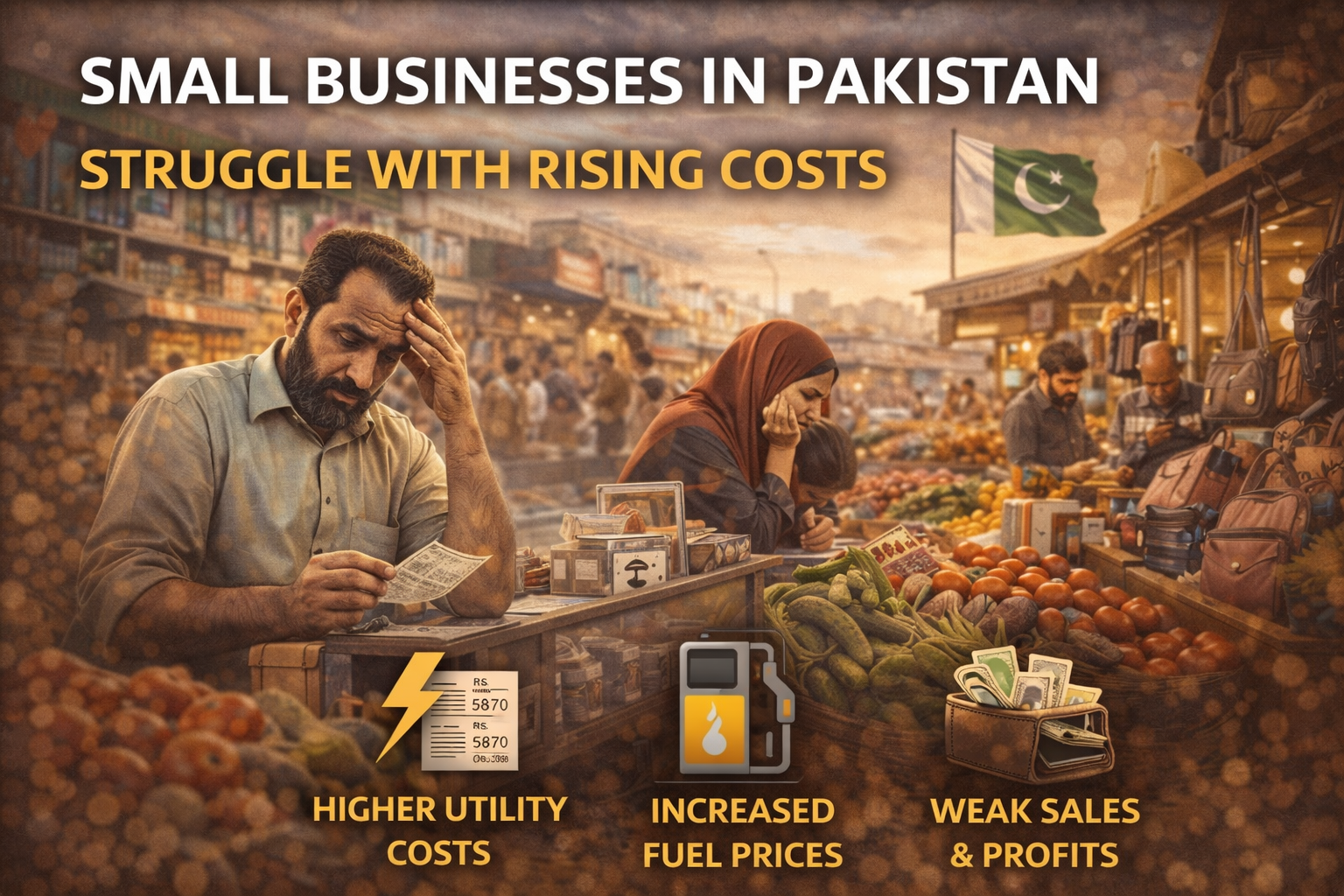
Small businesses in Pakistan are facing increasing pressure as rising operational costs continue to challenge their survival across the country. From neighborhood shops and small manufacturing units to service providers and traders, many business owners say that managing expenses has become harder than ever.
Over the past few months, inflation has affected nearly every aspect of business operations. Higher electricity bills, increased fuel costs, and rising raw material prices have all contributed to shrinking profit margins. For small enterprises that operate on limited capital, these changes can quickly become overwhelming.
Rising Costs Hitting Operations
One of the biggest concerns for small businesses is the rising cost of utilities. Electricity tariffs and gas prices have increased operating expenses, particularly for businesses that rely on machinery, refrigeration, or extended working hours. Shopkeepers and workshop owners report that monthly utility bills now consume a significant portion of their earnings.
Fuel prices have also had a direct impact. Transportation costs have gone up, affecting the delivery of goods and raw materials. Businesses that depend on daily supply chains, such as food vendors and retail stores, are especially vulnerable to these increases.
Declining Consumer Spending
Another major challenge is reduced consumer spending. As households struggle with higher food and living costs, discretionary spending has declined. Many small business owners say that customers are buying fewer items or opting for cheaper alternatives.
This shift in consumer behavior has forced businesses to lower prices or offer discounts, further reducing profit margins. In some cases, shopkeepers are barely breaking even, making it difficult to cover basic expenses such as rent and wages.
Pressure on Employment
Small businesses are a key source of employment in Pakistan. However, rising costs have made it difficult for employers to maintain staff levels. Some business owners have reduced working hours, while others have been forced to lay off employees to stay afloat.
This situation not only affects workers but also slows down economic activity at the local level. Experts warn that prolonged pressure on small enterprises could lead to higher unemployment and reduced income opportunities.
Access to Credit Remains Limited
Many small businesses depend on short-term credit to manage cash flow, but access to affordable financing remains a challenge. High interest rates and strict lending requirements discourage borrowing, leaving business owners with limited options to absorb rising costs.
Without financial support, businesses struggle to invest in improvements or expand operations. This limits growth potential and keeps many enterprises stuck in survival mode.
Government Support and Expectations
Business associations have repeatedly called for targeted relief measures. These include lower utility tariffs for small enterprises, easier access to credit, and tax relief for struggling sectors. While authorities have announced various support initiatives in the past, business owners say that implementation often falls short.
Economists argue that supporting small businesses is essential for economic stability. These enterprises form the backbone of the local economy, contributing to employment and community development.
Looking Ahead
Despite the challenges, many small business owners remain determined to continue operating. Some are adapting by cutting costs, switching suppliers, or offering new products and services. Others are turning to digital platforms to reach customers and reduce overheads.
The future of small businesses in Pakistan will depend largely on economic conditions and policy support. Stable prices, improved access to financing, and consistent consumer demand could help ease current pressures.
For now, rising costs remain a serious concern, and small business owners across the country are hoping for practical solutions that allow them not just to survive, but to grow.
[…] Small businesses in Pakistan face rising operational costs […]