
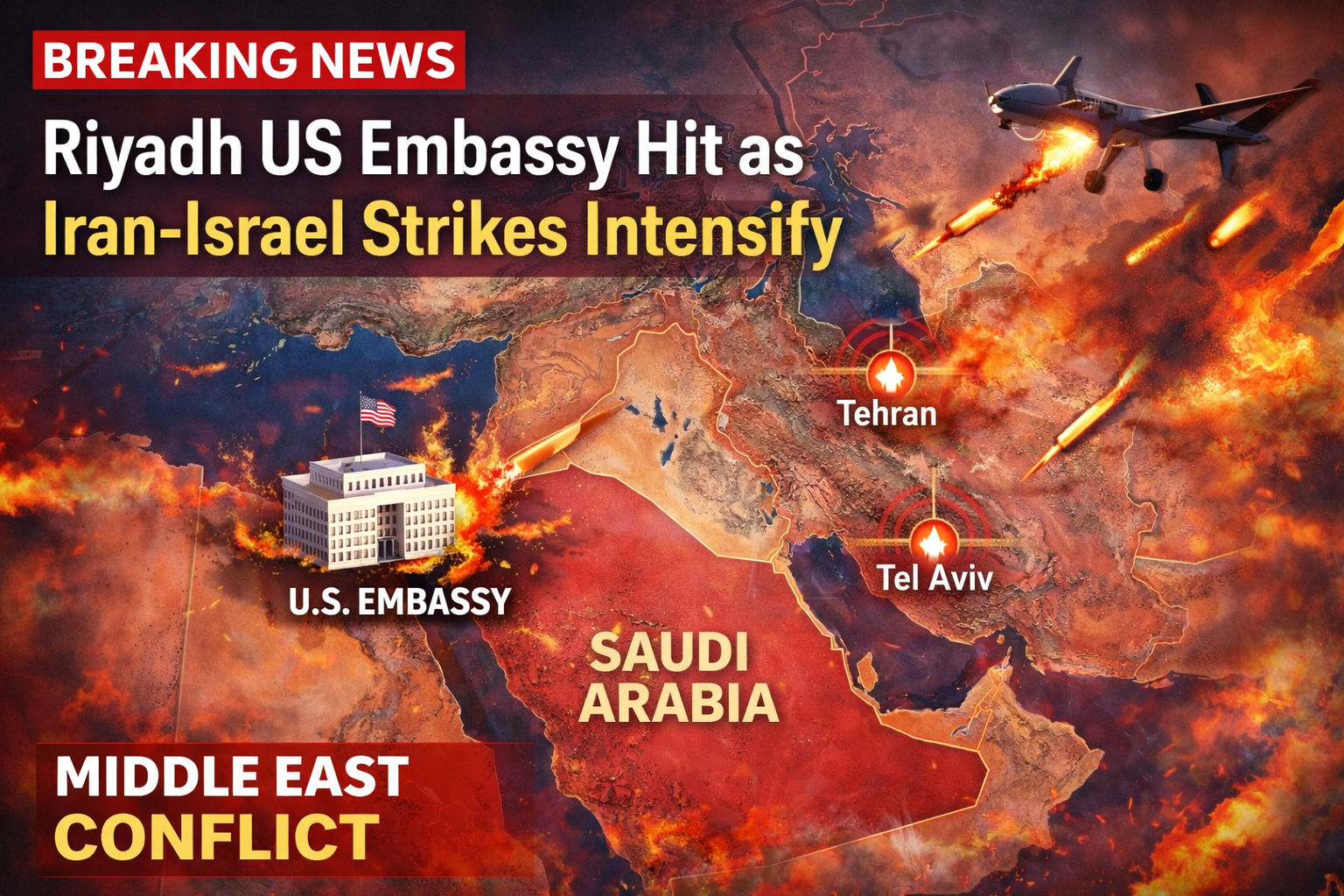
Riyadh US Embassy Hit as Iran-Israel Strikes Intensify after escalating military confrontation involving Iran, Israel, and the United States triggered drone attacks, large-scale bombardments, diplomatic shutdowns, and emergency travel advisories across the Middle East.
Saudi authorities confirmed that two drones targeted the United States Embassy compound in Riyadh, causing limited fire damage and minor structural impact. No major casualties were immediately reported, though security measures across diplomatic facilities were significantly strengthened.
Drone Attack Raises Diplomatic Security Concerns
Following the incident, US diplomatic missions in Saudi Arabia suspended consular services in Riyadh, Jeddah, and Dhahran, while American citizens were instructed to follow shelter-in-place guidance and prepare personal emergency plans.
The attack marked one of the most direct threats to diplomatic infrastructure since tensions sharply escalated in the region.
Security analysts view attacks on embassies as a serious escalation due to their symbolic and strategic importance under international law.
Strait of Hormuz Closure Sparks Global Alarm
Iran’s Islamic Revolutionary Guard Corps (IRGC) announced the closure of the Strait of Hormuz, warning that vessels attempting passage could be targeted.
The strategic waterway handles nearly 20 percent of global oil and gas shipments, making any disruption a major concern for international energy markets.
Maritime monitoring agencies reported rising security incidents near Gulf shipping routes, while dozens of oil tankers reportedly halted movement awaiting safer transit conditions.
Energy infrastructure across Gulf states also came under threat, with QatarEnergy temporarily suspending liquefied natural gas production at two facilities following reported attacks.
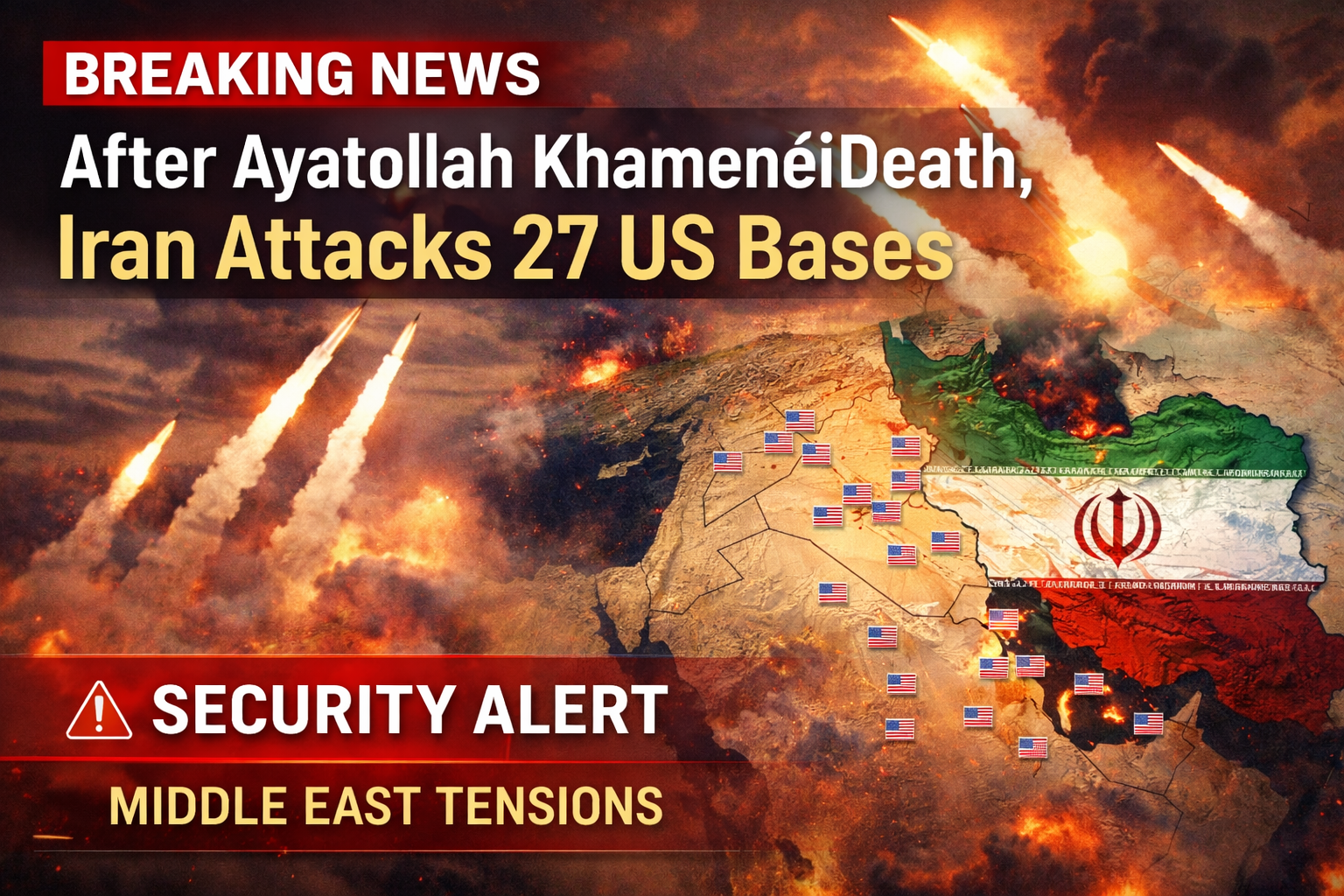
Heavy Bombardment Reported in Tehran and Tel Aviv
Israeli forces continued air operations targeting locations in Tehran and Beirut, including strikes reportedly affecting Iran’s state broadcasting infrastructure.
Casualty figures reported by regional sources suggest that combined deaths in Iran and Lebanon have exceeded 600, though independent verification remains ongoing.
Iran also launched missile attacks toward Israeli territory. Israeli military officials stated that air defense systems intercepted missiles over Tel Aviv, West Jerusalem, and Eilat, while at least 10 fatalities have been reported in Israel since the latest escalation began.
Embassies Shut as Countries Issue Emergency Advisories
Amid worsening security conditions, the United States and Canada temporarily closed several diplomatic missions across the Middle East.
The US Embassy in Kuwait suspended operations indefinitely, canceling all routine and emergency consular appointments. Meanwhile, non-essential American government personnel in Iraq were ordered to leave the country due to growing risks.
Washington also issued an emergency advisory urging US citizens to immediately depart 14 Middle Eastern countries, citing rapidly changing security threats and risks of missile or drone attacks.
Canada issued similar warnings, advising citizens in parts of the Gulf region to leave without waiting for evacuation flights.
Military Claims and Counterclaims Continue
Iranian state media claimed significant military losses inflicted on US forces and attacks on naval and oil tanker assets in the Gulf region. Independent confirmation of several battlefield claims remains unavailable.
Jordan formally protested missile activity affecting regional airspace and summoned Iran’s ambassador to express concern over escalating instability.
Meanwhile, Israel extended nationwide emergency measures until March 12, placing security forces on heightened alert amid expectations of continued hostilities.
Diplomatic Efforts Urged Amid Escalation
Global leaders and international organizations have called for urgent diplomatic engagement to prevent wider regional conflict.
Analysts warn that continued escalation involving major regional and global powers could have far-reaching consequences for global energy supplies, trade routes, and international security stability.
The situation remains fluid as governments monitor developments and reassess diplomatic and military responses.