
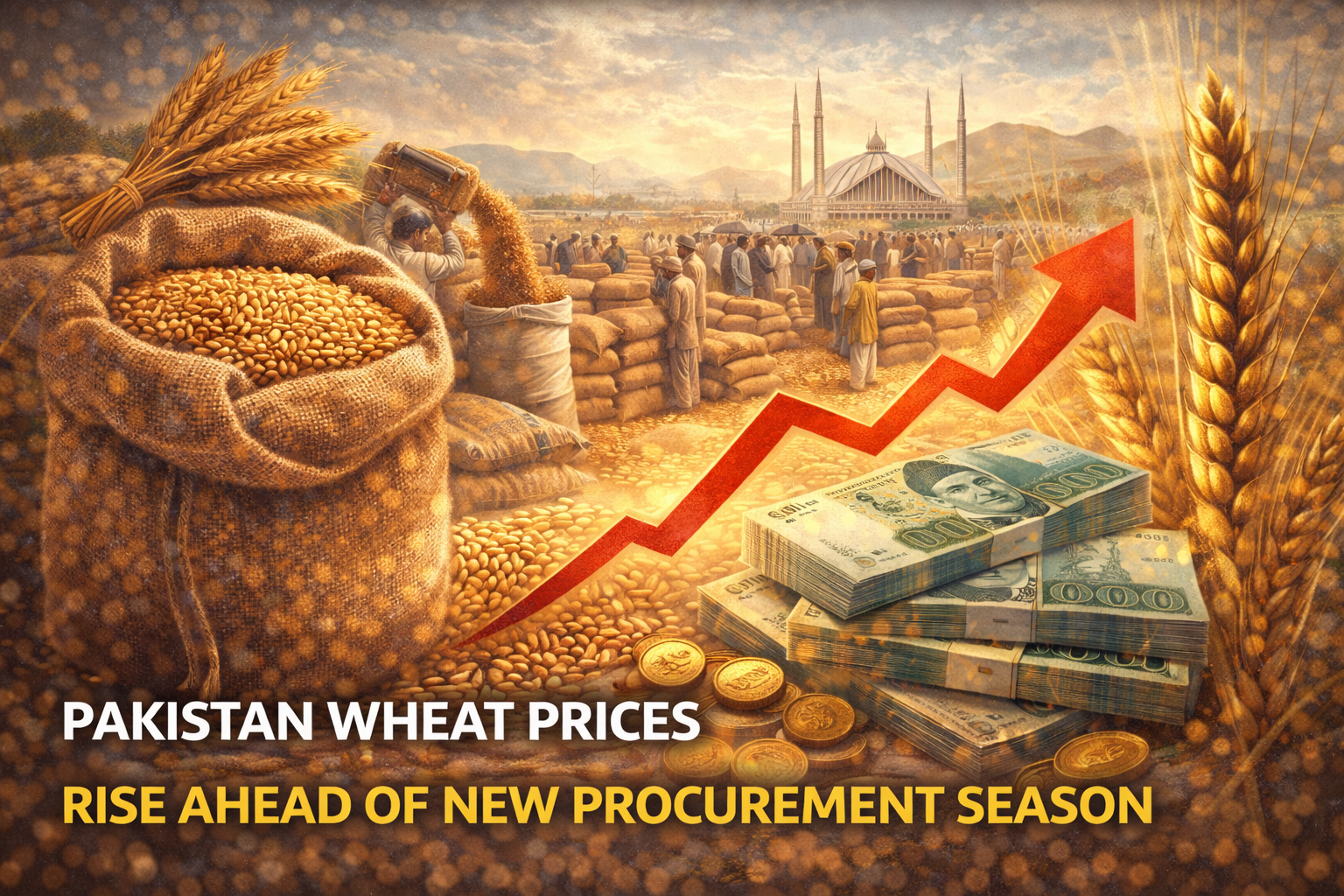
Pakistan wheat prices have shown an upward trend ahead of the upcoming procurement season, raising concerns among consumers and policymakers. Market observers say fluctuations in supply, production costs, and procurement policies are influencing prices at a critical time for the country’s food security.
Wheat is a staple food in Pakistan, and any change in its price directly affects household expenses. Over the past few weeks, traders have reported increased activity in wholesale markets, with prices gradually moving upward. This has sparked debate about availability and the government’s role in stabilizing rates.
Farmers point to rising input costs as a major factor behind higher prices. Fertilizers, fuel, and irrigation expenses have increased, making wheat cultivation more costly. Growers argue that fair pricing is essential to cover production costs and encourage continued farming.
At the same time, consumers worry that higher wheat prices could lead to increased flour rates. Flour prices have a direct impact on daily food expenses, especially for low- and middle-income households. Any sustained rise could add pressure to household budgets already affected by inflation.
Government officials have stated that monitoring mechanisms are in place to prevent artificial shortages and hoarding. Authorities are expected to announce procurement targets and support prices to ensure sufficient supply in government reserves. These measures aim to balance farmer interests with consumer affordability.
Market analysts note that Pakistan wheat prices are also influenced by global trends. International wheat markets have experienced volatility due to weather conditions, export restrictions, and supply chain disruptions. These factors indirectly affect domestic pricing expectations.
Storage and transportation challenges further complicate the situation. Inadequate storage facilities can lead to post-harvest losses, reducing available supply. Improving logistics and storage infrastructure is seen as key to stabilizing prices over the long term.
Experts emphasize the importance of transparent procurement policies. Clear announcements regarding support prices and purchase quantities can help reduce uncertainty in the market. When farmers and traders have confidence in policy direction, price volatility tends to decrease.
Food security specialists warn that unmanaged price increases could impact nutrition levels, particularly in vulnerable communities. Wheat-based products form the foundation of daily meals for millions, making affordability a national concern.
Economists suggest that timely government intervention can help smooth price movements. Strategic release of reserves, efficient procurement, and monitoring of market practices are commonly recommended tools to manage fluctuations.
As the procurement season approaches, all eyes are on official decisions that will shape market behavior. Pakistan wheat prices in the coming weeks are expected to reflect how effectively supply, demand, and policy measures are balanced.
For now, consumers, farmers, and traders remain alert to developments, knowing that wheat pricing decisions have wide-ranging implications for food security and economic stability across the country.