
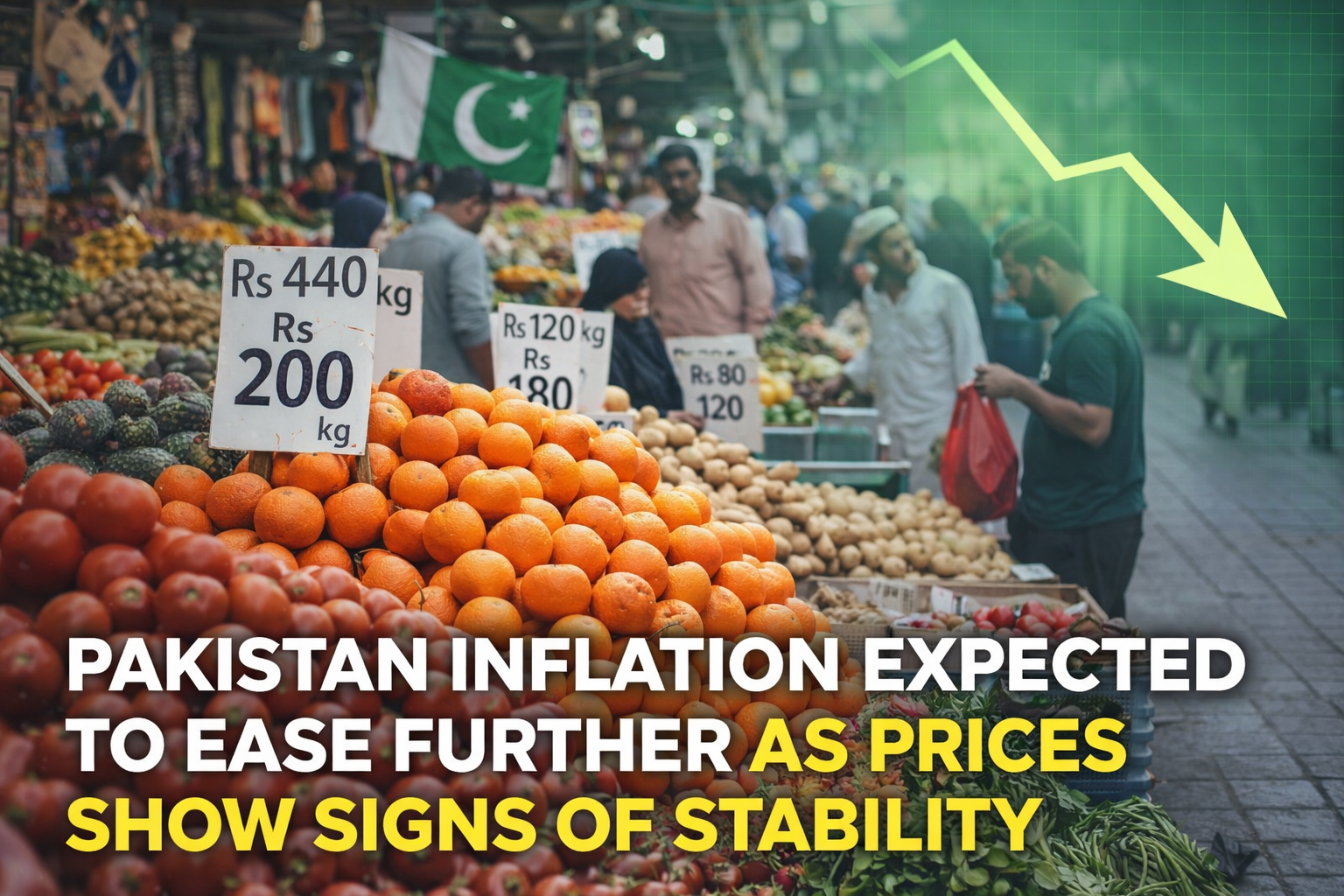
Pakistan Inflation Expected to Ease Further as recent price trends suggest signs of stabilization, offering cautious optimism for consumers and businesses alike. After a prolonged period of high inflation that affected household budgets and economic activity, analysts believe that price pressures may continue to ease in the coming months.
Over the past year, inflation remained one of the biggest challenges for Pakistan’s economy. Rising food prices, increased energy costs, and currency fluctuations significantly reduced purchasing power and raised concerns across all income groups. However, recent data trends indicate that the pace of price increases has slowed compared to previous months.
According to economic observers, improved supply conditions and tighter monetary measures have played a role in controlling inflationary pressures. Better availability of essential commodities and gradual stabilization of the currency have helped reduce sudden price shocks in local markets.
Government officials have stated that maintaining price stability remains a top priority. Policy measures aimed at controlling market manipulation, improving supply chains, and monitoring essential goods prices are expected to continue. These efforts are intended to prevent unnecessary price hikes and protect consumers.
Experts note that inflation trends are closely linked to global economic conditions. Fluctuations in international commodity prices and changes in global demand can influence local prices. Despite external uncertainties, analysts suggest that Pakistan’s inflation outlook may remain relatively stable if current economic policies are sustained.
For businesses, easing inflation could help restore confidence and support investment planning. High inflation often creates uncertainty for producers and retailers, making cost management difficult. A more predictable pricing environment could encourage business activity and gradual economic recovery.
Consumers, particularly those with fixed incomes, may benefit from slower price increases. While prices remain higher than previous years, stabilization could provide some relief by reducing the frequency of sharp cost increases for essential goods.
Economists caution that challenges remain, including fiscal pressures and external economic risks. Sustained efforts will be required to ensure that inflation continues on a downward trend without disrupting economic growth.
Overall, the outlook for inflation in Pakistan shows early signs of improvement. If current trends continue and supportive policies remain in place, consumers and businesses may experience greater stability in the months ahead.