
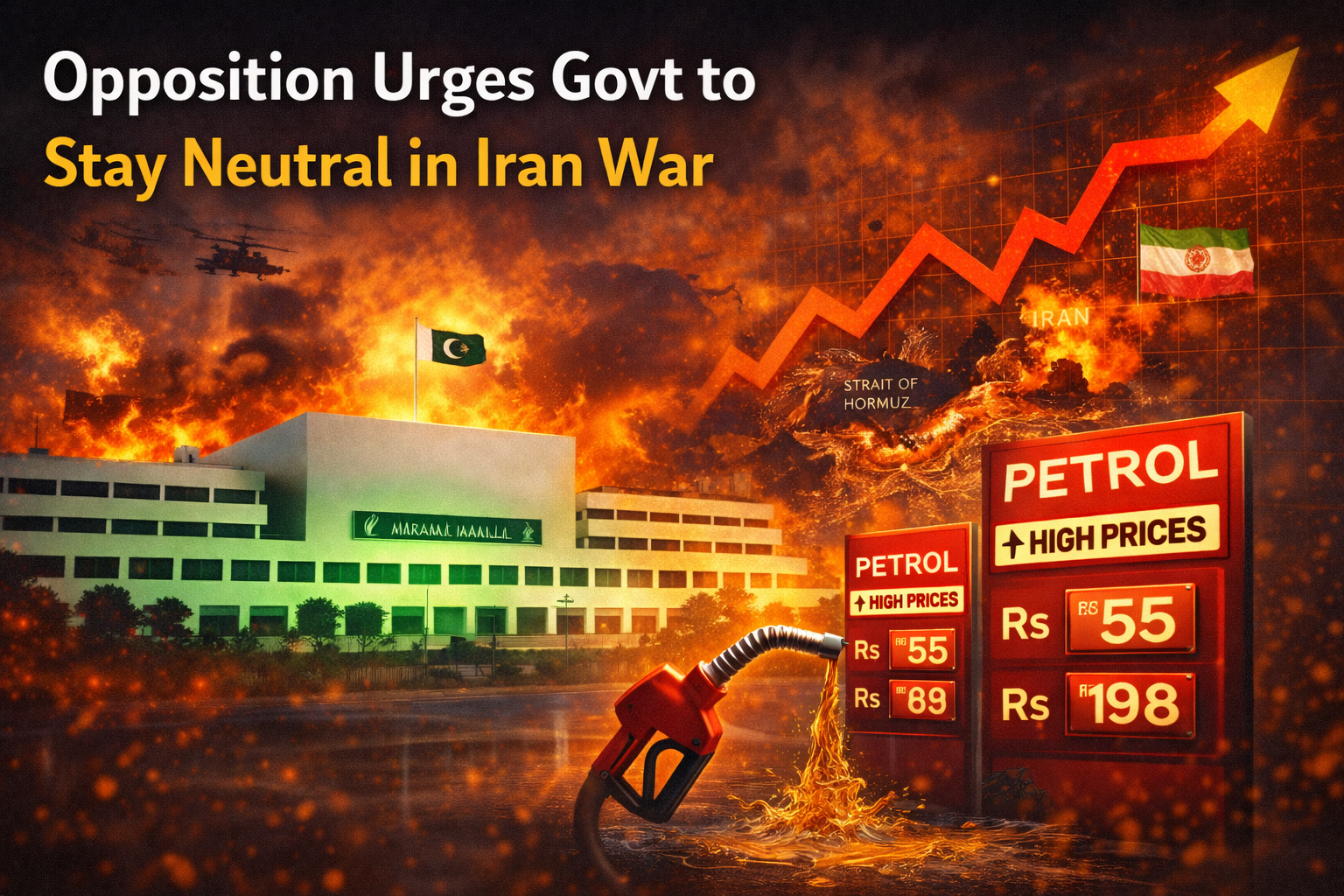
Opposition Urges Govt to Stay Neutral in Iran War as leaders from Pakistan’s opposition alliance, including representatives of Pakistan Tehreek-e-Insaf (PTI), called on the government to avoid involvement in the ongoing regional conflict and review domestic economic decisions linked to rising fuel prices.
The demands were made during a press conference in Islamabad, where opposition leaders also urged authorities to withdraw from the proposed Board of Peace initiative and reconsider recent increases in petroleum product prices.
Opposition Leaders Call for Neutral Foreign Policy
PTI Secretary General Salman Akram Raja, speaking at the press briefing alongside senior party figures including Babar Awan and Senator Allama Raja Nasir Abbas, emphasized that Pakistan should maintain neutrality in the ongoing tensions involving Iran.
He stated that the situation in the Gulf region has become highly volatile and warned that regional conflicts could further destabilize the broader Middle East.
Raja argued that Pakistan, as a nuclear power with strategic influence, should focus on promoting dialogue and diplomatic solutions rather than becoming a party to military confrontations.
Calls to Suspend Participation in Board of Peace
During the press conference, opposition leaders also demanded that the government immediately suspend Pakistan’s participation in the Board of Peace initiative.
Babar Awan noted that some countries, including Indonesia, had reportedly reconsidered their participation in the initiative and suggested Pakistan should review its own involvement as well.
He emphasized that decisions regarding international alliances or security initiatives should be made carefully, particularly during periods of heightened regional conflict.
Opposition Criticizes Fuel Price Increase
Opposition representatives also criticized the government for increasing petroleum prices, warning that higher fuel costs could place additional financial pressure on citizens already facing rising living expenses.
Salman Akram Raja highlighted reports suggesting a possible increase of around Rs55 per liter in petrol prices, describing it as a sign of further economic difficulties for ordinary households.
He argued that instead of shifting financial burdens onto the public, policymakers should reduce government expenditures and address structural economic challenges.
Political and Legal Concerns Raised
The press conference also touched on broader political developments within Pakistan. Opposition leaders criticized recent court decisions involving political figures and called for greater transparency in legal proceedings.
Babar Awan stated that several individuals had received court verdicts in their absence, raising concerns about procedural fairness.
Opposition representatives further reiterated calls for political dialogue, judicial reforms, and greater institutional balance within the country’s governance system.
Call for Political Dialogue and Elections
Opposition leaders concluded the briefing by urging the government to initiate political dialogue aimed at resolving ongoing tensions.
They also repeated demands for electoral reforms and called for discussions involving major political stakeholders to ensure stability.
Analysts say such statements reflect the opposition’s attempt to link domestic political issues with broader regional developments, while advocating for diplomatic approaches to international conflicts.