
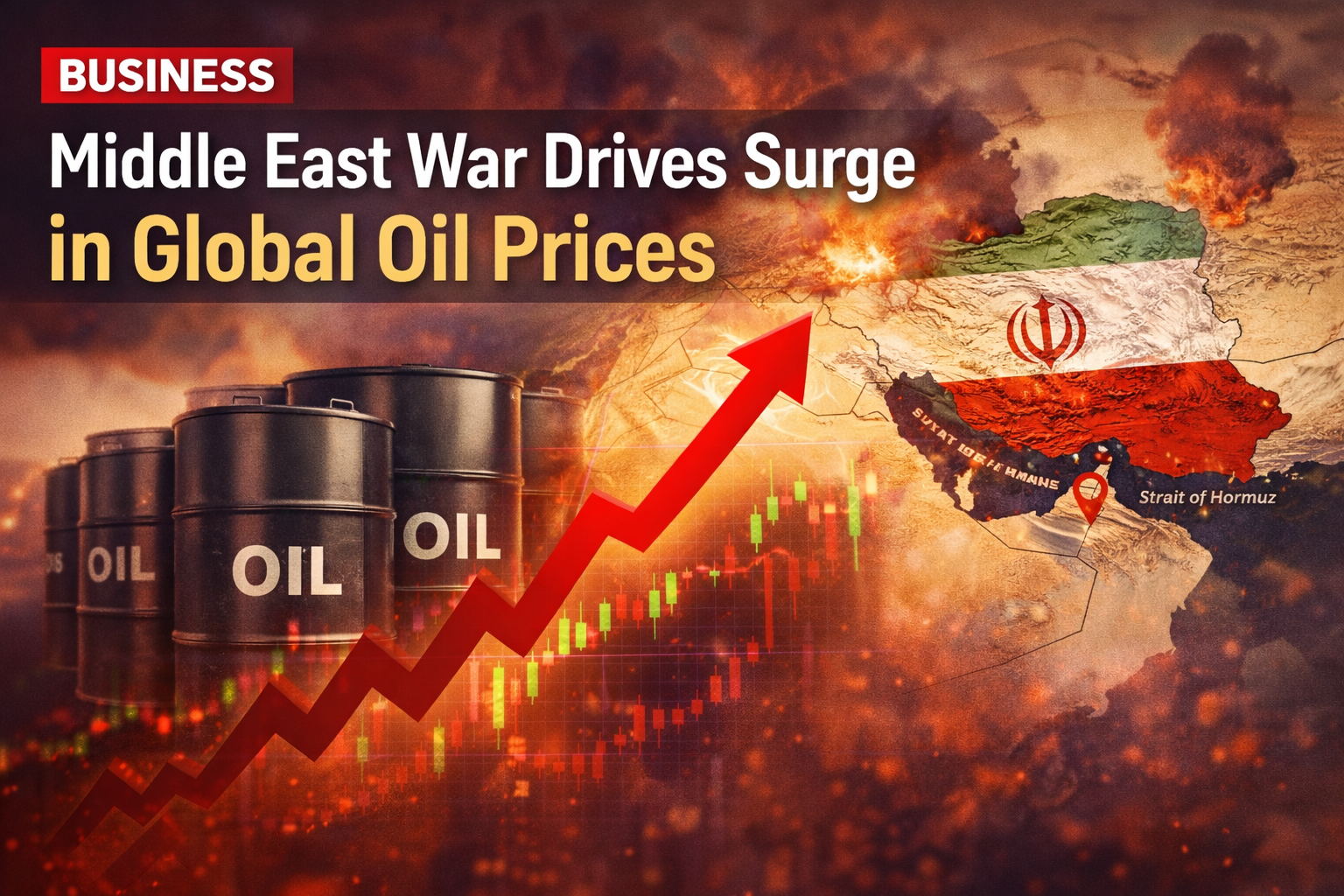
Middle East War Drives Surge in Global Oil Prices Amid Supply Concerns
Middle East War Drives Surge in Global Oil Prices after escalating tensions following reported military strikes involving Iran, the United States, and Israel triggered renewed uncertainty across global energy markets, pushing crude oil prices sharply higher at the start of the trading week.
International oil benchmarks reacted strongly to growing fears of supply disruption in one of the world’s most critical energy-producing regions.
Oil Prices Rise Following Regional Escalation
Global oil prices recorded a significant increase as investors responded to rising geopolitical risks in the Middle East. On Monday, Brent crude oil prices surged nearly 10 percent, crossing the $82 per barrel mark during early trading hours.
Prices later eased slightly but remained elevated at around $79 per barrel, reflecting continued market anxiety over possible long-term disruptions in oil supply routes.
Energy analysts noted that oil markets typically react quickly to instability in the Middle East due to the region’s central role in global crude production and transportation.
OPEC Announces Production Increase
In response to rising prices, the Organization of the Petroleum Exporting Countries (OPEC) announced plans to increase oil production by approximately 206,000 barrels per day.
The move is aimed at stabilizing global markets and preventing excessive price volatility that could negatively impact importing economies.
However, market experts believe additional production may only provide short-term relief if geopolitical tensions continue to escalate or expand into broader regional conflict.
Some analysts warned that prolonged instability could push oil prices beyond $100 per barrel, especially if transportation routes remain affected.
Strait of Hormuz Disruption Raises Global Concerns
A major factor contributing to market uncertainty is the reported disruption of shipping activity through the Strait of Hormuz, a strategically vital maritime corridor through which nearly 20 percent of global oil and gas shipments pass.
Reports indicated that Iran suspended vessel movement through the strait following recent developments, raising fears of supply bottlenecks in international energy markets.
The United Kingdom Maritime Trade Operations (UKMTO) center also reported incidents involving attacks on at least three commercial vessels near the waterway.
Tanker Traffic Slows Amid Security Risks
Shipping data suggested that more than 150 oil tankers have anchored in Gulf waters while awaiting security clearance before continuing transit through the region.
Maritime security experts warned that delays in tanker movement could significantly affect global energy supply chains if disruptions persist for an extended period.
Insurance costs for shipping companies operating in high-risk zones are also expected to rise, potentially adding further pressure on oil prices and transportation expenses worldwide.
Global Economic Impact Under Watch
Economists caution that sustained increases in oil prices could influence inflation trends, transportation costs, and economic recovery prospects across both developed and emerging markets.
Countries heavily dependent on energy imports may face renewed fiscal pressure if crude prices continue climbing.
Financial markets and governments worldwide are closely monitoring developments as diplomatic efforts continue to prevent further escalation in the region.