
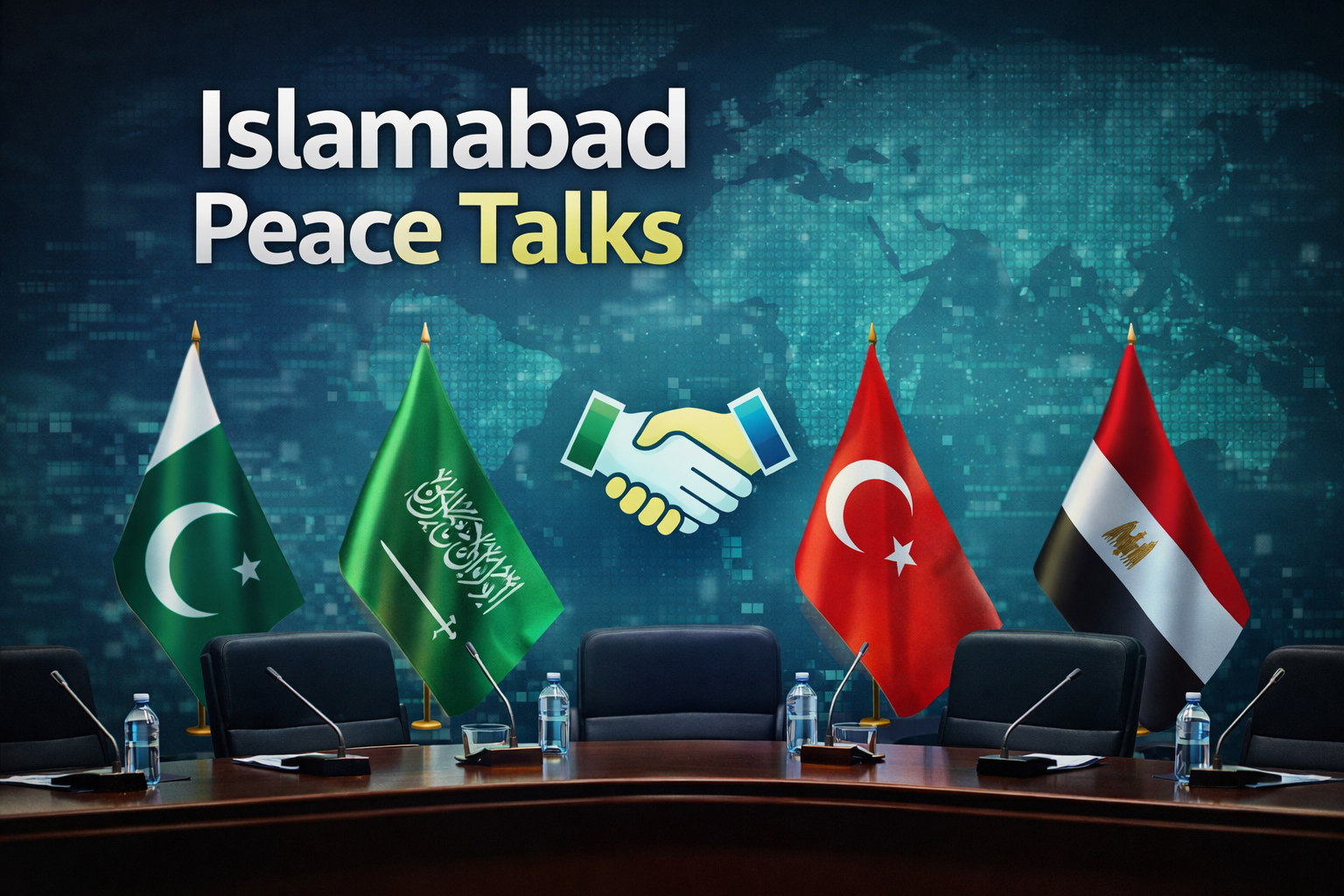
Islamabad talks end as regional peace efforts intensify, with foreign ministers from Pakistan, Saudi Arabia, Türkiye, and Egypt meeting to discuss de-escalation in the Middle East.
🌍 High-Level Meeting Held in Islamabad
A significant diplomatic meeting was held in Islamabad, hosted by Pakistan, bringing together the foreign ministers of four key countries. The session focused on addressing rising tensions in the Middle East and exploring options for reducing conflict.
The meeting was attended by Deputy Prime Minister and Foreign Minister Ishaq Dar, along with representatives from Saudi Arabia, Türkiye, and Egypt.
🤝 Focus on Ceasefire and Stability
During the discussions, participants exchanged views on achieving a ceasefire and promoting long-term peace in the region. Various proposals were considered as part of ongoing diplomatic efforts to manage the evolving situation.
Officials confirmed that the first round of talks has concluded, with another round expected soon. In the next phase, progress on the discussed proposals will be reviewed and shared among participating countries.
✈️ Arrival of Delegations
Saudi Foreign Minister Faisal bin Farhan Al Saud arrived in Islamabad via a special flight, highlighting the importance of the meeting. The visit comes at a time of heightened regional tension, making diplomatic engagement critical.
The presence of multiple foreign ministers reflects coordinated efforts to address shared concerns related to security and stability.
🇵🇰🇹🇷 Bilateral Talks with Türkiye
Prior to the joint session, Ishaq Dar held a separate meeting with Türkiye’s Foreign Minister Hakan Fidan. Both sides reviewed bilateral relations and discussed regional developments.
The Pakistani side emphasized the longstanding and strong ties between the two countries, based on shared history and mutual respect. Both countries reaffirmed their commitment to strengthening cooperation across various sectors.
They also discussed the evolving situation in the Middle East, including developments related to Iran, and stressed the importance of dialogue and diplomacy.
🇵🇰🇪🇬 Pakistan-Egypt Discussions
Ishaq Dar also met Egypt’s Foreign Minister Badr Abdelatty to discuss bilateral relations and regional issues.
Both sides reviewed progress made since recent high-level engagements, including earlier meetings held in Riyadh. They expressed satisfaction with the current direction of relations and agreed to expand cooperation in multiple sectors.
📊 Trade, Investment and Cooperation
During the Pakistan-Egypt meeting, both countries emphasized the need to enhance trade and investment ties. They discussed activating bilateral mechanisms, including joint commissions and business-to-business engagement.
Officials also highlighted cooperation in healthcare, particularly in efforts to combat Hepatitis C, where Egypt has been providing support.
🛡️ Defense and Security Collaboration
The discussions also covered defense and security cooperation. Both sides acknowledged progress in these areas and agreed to further strengthen collaboration through training programs and institutional partnerships.
The importance of continued coordination on regional security issues was also highlighted.
🌐 Regional and Global Issues
The meetings included discussions on broader regional and international developments. The situation in the Middle East remained a central focus, with all parties emphasizing restraint, de-escalation, and diplomatic solutions.
Pakistan reiterated its support for the Palestinian people and condemned ongoing violence in Gaza and the West Bank. Egypt’s role in facilitating humanitarian assistance to affected populations was also acknowledged.
🤲 Multilateral Cooperation
Both Pakistan and Egypt agreed to continue close coordination at international platforms such as the United Nations and the Organization of Islamic Cooperation (OIC). These forums are seen as key avenues for addressing global and regional challenges.
🔍 Continued Diplomatic Engagement
The visit of Egypt’s foreign minister is part of ongoing high-level diplomatic engagement between the two countries. It reflects a shared commitment to maintaining close coordination amid changing regional dynamics.
The Islamabad meeting marks an important step in collective diplomatic efforts to address tensions and promote stability in the Middle East. Further rounds of talks are expected to continue this engagement.