
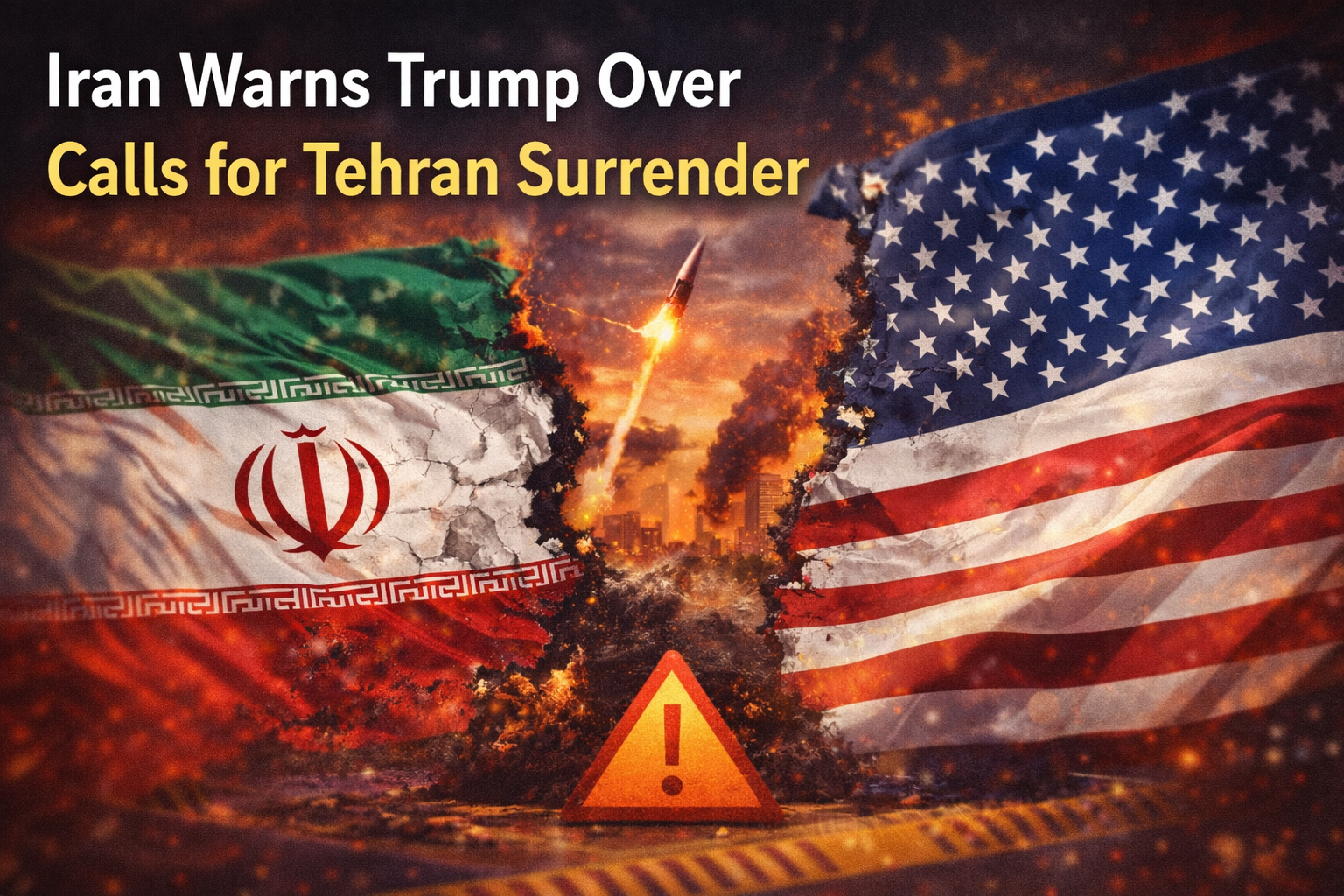
Iran Warns Trump Over Calls for Tehran Surrender as Iranian President Masoud Pezeshkian responded strongly to remarks by US President Donald Trump, stating that Tehran will not bow to pressure and will continue resisting external demands.
The statement came during an emergency televised address broadcast on Iranian state television amid escalating tensions in the Middle East following recent military confrontations involving Iran, the United States, and Israel.
Iranian Leadership Rejects Surrender Demands
According to international media reports, President Trump stated that no agreement with Iran would be possible until the country agreed to surrender its position in the ongoing conflict.
In response, President Masoud Pezeshkian declared that Iran would continue its resistance, emphasizing that adversaries expecting Tehran to surrender would carry that hope “to their graves.”
The Iranian president stressed that Iran would not accept pressure or coercion in matters concerning its national sovereignty and security.
Iran Addresses Regional Concerns
During the televised speech, Pezeshkian also addressed tensions with neighboring countries in the Gulf region. He apologized for the unintended consequences of recent military actions that affected regional stability.
However, he clarified that Iranian operations were not intended to target neighboring states or their infrastructure.
According to the Iranian leadership, the strikes were directed specifically at US military bases and installations located in the region rather than civilian areas or facilities belonging to neighboring countries.
Pezeshkian expressed hope that neighboring states would not allow their territories to be used for further military actions against Iran.
Iran Says It Does Not Seek Regional Escalation
The Iranian president stated that Iran does not wish to increase tensions across the Middle East but remains prepared to defend itself if national security is threatened.
He argued that some countries mistakenly believe that pressure or military action could force Iran into submission.
Iranian officials maintain that the country retains the right to respond to perceived aggression and protect its strategic interests.
Conflict Escalates After Recent Military Operations
Regional tensions intensified after the United States and Israel reportedly launched military operations targeting Iranian facilities starting on February 28.
According to Iranian sources, several senior Iranian officials and military figures were killed during the initial phase of the attacks.
In response, Iran launched missile strikes targeting American military installations located in Gulf states, resulting in casualties and damage according to reports from Iranian state media.
Independent verification of several claims from both sides remains limited as the conflict continues to evolve.
International Calls for De-escalation
The escalating exchange of military actions has raised concerns among global leaders and international organizations, with many urging restraint and diplomatic dialogue.
Analysts warn that continued confrontation between regional powers and global actors could significantly destabilize the Middle East, affecting energy markets, trade routes, and broader international security.
Diplomatic efforts by several countries are ongoing as governments attempt to prevent the conflict from expanding further.