
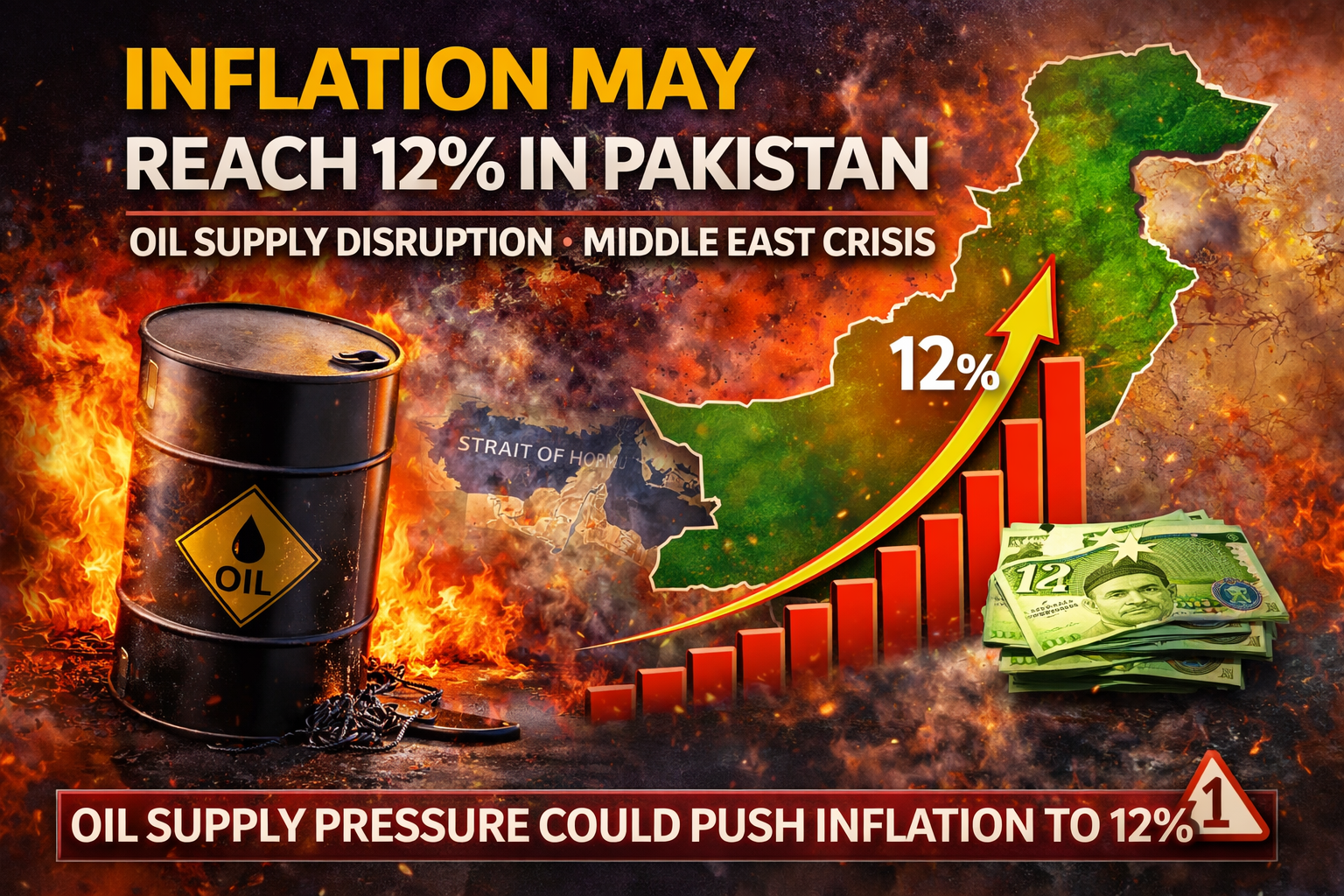
Inflation May Reach 12% Due to Middle East Crisis as disruptions in oil supply linked to tensions and potential blockage of the Strait of Hormuz raise serious concerns for Pakistan’s economy, according to a new economic assessment.
A report released by the Pakistan Institute of Development Economics (PIDE) highlights that interruptions in global oil flows could significantly increase inflation and strain the country’s external account.
Oil Supply Disruptions Raise Alarm
According to the report, around 20 million barrels of oil pass daily through the Strait of Hormuz, making it one of the most critical global energy routes.
Any disruption in this supply chain could immediately push oil prices higher, triggering a ripple effect across economies dependent on imported energy.
Pakistan, which relies heavily on oil imports, is particularly vulnerable to such disruptions.
Inflation Could Rise to 12%
The PIDE report warns that inflation in Pakistan, currently estimated around 8.8 percent, could rise significantly depending on the severity of the supply shock.
-
In a moderate scenario, inflation could reach 10.4 percent
-
In a severe disruption scenario, it may climb up to 12 percent
This increase would directly impact household expenses, fuel prices, and the cost of essential goods.
Impact on External Account
The report also highlights risks to Pakistan’s external account balance.
If oil prices surge due to supply disruptions, the country’s monthly oil import bill could increase by $384 million.
This could potentially shift Pakistan’s current account from a surplus to a deficit of up to $4.6 billion annually, placing additional pressure on foreign exchange reserves.
Energy Imports and Economic Pressure
Energy products make up approximately 22 percent of Pakistan’s total imports, making the economy highly sensitive to changes in global oil prices.
In addition to rising fuel costs, other factors such as:
-
Increased shipping charges
-
Higher insurance costs
-
Depreciation of the Pakistani rupee
-
Additional taxes
could further drive up inflation.
Key Sectors at Risk
The report identifies sectors like transportation, agriculture, and food supply as particularly vulnerable.
Diesel, which is widely used in these sectors, plays a crucial role in maintaining supply chains and production.
Any increase in diesel prices could lead to higher costs across the economy, especially in food production and distribution.
Policy Recommendations to Reduce Impact
To mitigate the negative effects, PIDE has recommended several emergency policy measures.
These include:
-
Close monitoring of fuel pricing, especially diesel
-
Improving supply chain efficiency
-
Reducing dependence on imported fuel
-
Strengthening economic planning to manage external shocks
Experts emphasize that timely policy actions could help limit the economic damage caused by global disruptions.
Uncertain Outlook Ahead
The future trajectory of inflation depends largely on developments in the Middle East and the stability of global oil supply routes.
If tensions escalate or the Strait of Hormuz remains disrupted, inflationary pressures could intensify further.
For now, the report underscores the need for preparedness as Pakistan navigates a challenging economic environment.