
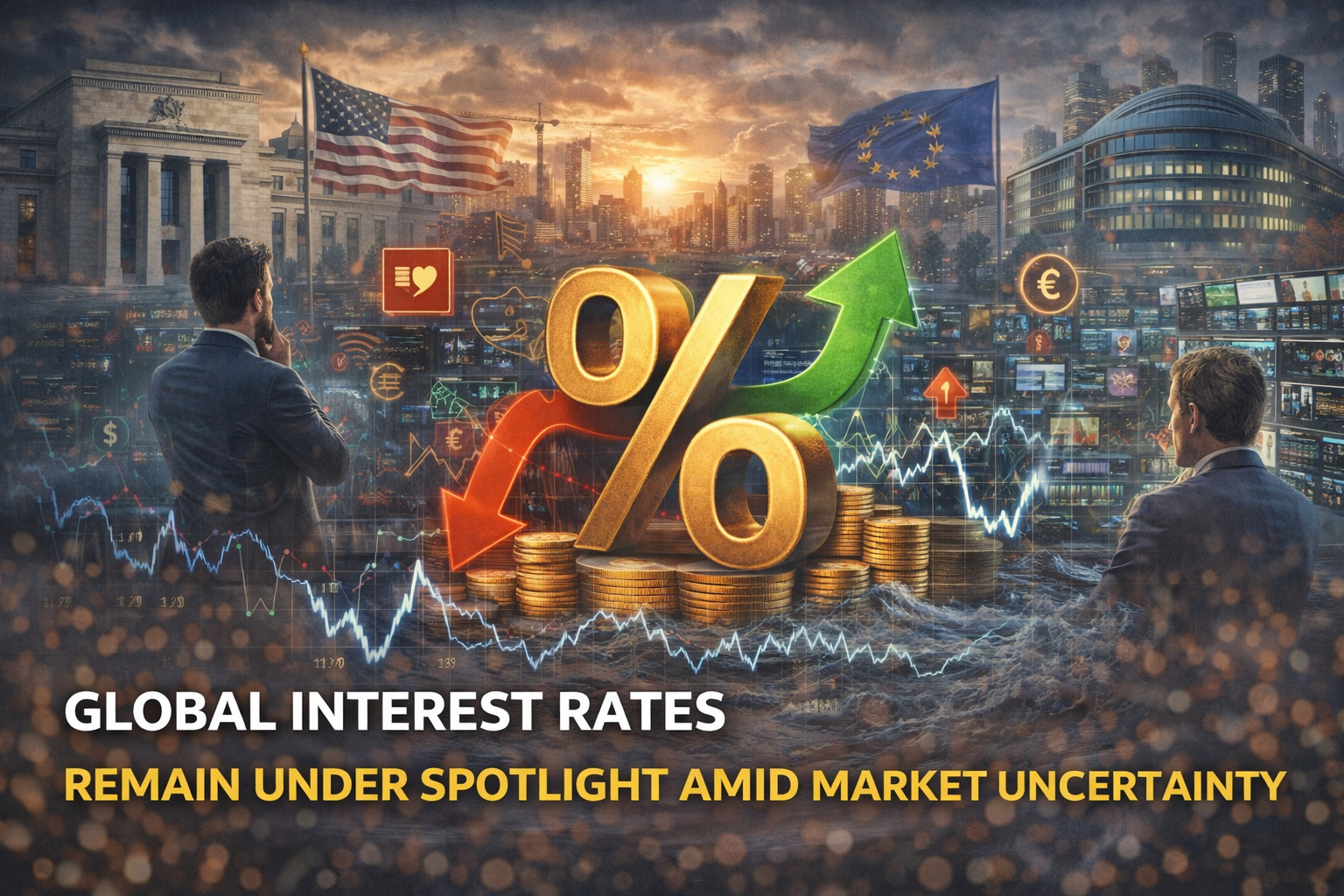
Global interest rates remain under close observation this week as financial markets react to mixed economic signals from major economies. Central banks across the world are carefully balancing inflation control with the need to support economic growth, keeping investors and businesses on edge.
In recent months, interest rate decisions have become one of the most closely watched indicators in global markets. Higher borrowing costs have affected everything from consumer spending to business investment, while policymakers continue to assess whether current measures are sufficient to manage inflation.
Several major economies have reported signs of slowing price growth, raising questions about whether interest rates have reached their peak. At the same time, economic growth remains uneven, with some regions showing resilience while others face pressure from weak demand and rising costs.
Market analysts note that uncertainty around global interest rates has influenced stock markets, currencies, and commodity prices. Investors are adjusting strategies based on expectations of future rate movements, leading to short-term volatility across financial markets.
Businesses worldwide are also feeling the impact. Higher interest rates have increased financing costs, particularly for small and medium-sized enterprises. Many companies are delaying expansion plans and focusing on cost management until there is greater clarity on monetary policy direction.
Consumers have not been immune to these changes. Mortgage rates, personal loans, and credit costs have risen in several countries, affecting household budgets. As a result, consumer spending patterns are shifting, with many people prioritizing essential expenses over discretionary purchases.
Central banks continue to emphasize data-driven decision-making. Policymakers are closely monitoring inflation trends, employment figures, and economic output before making further adjustments. Officials have repeatedly stated that maintaining price stability remains a top priority, even as growth concerns persist.
Economists warn that sudden changes in interest rate policy could have unintended consequences. A rapid reduction in rates may reignite inflation, while prolonged high rates could slow economic recovery. Finding the right balance is proving to be a complex challenge.
Global coordination is also playing a role in shaping expectations. Since financial markets are interconnected, policy decisions in one major economy can influence others. Currency movements and capital flows often respond quickly to changes in interest rate outlooks.
Despite uncertainty, some analysts believe that gradual stabilization may be possible if inflation continues to ease. Clear communication from central banks and consistent policy signals could help reduce market volatility in the coming months.
As global interest rates remain under scrutiny, businesses, investors, and consumers alike are closely watching developments. The decisions made by central banks in the near term are expected to have lasting effects on economic activity and financial stability worldwide.