
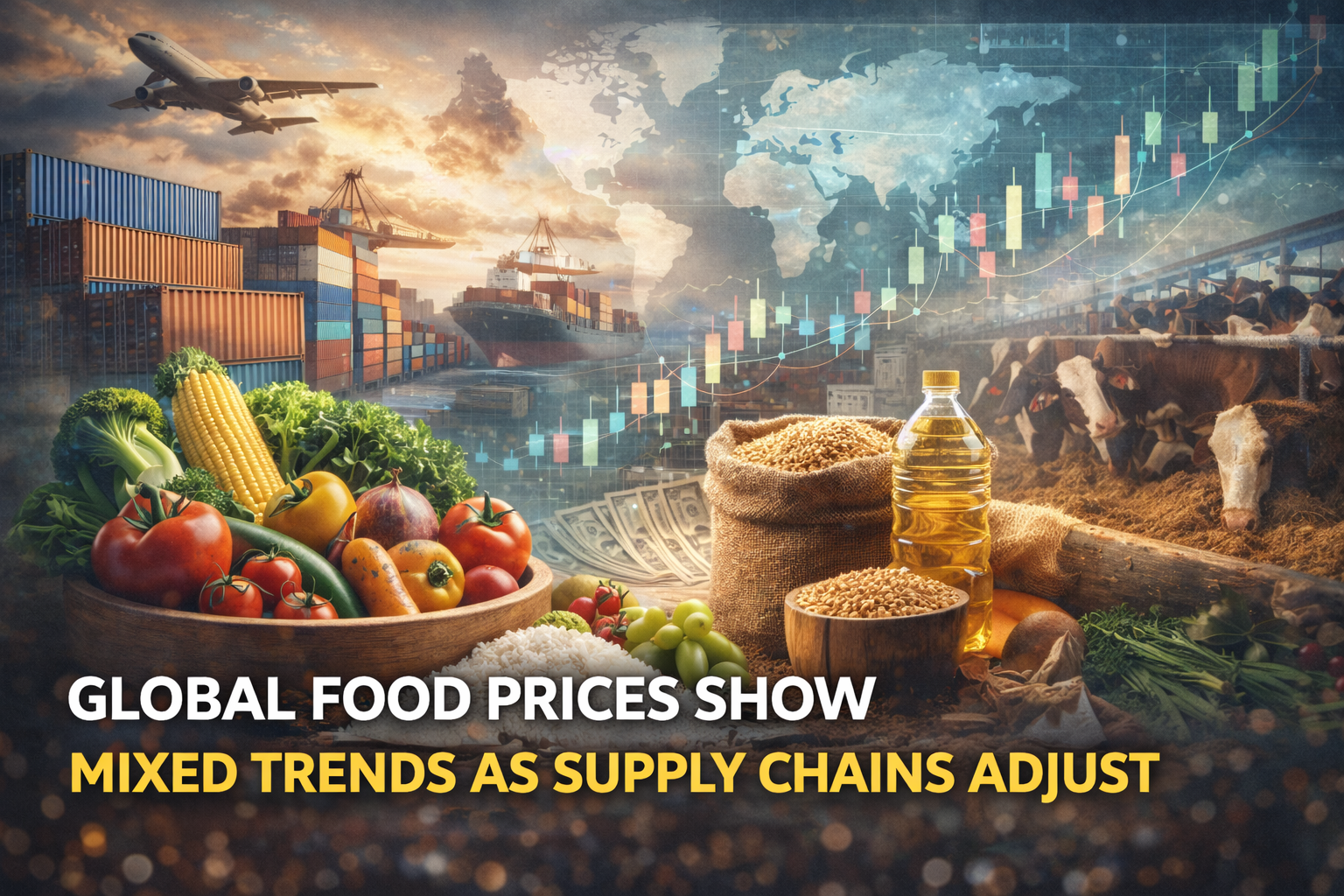
Global food prices have shown mixed trends in recent months as international supply chains continue to adjust to changing demand and production conditions. While some essential food items have become more affordable in certain regions, others remain under pressure due to transportation costs and climate-related challenges.
Food markets across the world are influenced by multiple factors, including weather patterns, farming output, trade policies, and global logistics. Any disruption in one region can quickly affect prices in another, making the food sector highly sensitive to global conditions.
Recent data from agricultural analysts indicates that increased crop production in some major exporting countries has helped stabilize prices for grains and cereals. Improved harvests have eased supply concerns, particularly in regions that faced shortages in previous seasons.
However, not all food categories have seen the same relief. Fruits, vegetables, and dairy products remain vulnerable to climate changes and rising input costs. Farmers in several countries continue to deal with higher expenses for fuel, fertilizers, and transportation, which affects retail prices.
Experts note that global food prices also depend on trade flows and international demand. When demand rises in large consumer markets, exporters may prioritize shipments, which can impact availability elsewhere. These shifts often lead to short-term price fluctuations.
Another factor influencing food prices is the gradual recovery of global supply chains. Shipping delays and logistical issues that disrupted markets in recent years are slowly being resolved, allowing food products to move more smoothly across borders.
Consumers worldwide are watching food prices closely, as they directly affect household budgets. In many countries, food accounts for a large portion of monthly expenses, making price stability an important issue for families.
Economists believe that while some price pressures may ease, long-term stability will depend on consistent production and efficient distribution networks. Investments in agricultural technology and infrastructure could play a role in reducing future volatility.
Overall, the global food market continues to adapt to new conditions. As supply chains adjust and production levels stabilize, food prices may become more predictable, though short-term changes are likely to continue.