
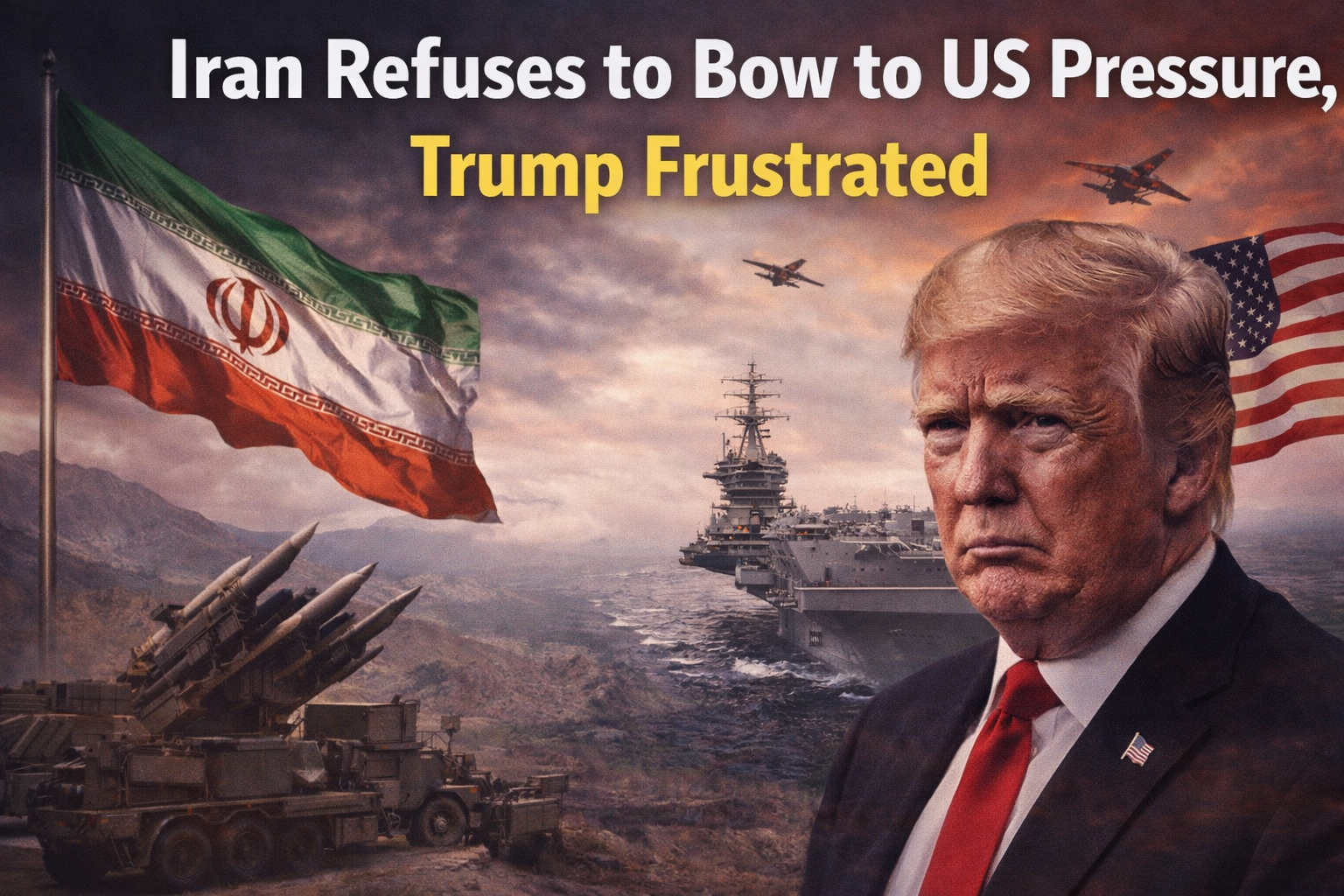
Iran Refuses to Bow to US Pressure Despite Military Escalation, Trump Frustrated as rising military deployments in the Middle East fail to produce the strategic concessions Washington had anticipated from Tehran. The latest developments highlight continued geopolitical tension between the two longtime rivals despite intermittent diplomatic engagement.
Officials familiar with the matter say the United States has significantly increased both its naval and military footprint in the region, aiming to exert pressure on Iran amid ongoing security and nuclear concerns.
US Military Presence Expands in the Region
According to policy insiders, Washington has reinforced its military posture across key Middle Eastern waterways and strategic locations. Additional naval assets, air defense systems, and troop deployments have been positioned to signal deterrence and strategic readiness.
Despite this show of force, Iran has not indicated any willingness to scale back its defense posture or alter its strategic policies under pressure.
Trump’s Frustration Surfaces
Donald Trump has reportedly expressed frustration over the lack of response from Tehran. In a recent interview, his special envoy Steve Witkoff revealed that the former US president questioned why Iran had not moved toward de-escalation despite heightened American military presence.
According to Witkoff, Trump asked why Iran had not publicly declared that it was prepared to abandon weapons ambitions, especially given the mounting pressure and visible US naval strength in the region.
Questions Over Strategic Deterrence
The remarks reflect broader questions within US policy circles about the effectiveness of military signaling as a diplomatic tool.
Washington’s approach has combined sanctions, military deployments, and diplomatic outreach. However, Iran’s resistance suggests that deterrence alone may not compel policy shifts without parallel political guarantees.
Previous Rounds of Negotiations
Diplomatic engagement between the two countries has not been entirely absent. Reports confirm that at least two rounds of indirect negotiations have taken place in recent months.
While these talks were viewed as confidence-building steps, they did not produce any major breakthroughs on contentious issues such as sanctions relief, nuclear activity, or regional security dynamics.
Additional Carrier Deployment Reported
Security sources indicate that the United States is preparing to send another aircraft carrier strike group toward the Middle East.
Such deployments are typically intended to project power, protect maritime routes, and reassure regional allies. However, they also risk escalating tensions if interpreted as aggressive signaling by adversaries.
Diplomatic Channels Still Open
Despite the military buildup, political analysts believe diplomatic pathways have not been fully exhausted.
Backchannel communications and mediated talks remain possible, particularly through regional intermediaries and international stakeholders invested in de-escalation.
Experts say both sides understand the risks of open confrontation, especially given the economic and security implications of prolonged conflict.
Trust Deficit Remains a Barrier
One of the primary obstacles to progress is the deep trust deficit between Washington and Tehran.
Years of sanctions, treaty withdrawals, and regional proxy tensions have eroded diplomatic confidence. As a result, even when negotiations occur, mutual skepticism slows momentum.
Regional and Global Implications
Ongoing US–Iran tensions carry significant implications beyond bilateral relations.
Energy markets, shipping security, and regional alliance structures are all influenced by developments between the two powers. Any escalation could impact global oil prices and maritime trade stability.
[…] […]