
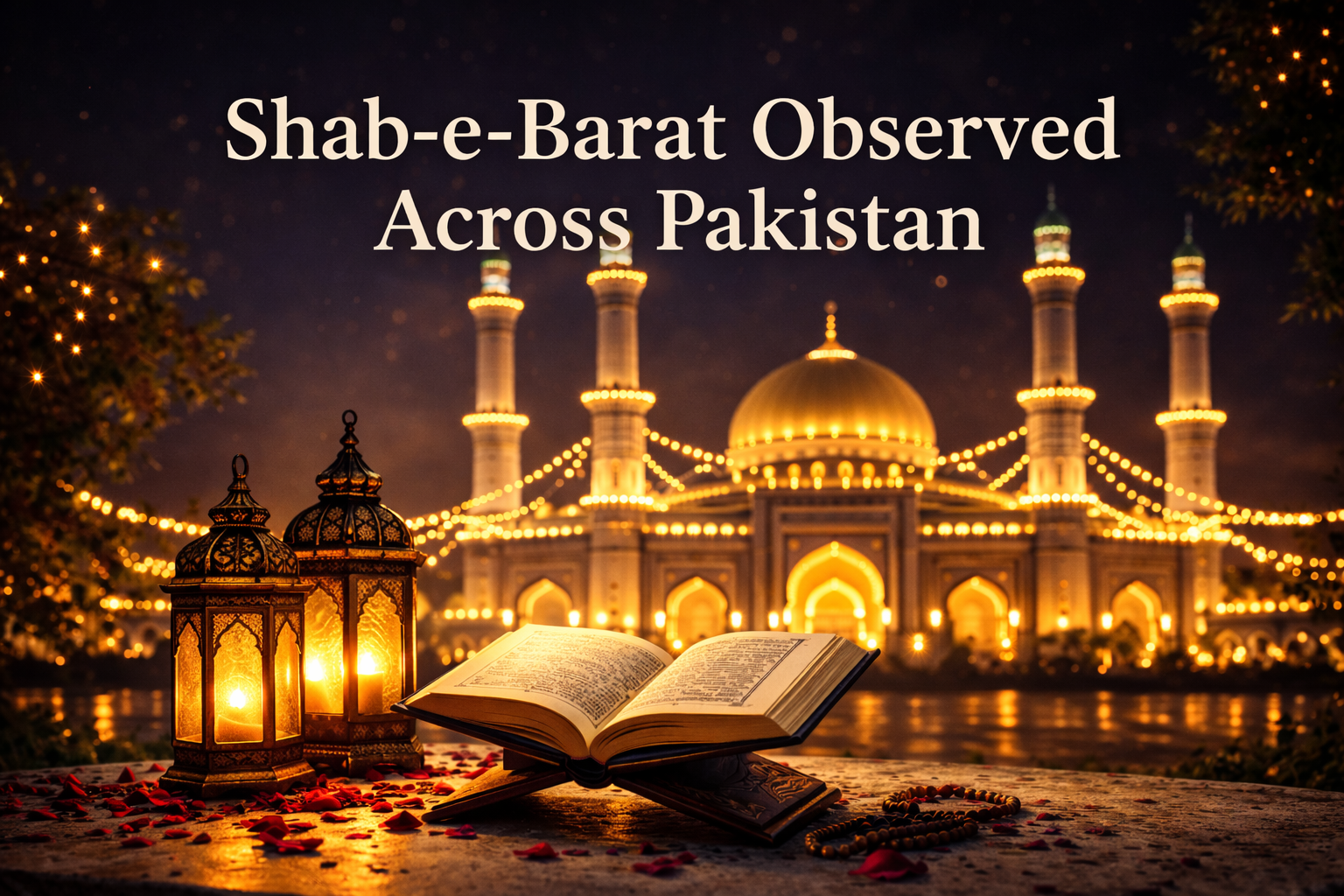
Shab-e-Barat observed with religious devotion and prayers as Muslims across Pakistan marked the sacred night with deep faith, worship, and reflection, while mosques nationwide remained filled with worshippers engaged in special night-long prayers.
Across the country, mosques organized special night vigils, where believers offered voluntary prayers (Nawafil) and sought forgiveness from Allah. Worshippers prayed for personal well-being, the safety of their families, national peace, prosperity, and the overall welfare of the Muslim Ummah.
Special prayers and religious gatherings
Throughout the night, mosques hosted recitations of the Holy Quran, remembrance of Allah (Zikr), and spiritually uplifting gatherings featuring Hamd, Naat, and Durood-o-Salam. Religious scholars and speakers addressed congregations, highlighting the significance of Shab-e-Barat and encouraging self-reflection, repentance, and moral reform.
Shab-e-Barat, which literally means the “Night of Emancipation,” is regarded by many Muslims as a night of mercy, forgiveness, and divine blessings. The word Shab means night, while Barat refers to freedom or deliverance, symbolizing spiritual release from sins through sincere repentance.
Meaning and religious significance
According to Islamic tradition, Shab-e-Barat is observed on the 15th night of Sha’ban, the eighth month of the Islamic lunar calendar. Many believers hold that on this night, Allah’s mercy is abundant and sincere repentance is accepted.
Muslims spend the night in worship, seeking forgiveness for past sins, praying for guidance, and making heartfelt supplications for success in both worldly and spiritual matters. The night is also seen as an opportunity to renew one’s commitment to righteousness and ethical living.
Mosques illuminated across the country
Mosques across Pakistan were decorated with colorful lights, creating a spiritually uplifting atmosphere. Major religious landmarks, including Data Darbar and the Badshahi Mosque, were illuminated and made special arrangements for worshippers.
Large numbers of people also visited graveyards to offer Fateha and Quran recitation for their deceased loved ones, praying for their forgiveness and eternal peace. Visiting graves on Shab-e-Barat is widely observed as a reminder of life after death and personal accountability.
Fasting and acts of charity
In keeping with tradition, many Muslims observed voluntary fasting the following day as a sign of devotion and gratitude. Acts of charity, helping the needy, and reconciling with others are also encouraged during this sacred period.
Islamic scholars emphasize that Shab-e-Barat is not only about ritual worship but also about inner reform, sincerity, and improving relationships with both Allah and fellow human beings.
Security arrangements across cities
To ensure the safety of worshippers, foolproof security arrangements were put in place nationwide. On the directives of Sindh Interior Minister Zia-ul-Hassan Lanjar, enhanced security measures were enforced across the province.
Similarly, Lahore Police deployed additional personnel across the city. Elite Force units were stationed at sensitive mosques and Imambargahs, while police patrols monitored major religious gatherings to maintain peace and order.
A night of mercy and reflection
Shab-e-Barat is also known as Laylat-ul-Mubarakah (the Blessed Night) and Laylat-ur-Rahmah (the Night of Mercy). Many believers view it as a night when destinies are reviewed and prayers are especially valued.
Religious scholars advise Muslims to observe the night with humility, avoiding excess or un-Islamic practices, and focusing instead on sincere worship, repentance, and good conduct.
As the night concluded, worshippers expressed hope that their prayers would be accepted, reinforcing the spirit of unity, compassion, and spiritual renewal across the country.