
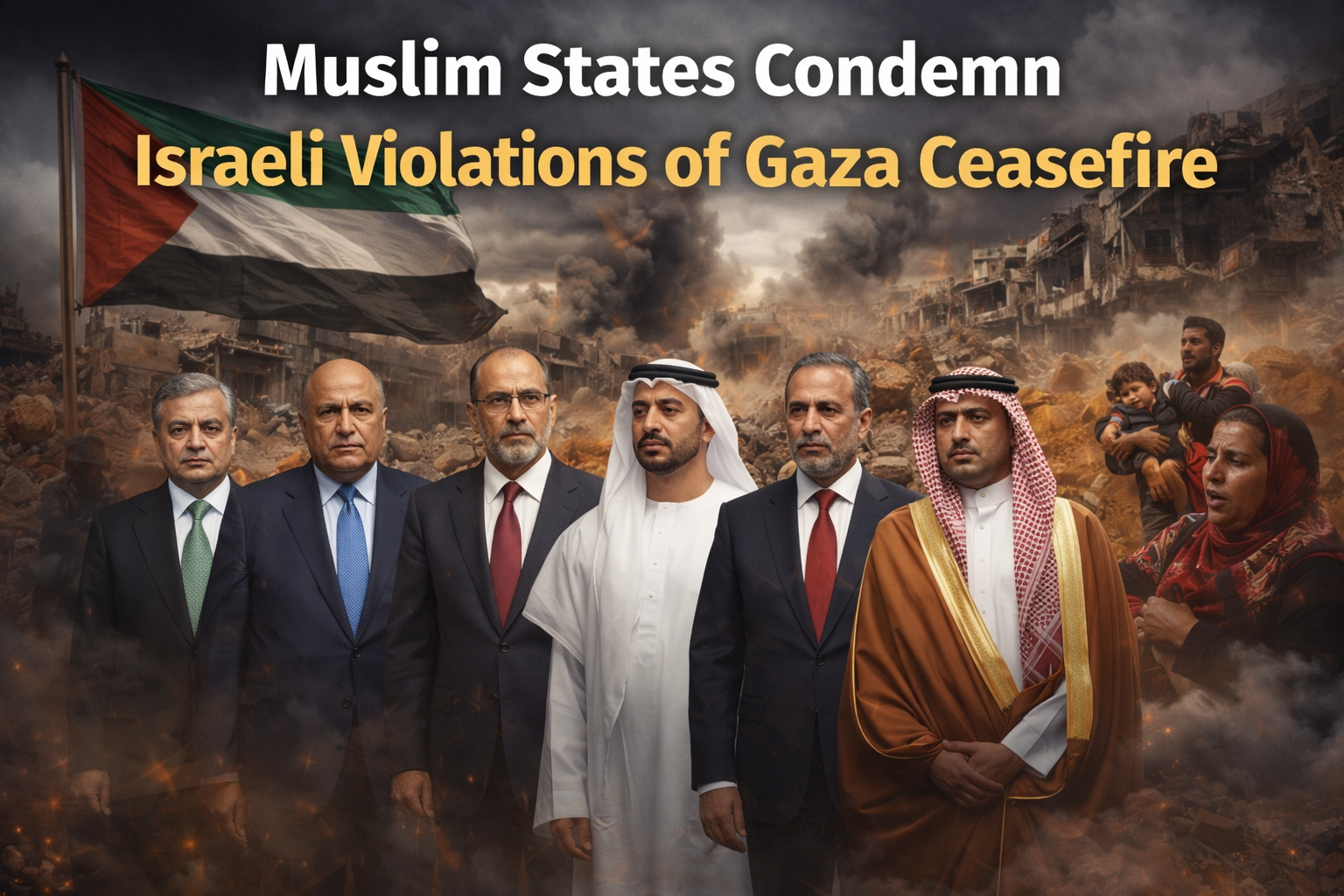
Muslim states condemn Israeli violations of Gaza ceasefire as foreign ministers from Pakistan, Egypt, Jordan, the United Arab Emirates, Indonesia, Türkiye, Saudi Arabia, and Qatar strongly criticized repeated breaches that have resulted in more than 1,000 Palestinians being killed or injured.
In a joint statement issued by the participating foreign ministries, the ministers said the continued violations risk escalating tensions and undermining ongoing efforts to restore peace and stability in the region. They warned that such actions could derail both regional and international initiatives aimed at sustaining the ceasefire.
The statement noted that the violations are occurring at a critical time when regional and international stakeholders are collectively working to advance the second phase of US President Donald Trump’s peace plan and ensure the implementation of UN Security Council Resolution 2803.

Ceasefire Violations Threaten Political Process
The foreign ministers emphasized that persistent ceasefire breaches pose a direct threat to the political process, weakening prospects for a stable transition toward improved security and humanitarian conditions in the Gaza Strip.
They stressed that ongoing military actions are obstructing efforts to move Gaza toward a more sustainable phase focused on civilian protection, humanitarian access, and long-term stabilization.
The ministers underlined the importance of full commitment from all parties to ensure the success of the second phase of the peace initiative, warning that continued violations could reverse diplomatic progress achieved so far.
Call for Restraint and Responsibility
In their statement, the foreign ministers urged all parties to exercise maximum restraint during this sensitive period. They called for strict adherence to ceasefire obligations and cautioned against any actions that could undermine the current process.
The ministers also stressed the need to create favorable conditions for early recovery and reconstruction efforts in Gaza, noting that stability on the ground is essential for rebuilding infrastructure and addressing humanitarian needs.
They urged responsible behavior from all sides to prevent further loss of life and deterioration of the situation.
Support for International Law and UN Resolutions
The joint declaration reaffirmed the foreign ministers’ commitment to achieving a just and lasting peace based on the Palestinian people’s right to self-determination and statehood.
They emphasized that any durable solution must align with international law, relevant United Nations resolutions, and the Arab Peace Initiative, which calls for a negotiated settlement guaranteeing security and rights for all parties.
The ministers reiterated that sustainable peace cannot be achieved through military actions, but only through political dialogue and respect for internationally agreed frameworks.
Regional and Diplomatic Significance
Analysts view the coordinated statement as a significant diplomatic signal, reflecting growing concern among key Muslim-majority states over the humanitarian and political consequences of continued violence in Gaza.
The unified stance also highlights broader regional support for diplomatic efforts aimed at stabilizing the conflict and preventing further escalation that could impact regional security.
As diplomatic initiatives continue, the foreign ministers stressed that maintaining the ceasefire remains a critical first step toward easing humanitarian suffering and reviving political negotiations.